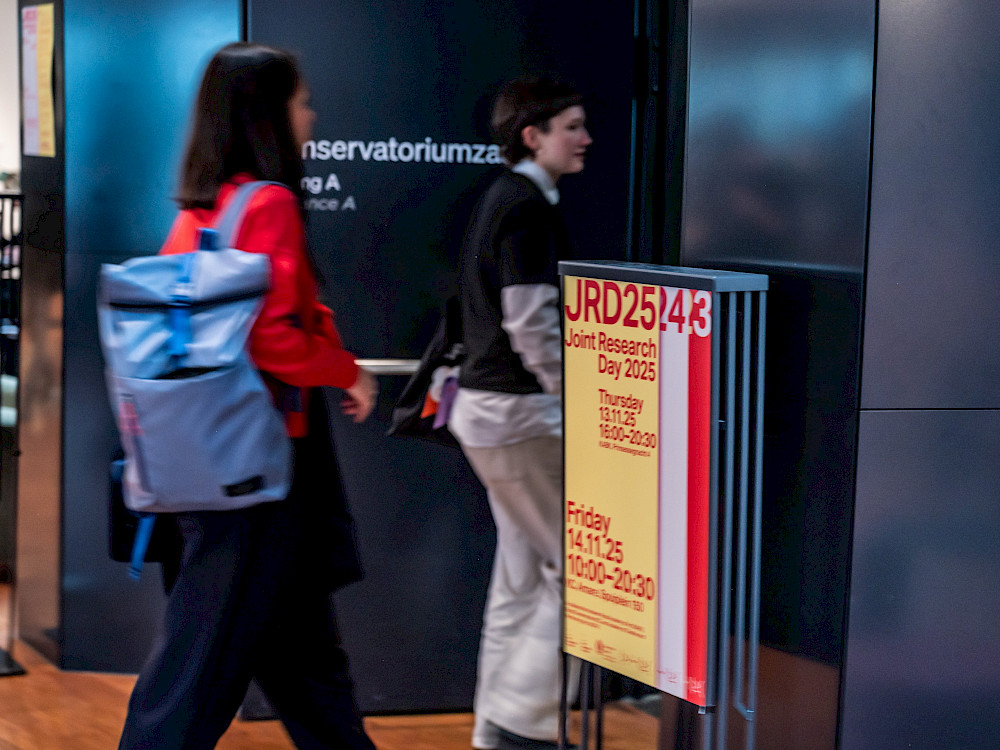
An Impression of the Joint Research Day 2025
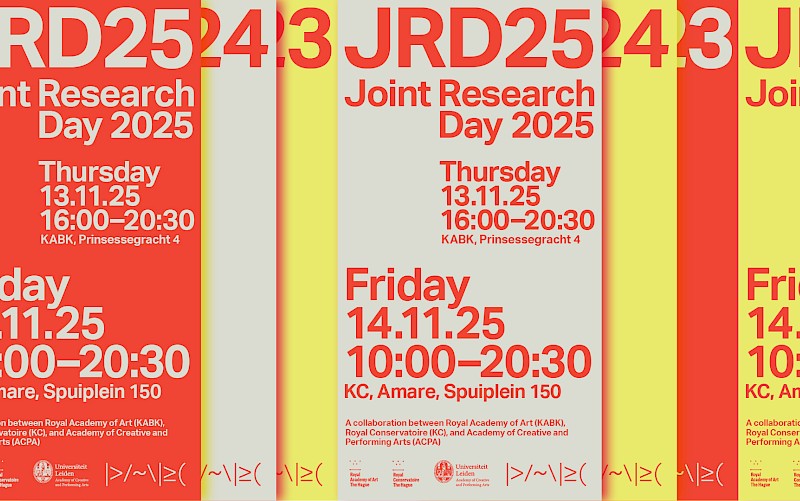
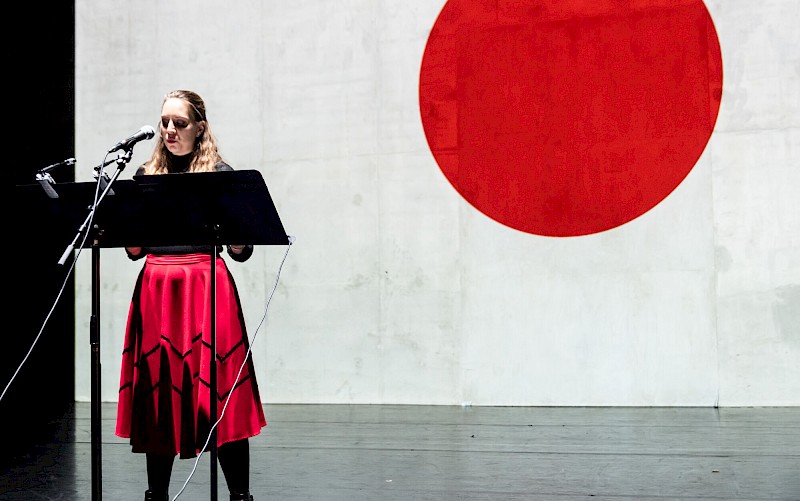
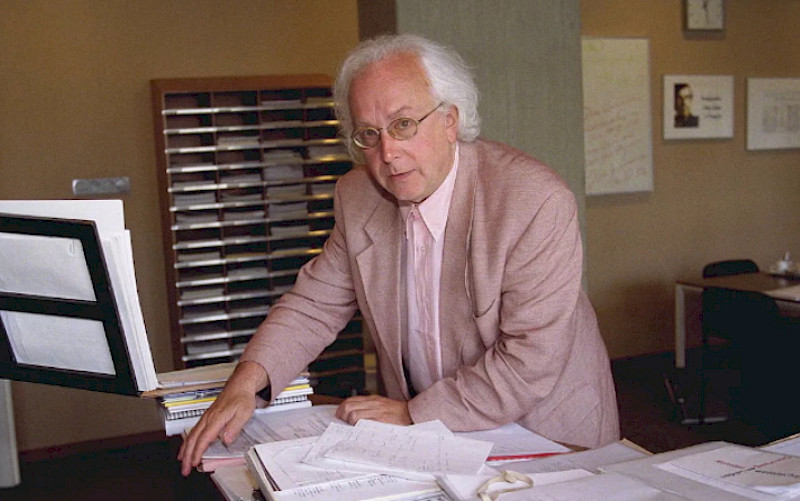
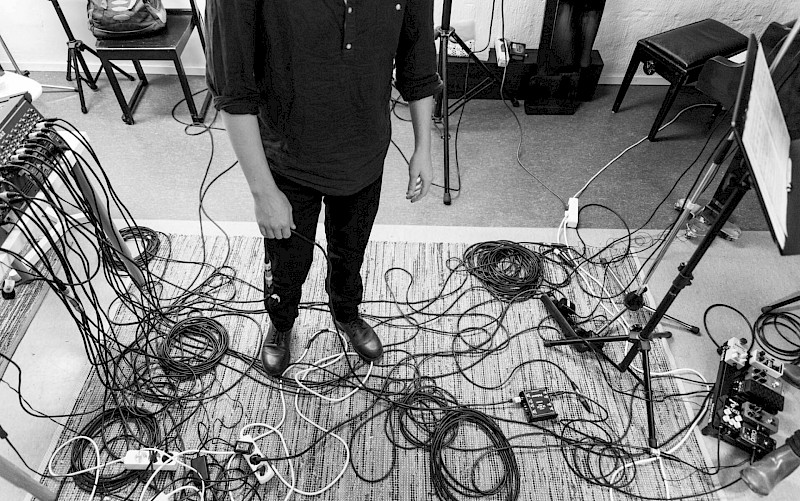
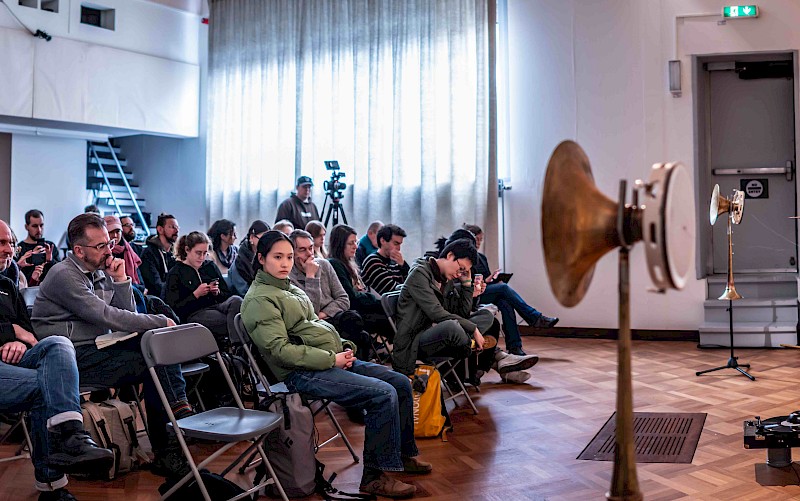
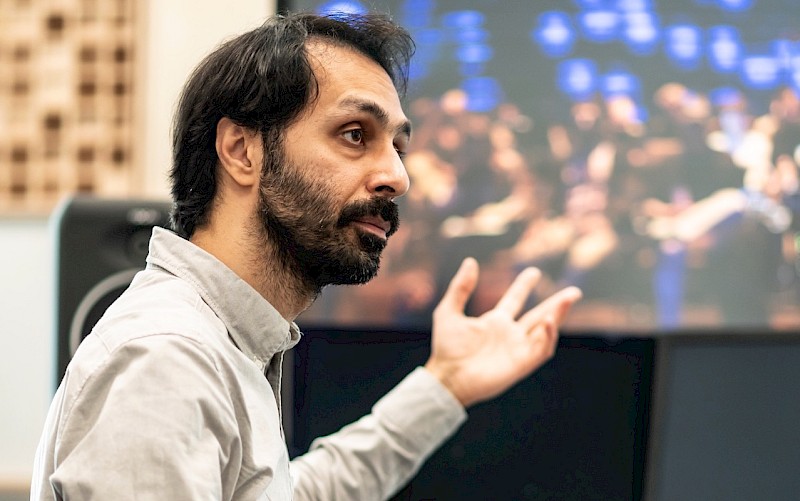
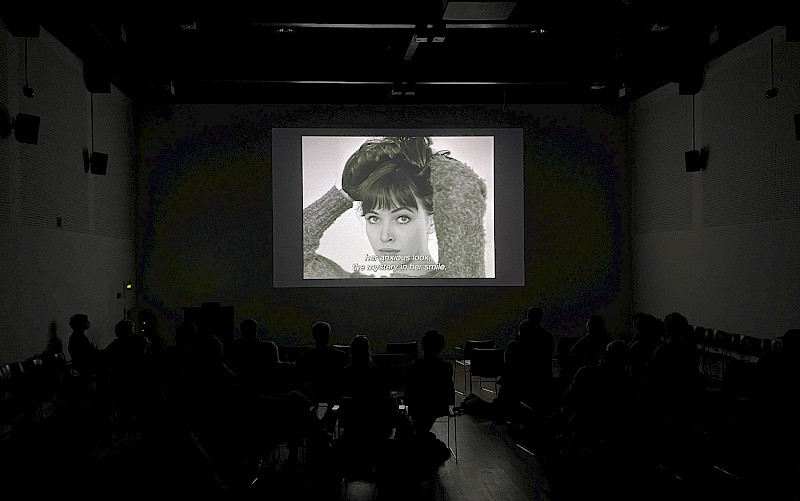
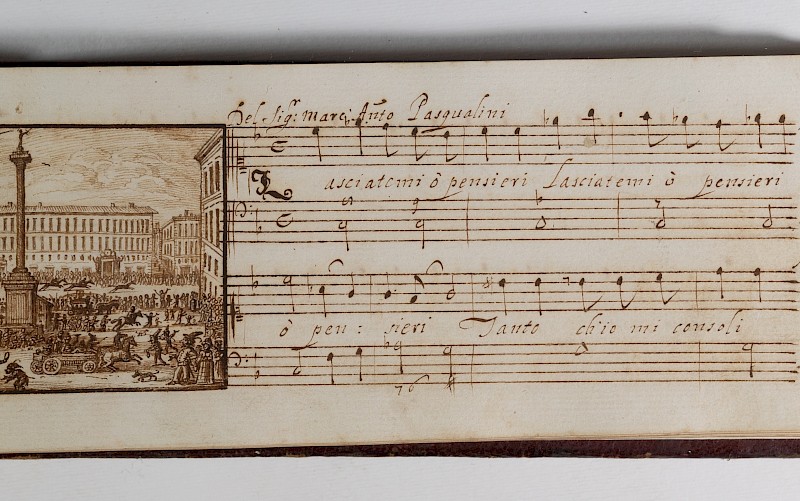
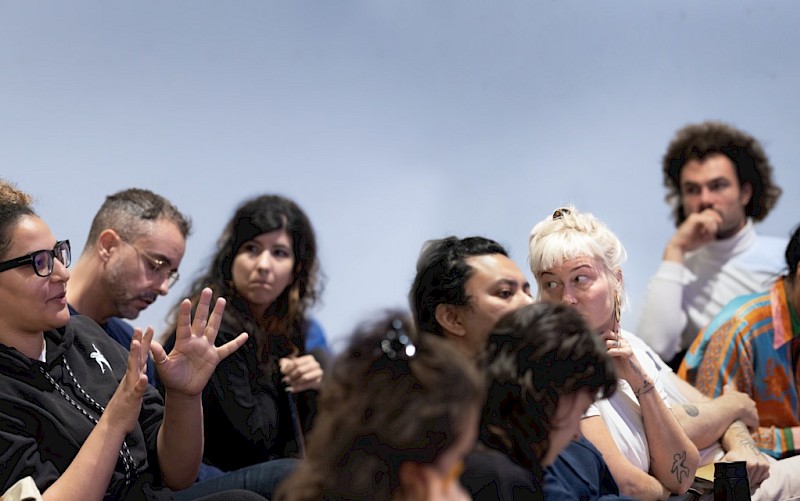
The third edition of the Joint Research Day (JRD25) took place at the Royal Academy of Art (KABK) and the Royal Conservatoire (KC) in The Hague on Thursday 13 and Friday 14 November 2025. On this page, you’ll find a glimpse into JRD25: a 15-hour programme dedicated to artistic and practice-based research, bringing together presentations, performances, round tables, and other encounters across art, design, music, and sound.
Over the course of two days, JRD25 brought together artist-researchers, tutors, PhD candidates, students, and alumni from KABK, KC, and the Academy of Creative and Performing Arts (ACPA) in a programme unfolding across the KABK Library, the Conservatoire Hall, and the New Music Lab. The programme traced pathways between art, design, and music, offering spaces to connect practices, share questions, and spark new collaborations.
All photos were taken by photographer Alex Schröder, video documentation was made by Silvia Ulloa.
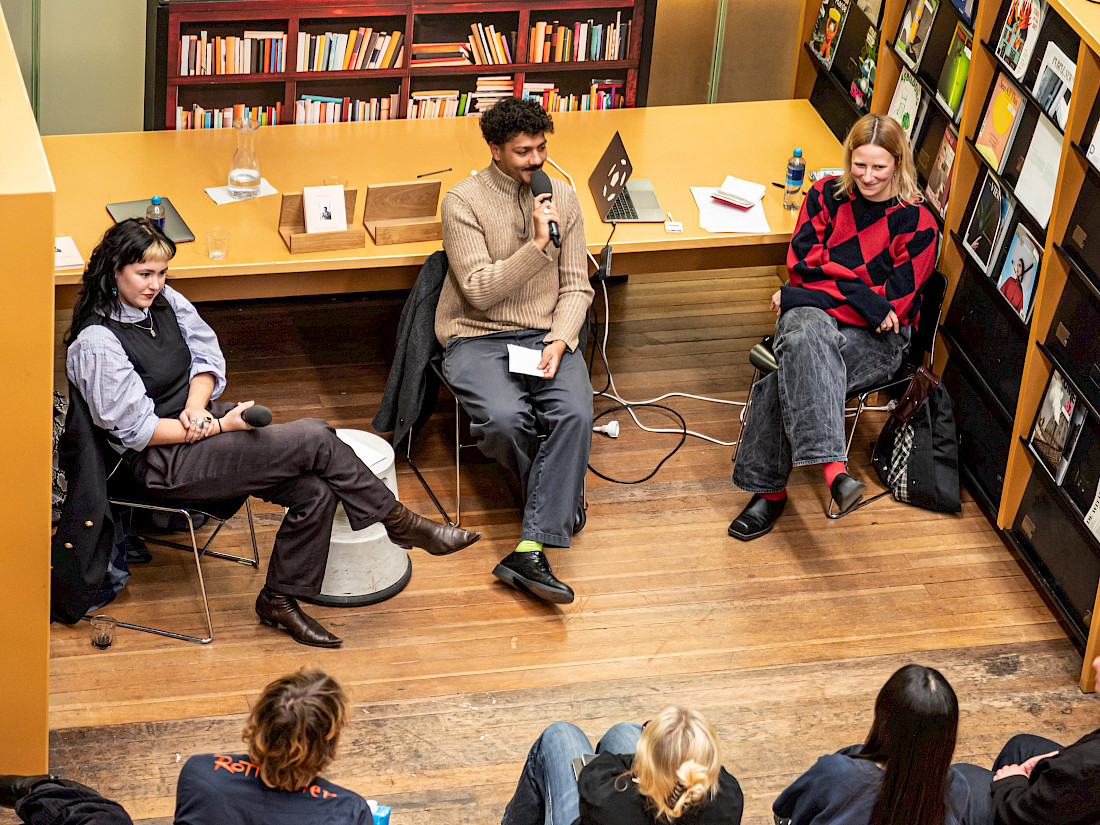
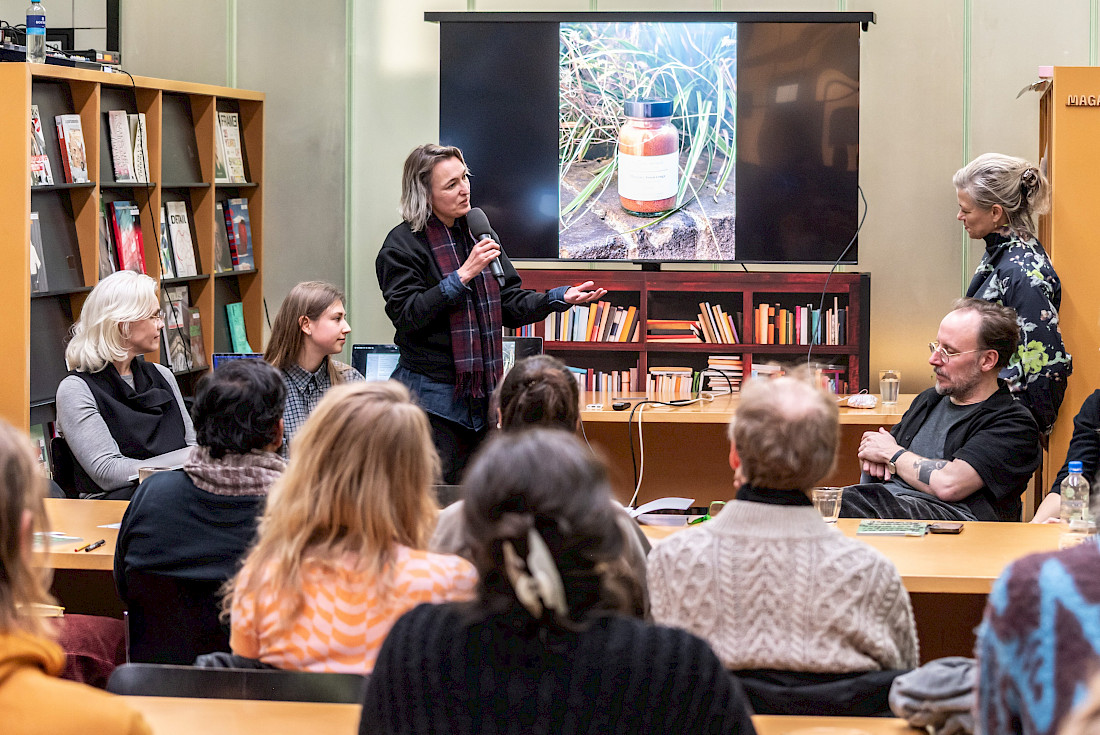
Bridging the Thesis: a Conversation Between Lucy Bink and Nadia Abadjieva, Moderated by Braidon Hobzek
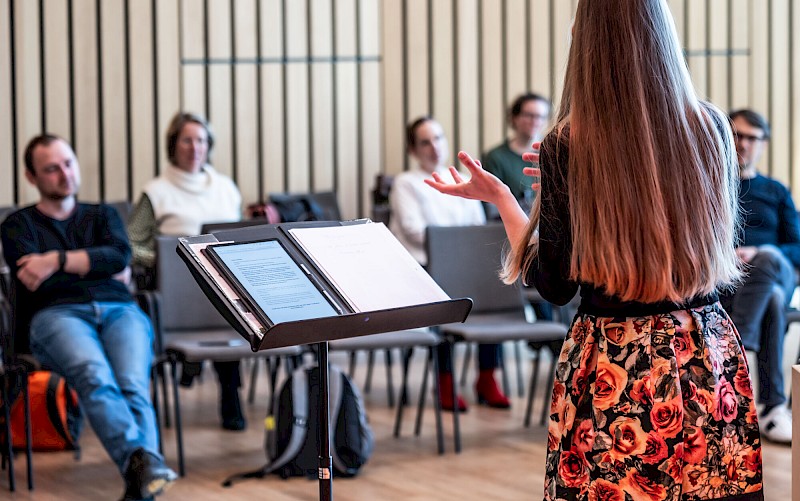
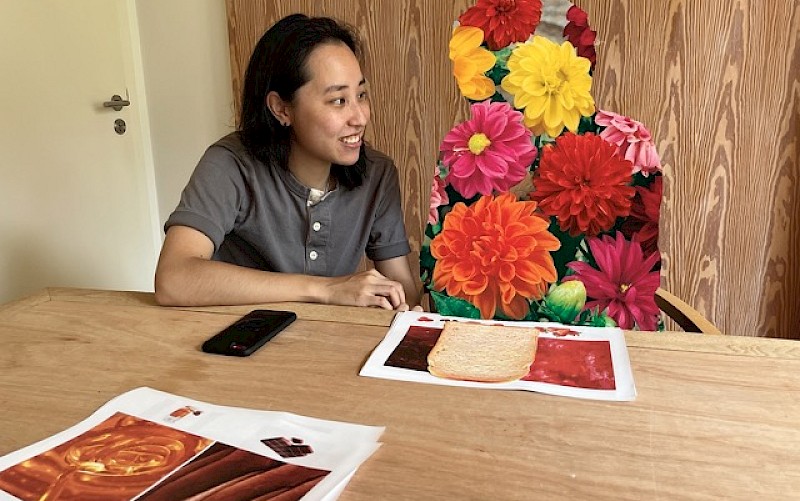
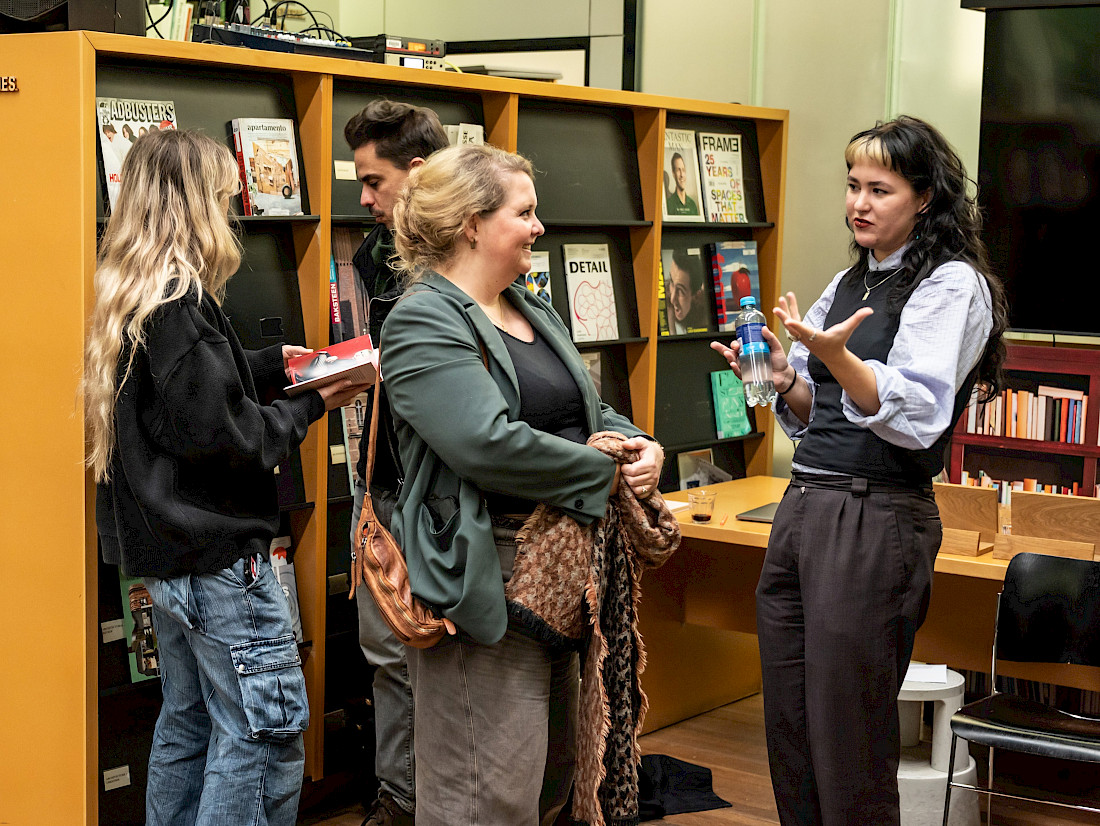
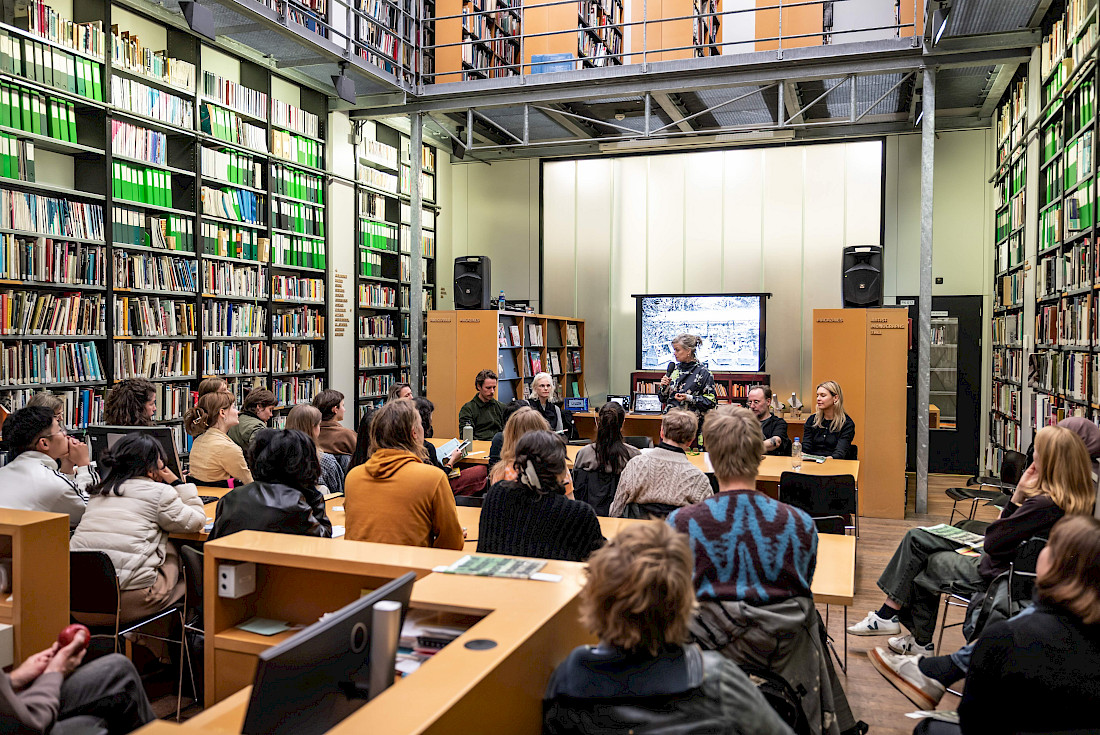
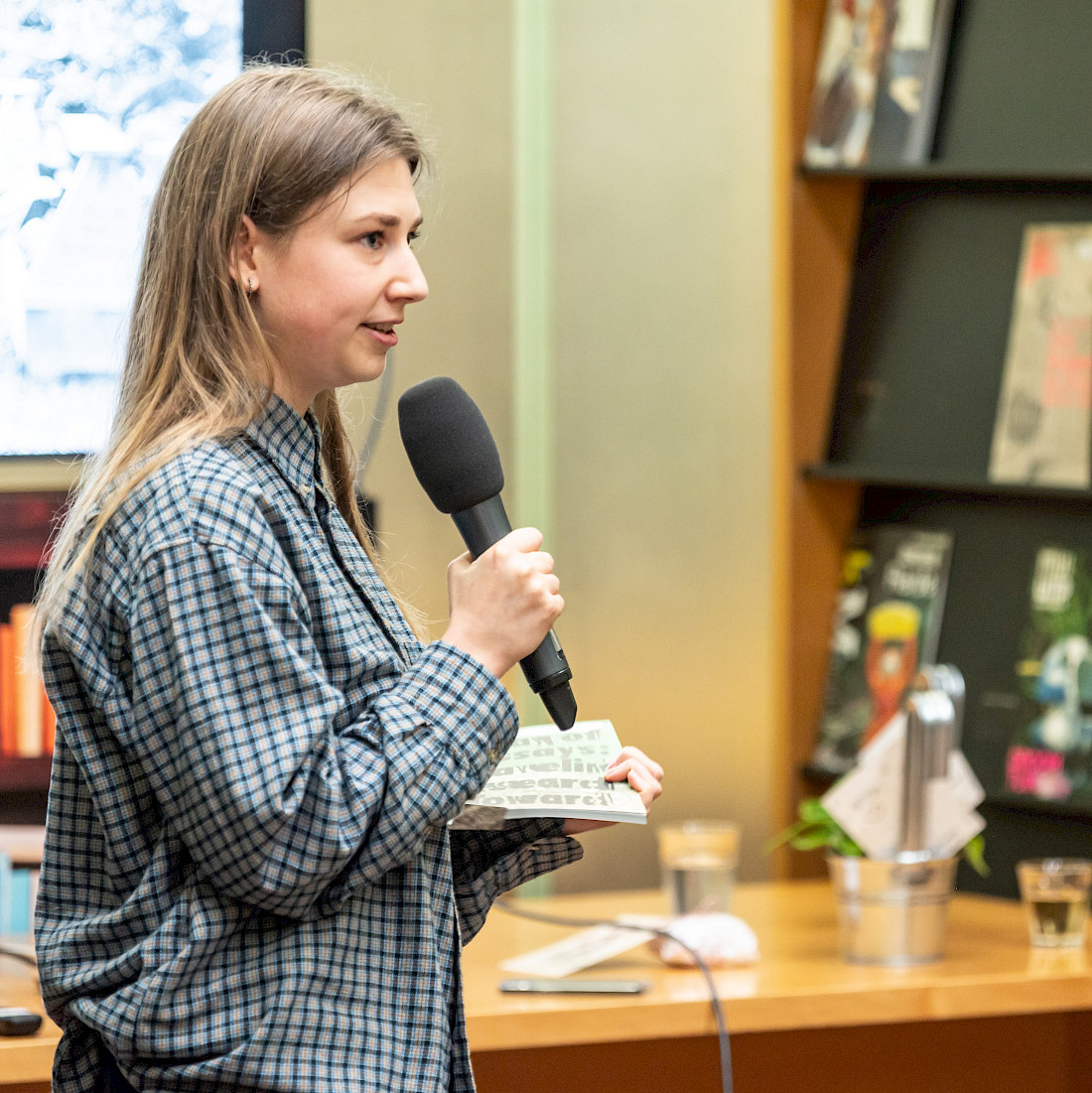
The KABK library and KABK tutors Anna Arov (BA Interactive Media Design (I/M/D)) and Ingrid Grootes (BA Photography) organized this year's edition of Bridging the Thesis, a conversation with recent KABK alumni Lucy Bink (BA Photography) and Nadia Abadjieva (BA I/M/D) about their thesis research, writing process, practice, and the connections between them. The conversation was moderated by fourth-year I/M/D student Braidon Hobzek. In addition, the library showcased a selection of theses by the 2025 KABK graduates.
Bridging the Thesis: a Conversation Between Lucy Bink and Nadia Abadjieva, Moderated by Braidon Hobzek
The KABK library and KABK tutors Anna Arov (BA Interactive Media Design (I/M/D)) and Ingrid Grootes (BA Photography) organized this year's edition of Bridging the Thesis, a conversation with recent KABK alumni Lucy Bink (BA Photography) and Nadia Abadjieva (BA I/M/D) about their thesis research, writing process, practice, and the connections between them. The conversation was moderated by fourth-year I/M/D student Braidon Hobzek. In addition, the library showcased a selection of theses by the 2025 KABK graduates.






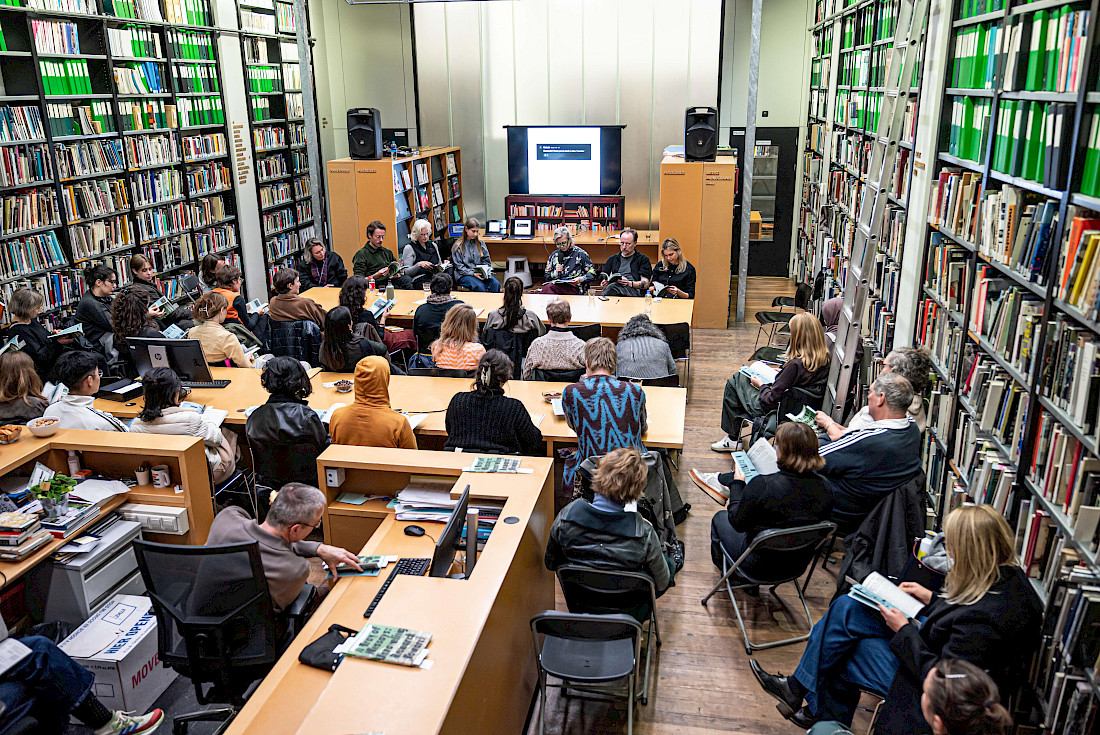
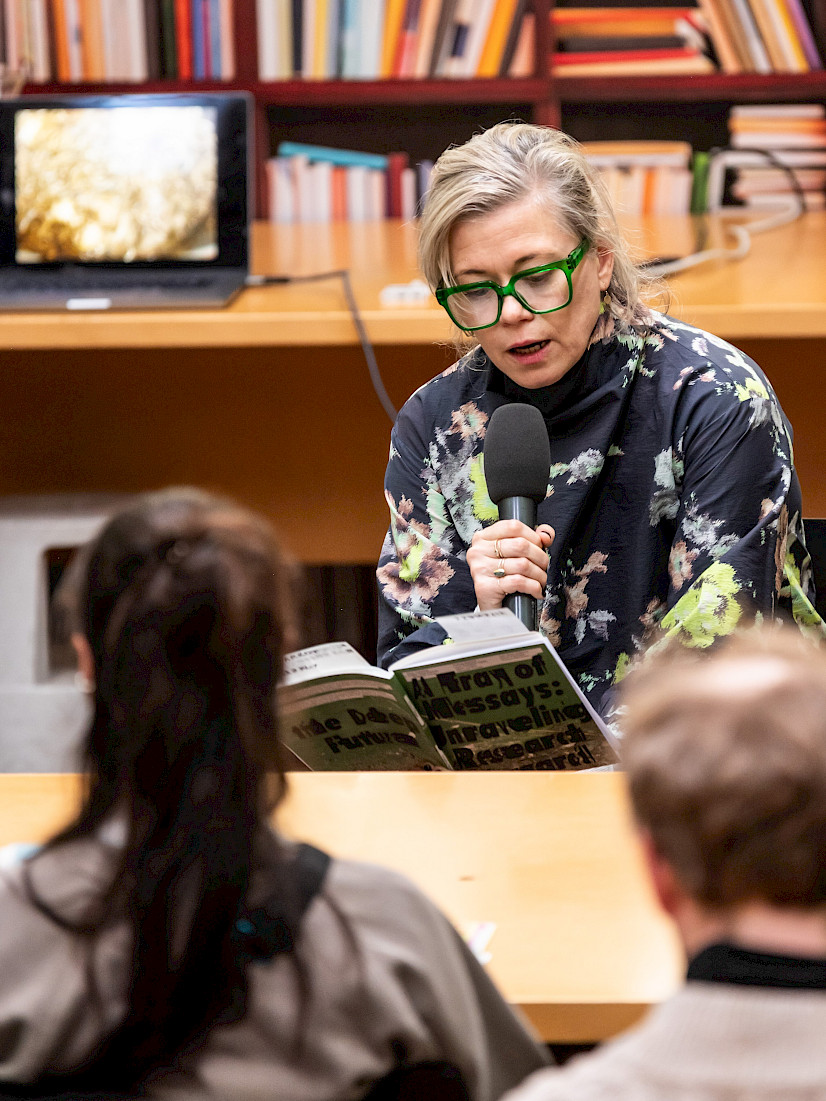
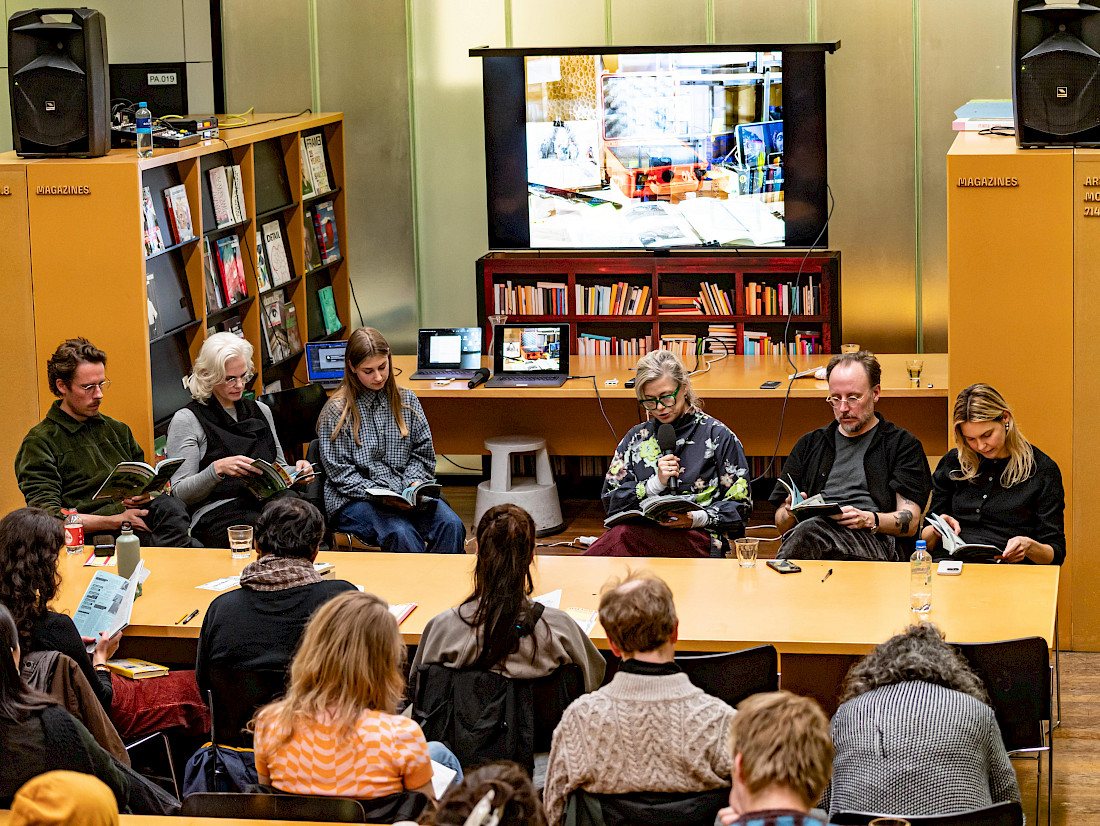
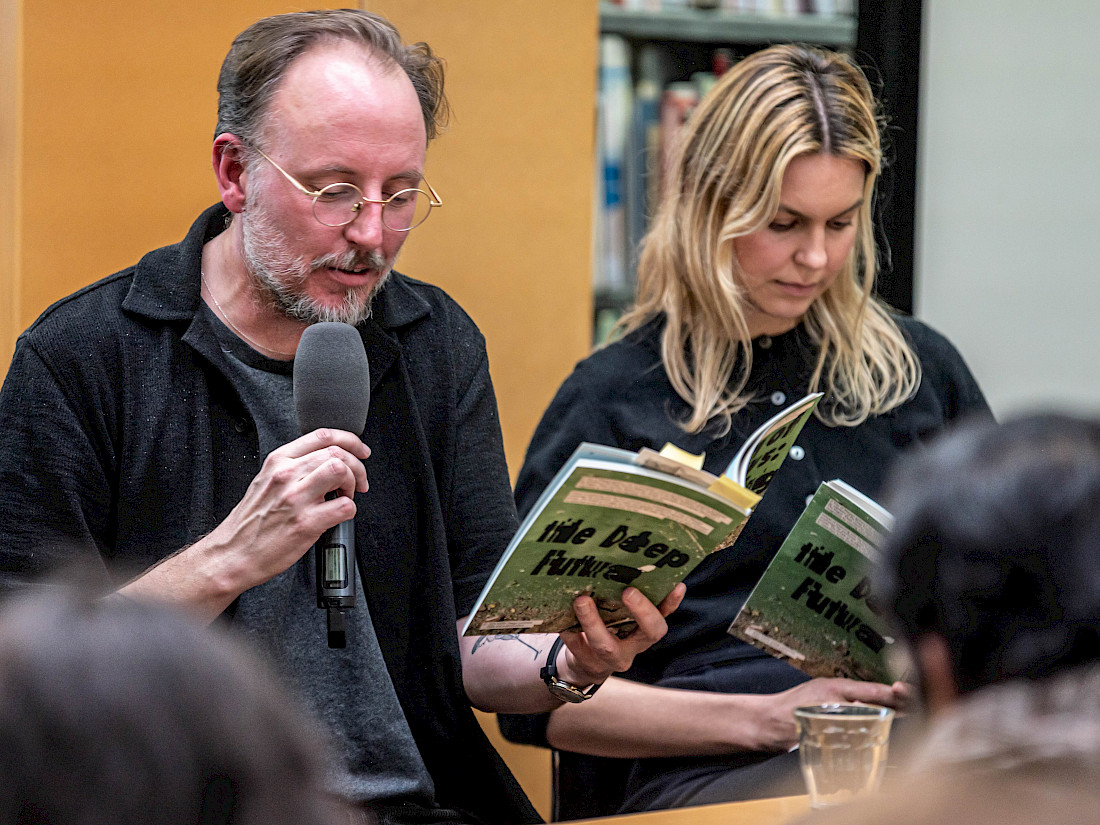
Special Launch Event for A Fray of Messays: Unraveling Research Toward the Deep Future, presented by KABK Deep Futures Research Group
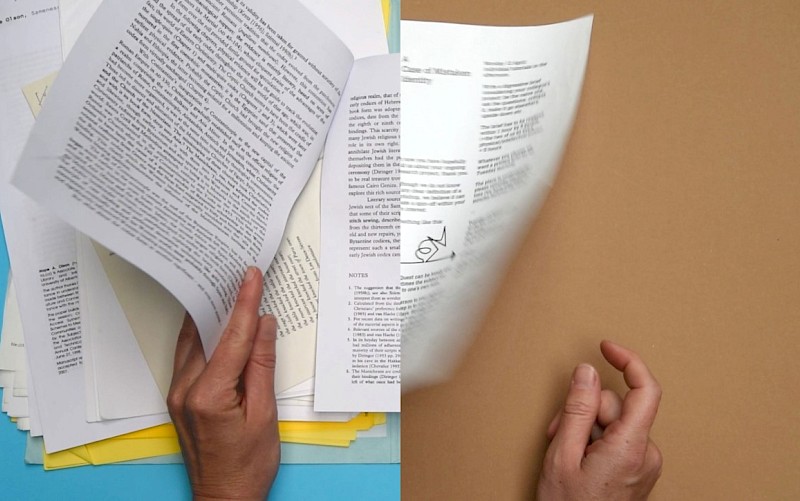
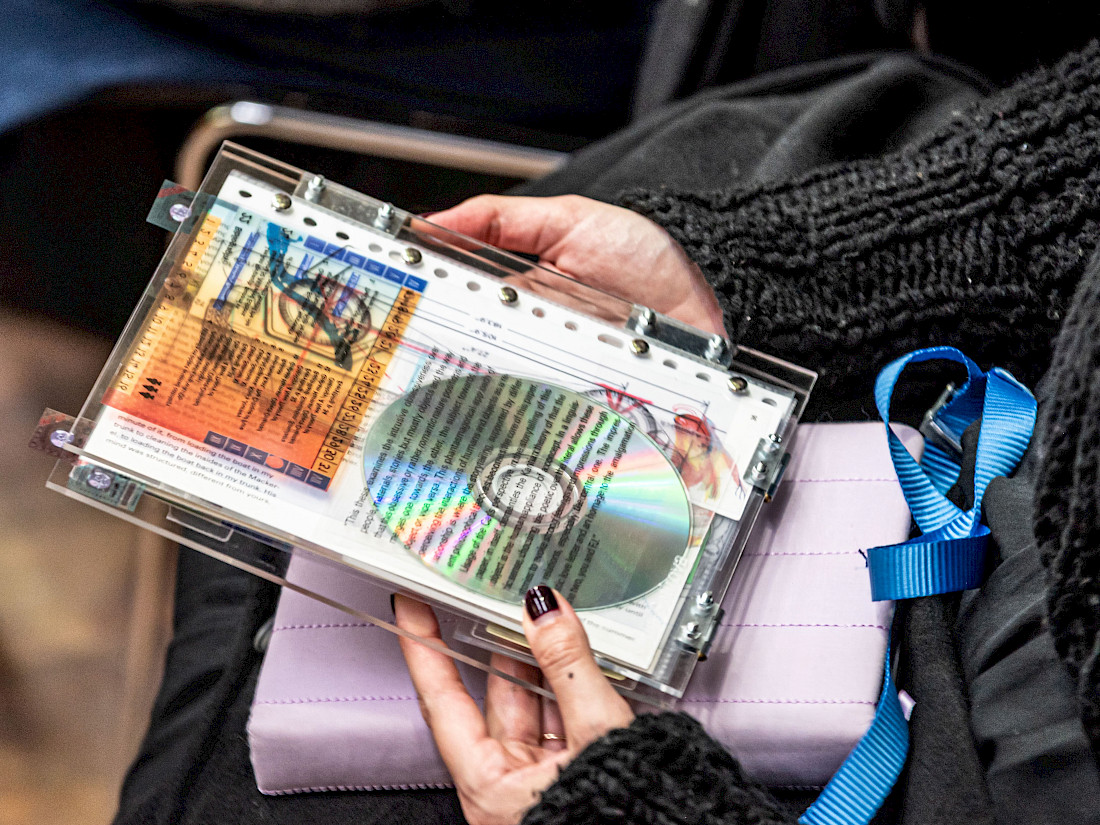
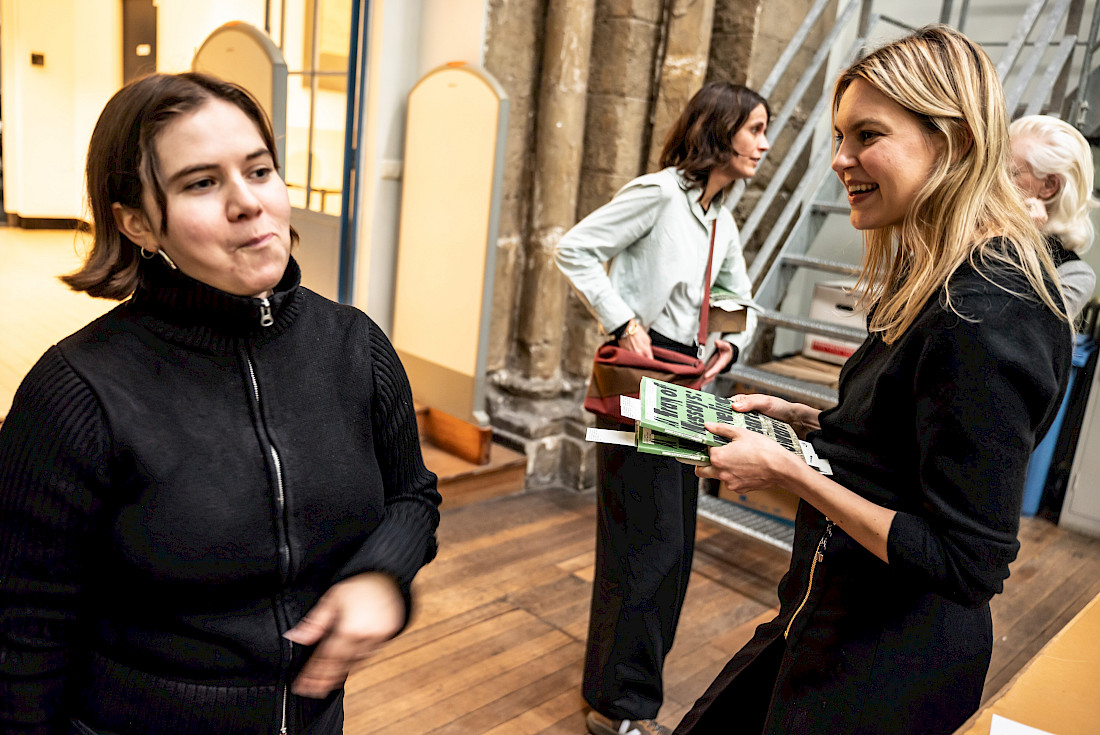
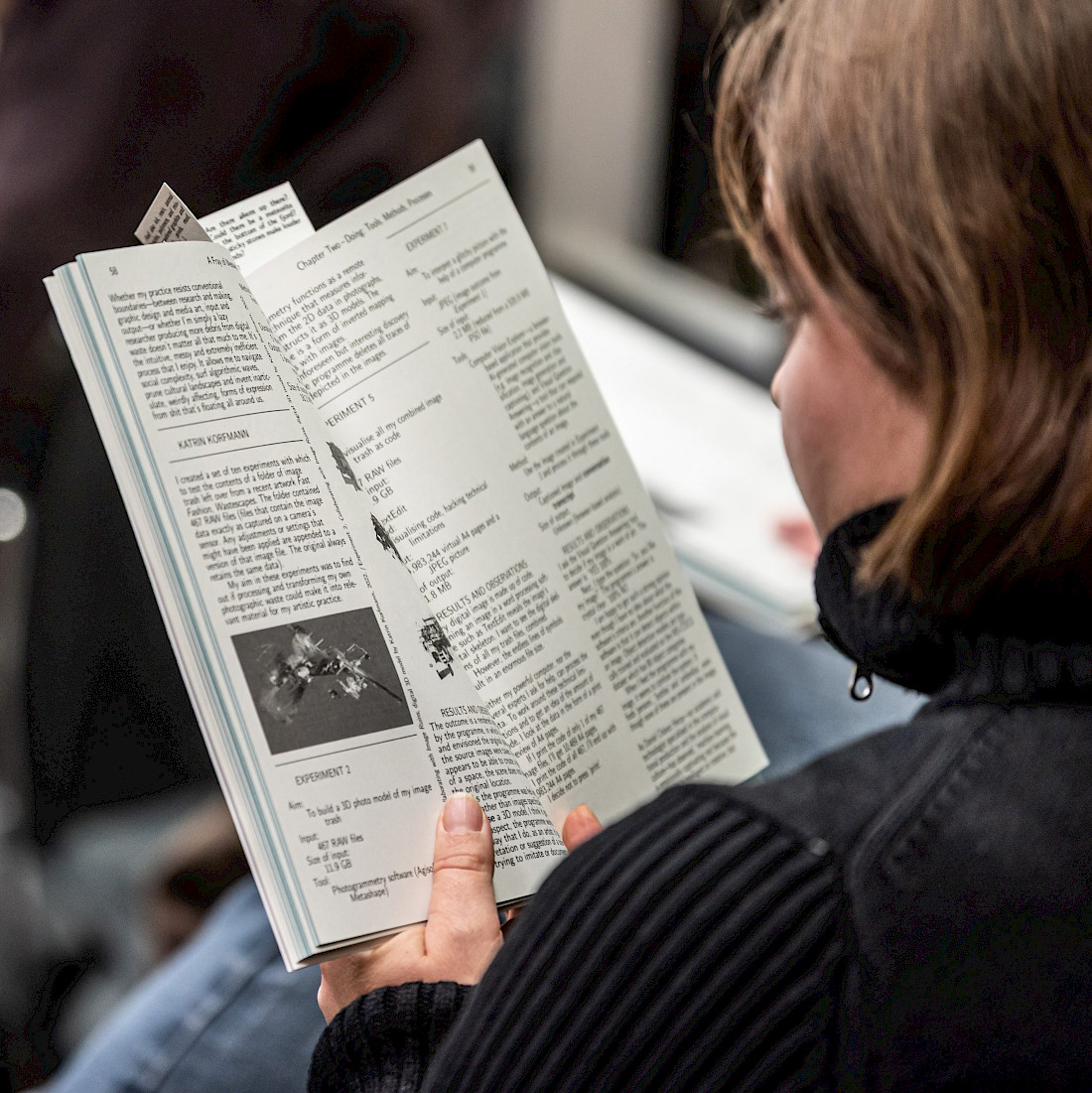
KABK tutors Jasper Coppes, Carl Johan Högberg, Katrin Korfmann, and Victoria Meniakina joined KABK Design lector Alice Twemlow for a public reading and conversation around their new book A Fray of Messays. They shared selected passages as well as insights into the collaborative process behind the publication. During this special launch, attendees received a free copy of the book — designed by Bart de Baets — accompanied by a limited-edition insert created for the occasion by KABK Graphic Design alumna Angèle Jaspers.
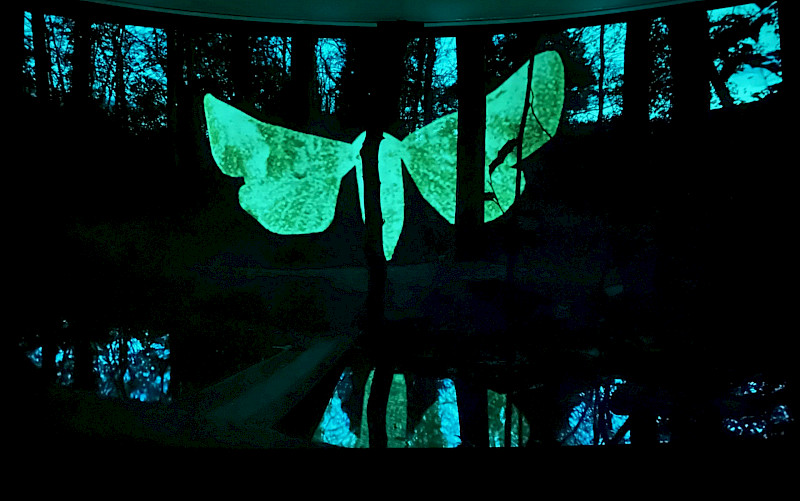
The presentation and discussion were complemented by a soundscape composed by sound practitioner Femke Dekker, drawing on sonic material from the research projects featured in the book. The evening concluded with a drinks reception.
Special Launch Event for A Fray of Messays: Unraveling Research Toward the Deep Future, presented by KABK Deep Futures Research Group
KABK tutors Jasper Coppes, Carl Johan Högberg, Katrin Korfmann, and Victoria Meniakina joined KABK Design lector Alice Twemlow for a public reading and conversation around their new book A Fray of Messays. They shared selected passages as well as insights into the collaborative process behind the publication. During this special launch, attendees received a free copy of the book — designed by Bart de Baets — accompanied by a limited-edition insert created for the occasion by KABK Graphic Design alumna Angèle Jaspers.
The presentation and discussion were complemented by a soundscape composed by sound practitioner Femke Dekker, drawing on sonic material from the research projects featured in the book. The evening concluded with a drinks reception.







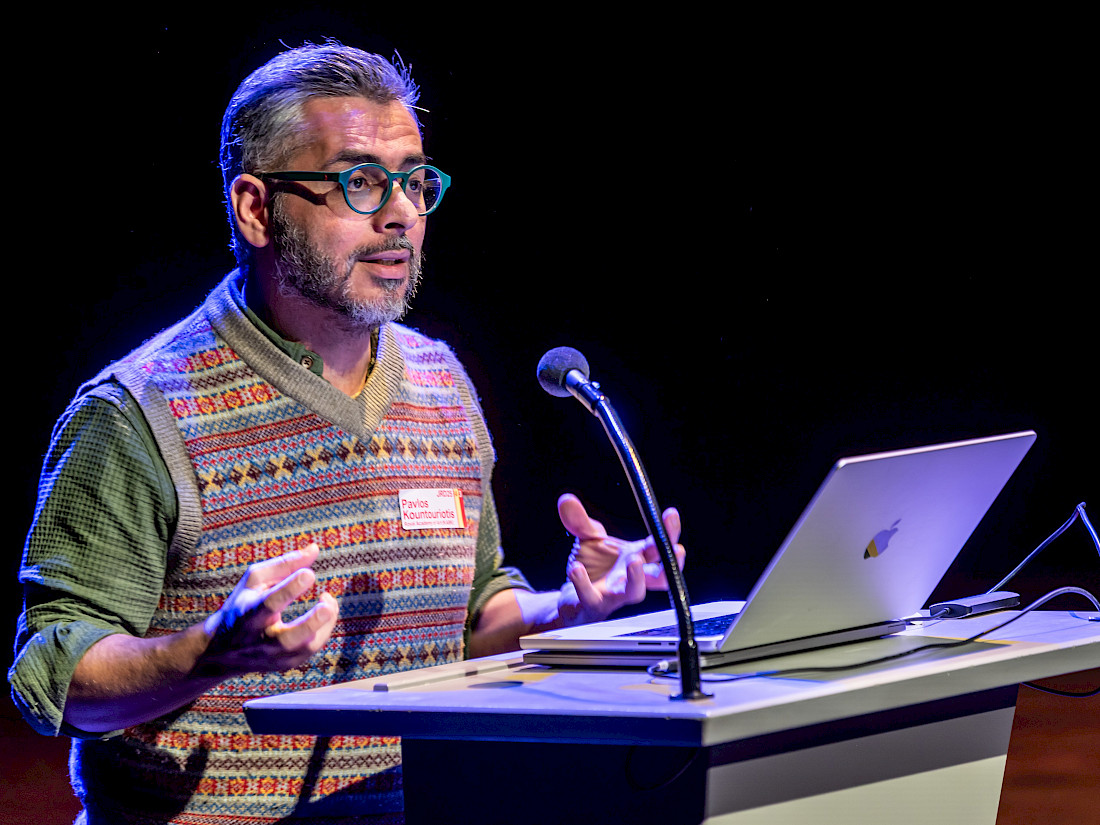
Notes on Practice-as-Research: Future Challenges and Haunted Pasts, by Pavlos Kountouriotis
The second day of JRD25 opened in the Conservatoire Hall with Pavlos Kountouriotis’ lecture Notes on Practice-as-Research: Future Challenges and Haunted Pasts. Pavlos described practice-as-research as something that begins in address: when thought turns outward and enters into exchange. He spoke about how this way of working develops through encounters and is sustained by the movement of ideas as they circulate, shift, and return in transformed ways.
He invited the audience to consider practice-as-research as a mode that depends on contribution, shared rhythms, and the continuity between practices. His presentation set the tone for the day, emphasising relation, responsiveness, and the unfolding of research through ongoing dialogue.
Notes on Practice-as-Research: Future Challenges and Haunted Pasts, by Pavlos Kountouriotis
The second day of JRD25 opened in the Conservatoire Hall with Pavlos Kountouriotis’ lecture Notes on Practice-as-Research: Future Challenges and Haunted Pasts. Pavlos described practice-as-research as something that begins in address: when thought turns outward and enters into exchange. He spoke about how this way of working develops through encounters and is sustained by the movement of ideas as they circulate, shift, and return in transformed ways.
He invited the audience to consider practice-as-research as a mode that depends on contribution, shared rhythms, and the continuity between practices. His presentation set the tone for the day, emphasising relation, responsiveness, and the unfolding of research through ongoing dialogue.

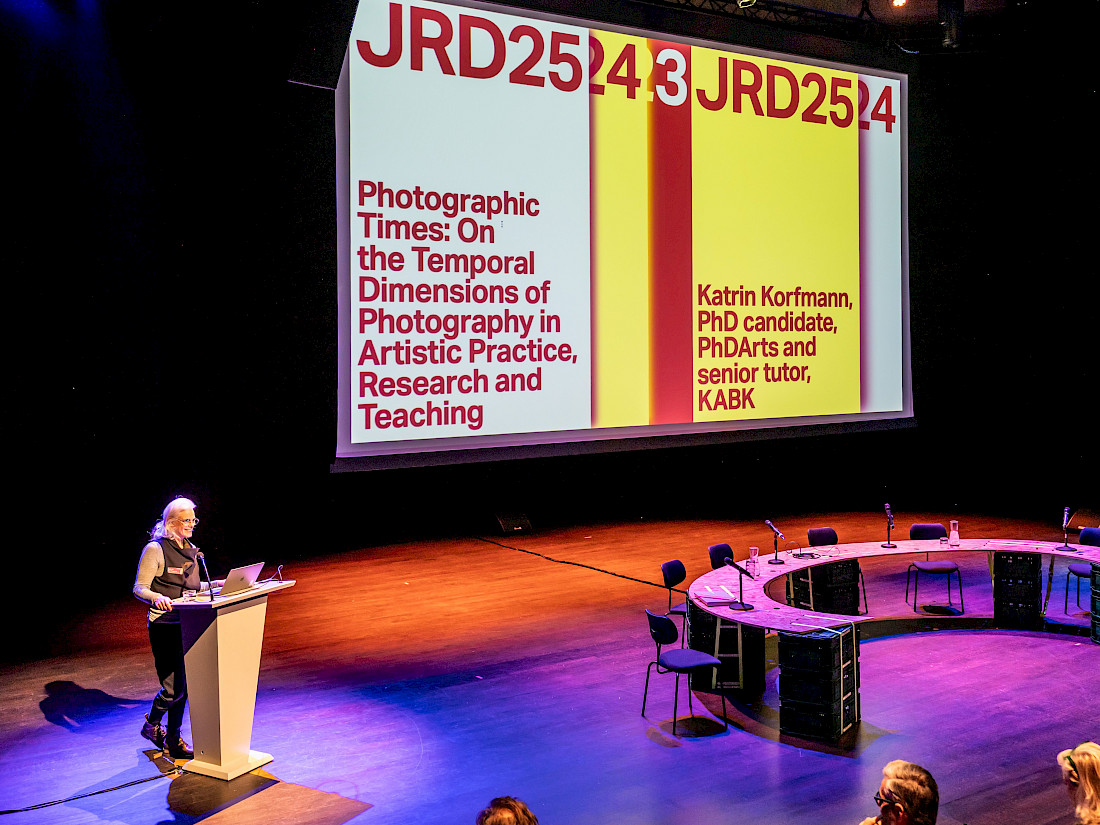
Photographic Times: On the Temporal Dimensions of Photography in Artistic Practice, Research and Teaching, by Katrin Korfmann
Katrin Korfmann shared reflections on the relationship between her artistic practice, research, and teaching, offering insight into what it means to prepare for a PhD in and through art and design. Drawing from her photographic practice and her experience as a tutor, she discussed how her research explores the ways photographic technologies not only represent time but also shape and produce it—particularly in an era of virtual environments, machine learning, and AI.
Her session offered students and colleagues a grounded and generous look into how research can grow from, and feed back into, both artistic work and educational practice.
Photographic Times: On the Temporal Dimensions of Photography in Artistic Practice, Research and Teaching, by Katrin Korfmann
Katrin Korfmann shared reflections on the relationship between her artistic practice, research, and teaching, offering insight into what it means to prepare for a PhD in and through art and design. Drawing from her photographic practice and her experience as a tutor, she discussed how her research explores the ways photographic technologies not only represent time but also shape and produce it—particularly in an era of virtual environments, machine learning, and AI.
Her session offered students and colleagues a grounded and generous look into how research can grow from, and feed back into, both artistic work and educational practice.

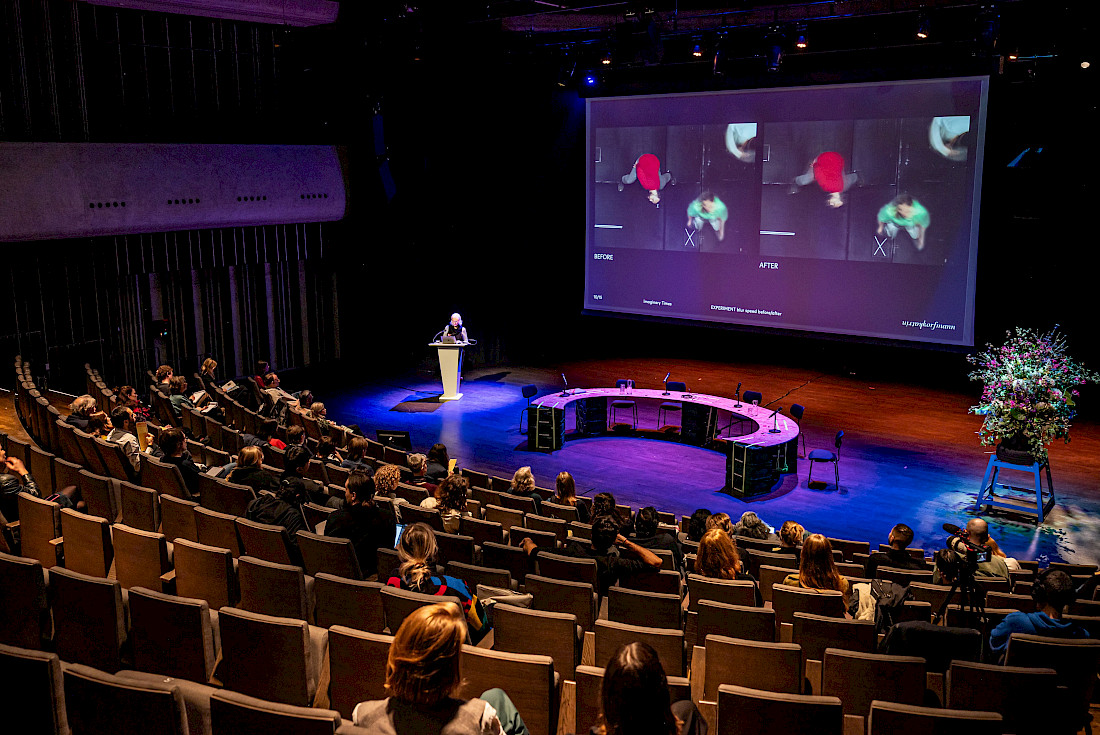
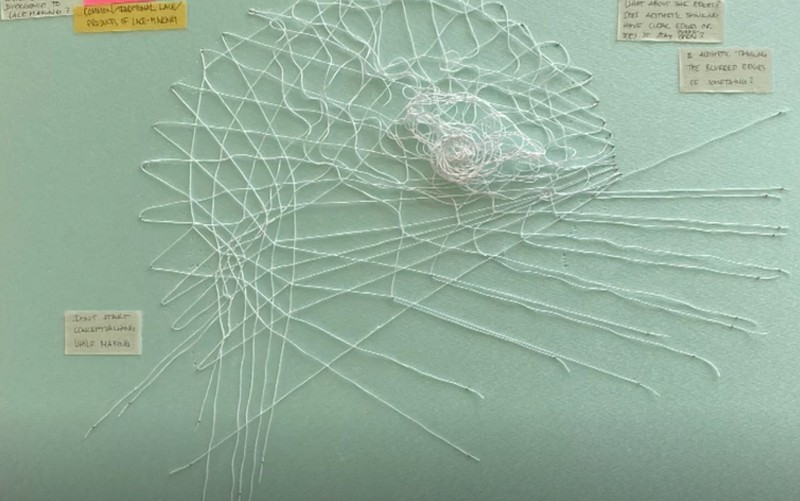
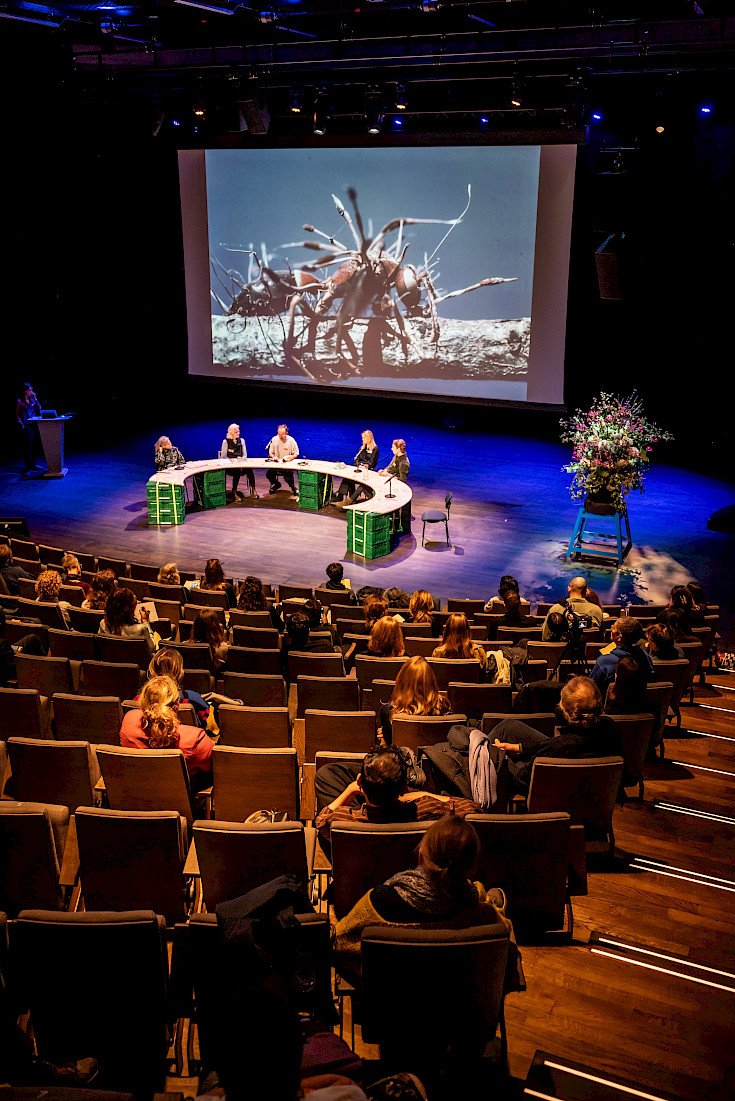
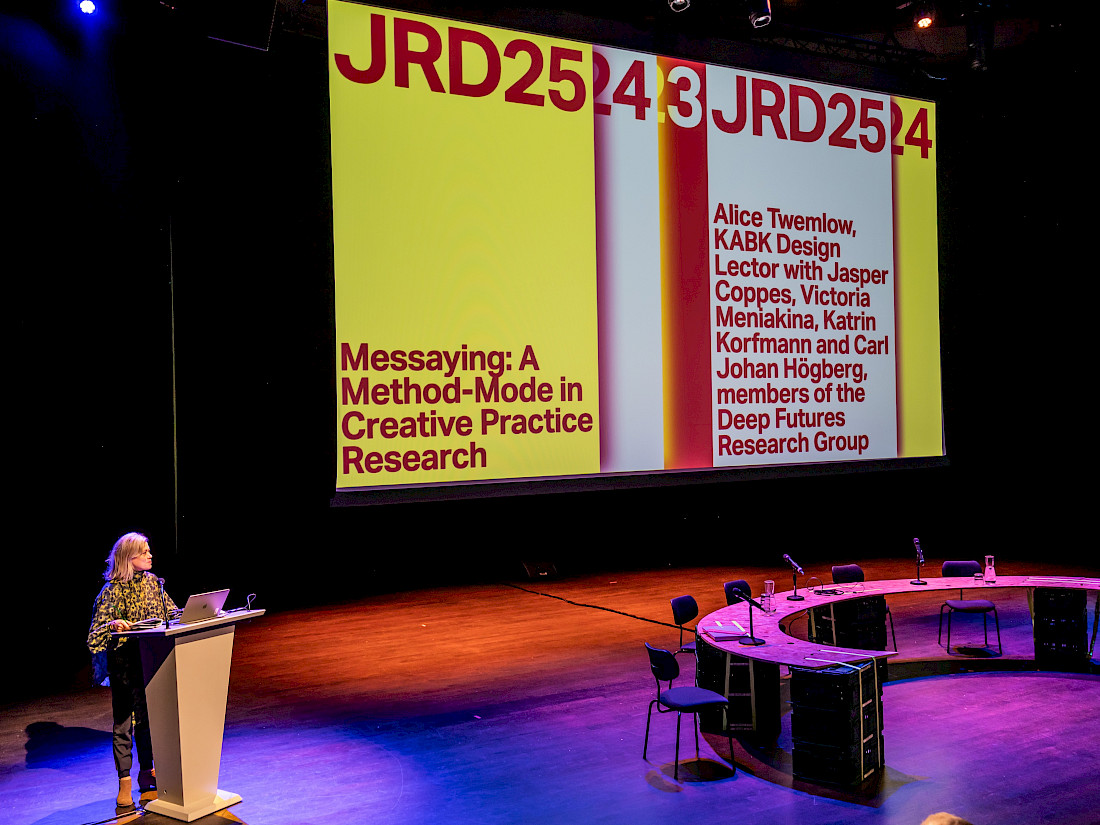
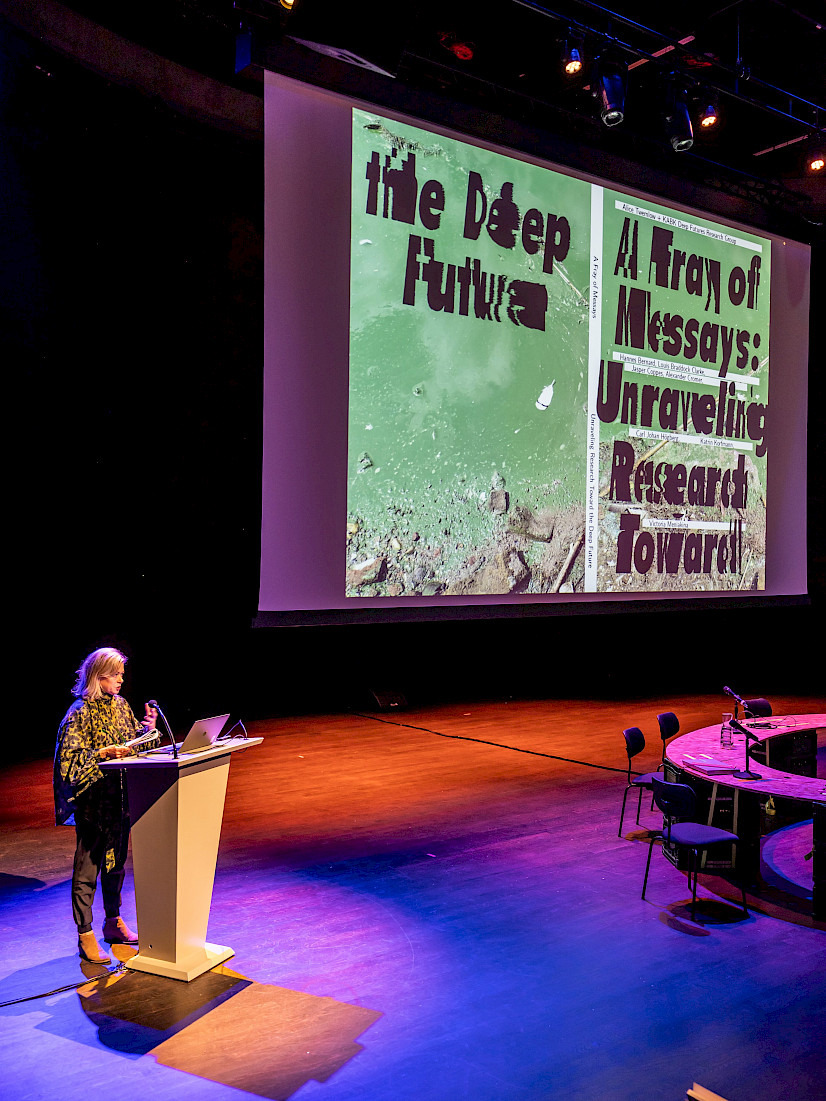
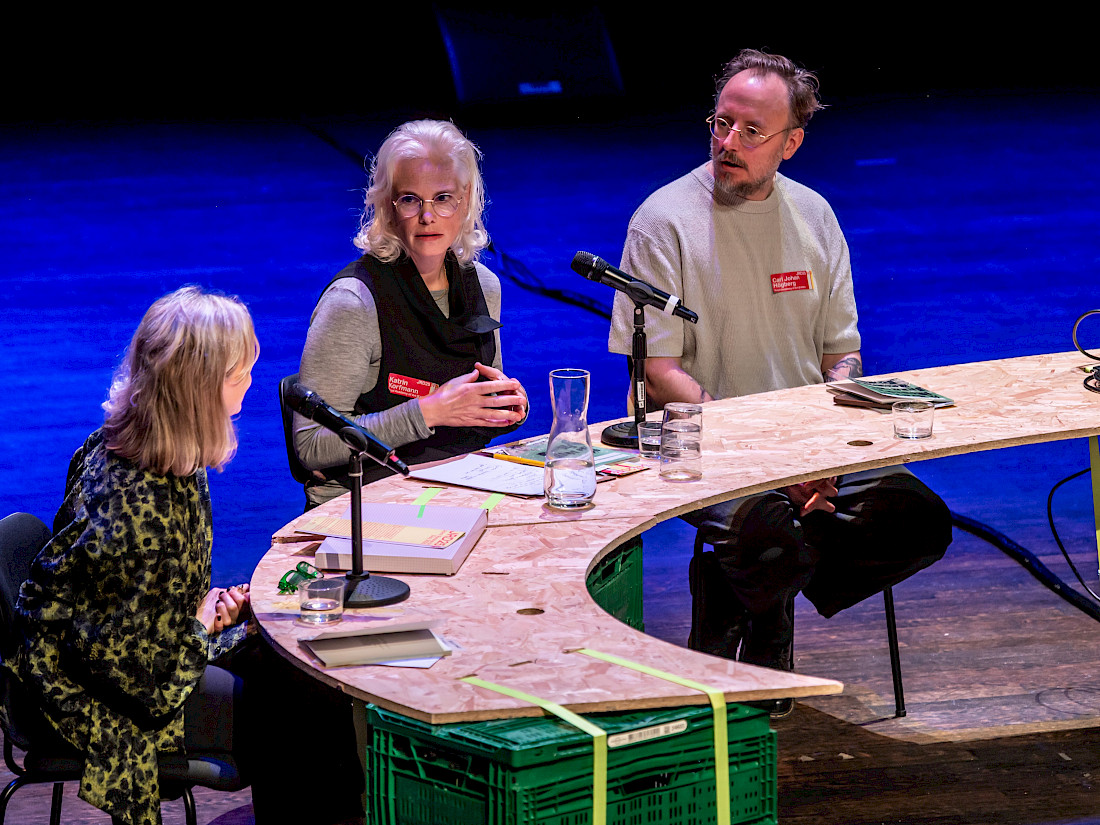
Messaying: A Method-Mode in Creative Practice Research, by KABK Deep Futures Research Group
In the late morning session, members of the Deep Futures Research Group — Jasper Coppes, Victoria Meniakina, Katrin Korfmann, Carl Johan Högberg, and Alice Twemlow — reflected on messaying as a method-mode in creative practice research. Building on several years of shared inquiry within the group, they introduced their newly published book A Fray of Messays: Unraveling Research Toward the Deep Future, which brings together diverse artistic research practices across performance, filmmaking, photography, interactive media, fine art, architecture, and sound.
The group spoke about how the book gathers traces of their individual research processes alongside moments of collaborative reflection, brought together in the form of “messays”: experimental, provisional structures that combine making and essaying. By remaining intentionally open-ended and unfinished, these messays create space for multiple perspectives and invite readers into an ongoing process of thinking-with and making-with.
The session offered insight into how collective research can take shape over time, and how documentation itself can become an active, generative part of artistic inquiry.
Messaying: A Method-Mode in Creative Practice Research, by KABK Deep Futures Research Group
In the late morning session, members of the Deep Futures Research Group — Jasper Coppes, Victoria Meniakina, Katrin Korfmann, Carl Johan Högberg, and Alice Twemlow — reflected on messaying as a method-mode in creative practice research. Building on several years of shared inquiry within the group, they introduced their newly published book A Fray of Messays: Unraveling Research Toward the Deep Future, which brings together diverse artistic research practices across performance, filmmaking, photography, interactive media, fine art, architecture, and sound.
The group spoke about how the book gathers traces of their individual research processes alongside moments of collaborative reflection, brought together in the form of “messays”: experimental, provisional structures that combine making and essaying. By remaining intentionally open-ended and unfinished, these messays create space for multiple perspectives and invite readers into an ongoing process of thinking-with and making-with.
The session offered insight into how collective research can take shape over time, and how documentation itself can become an active, generative part of artistic inquiry.




Practical Proposals of What-Might-Be, by TogetherTogether
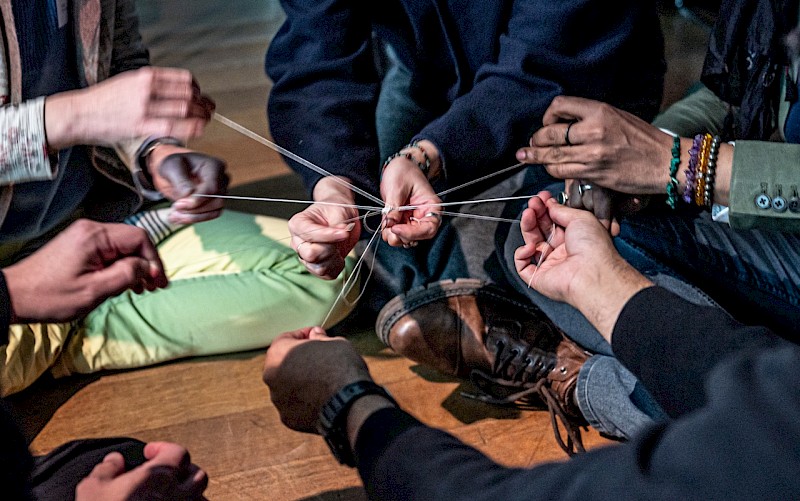
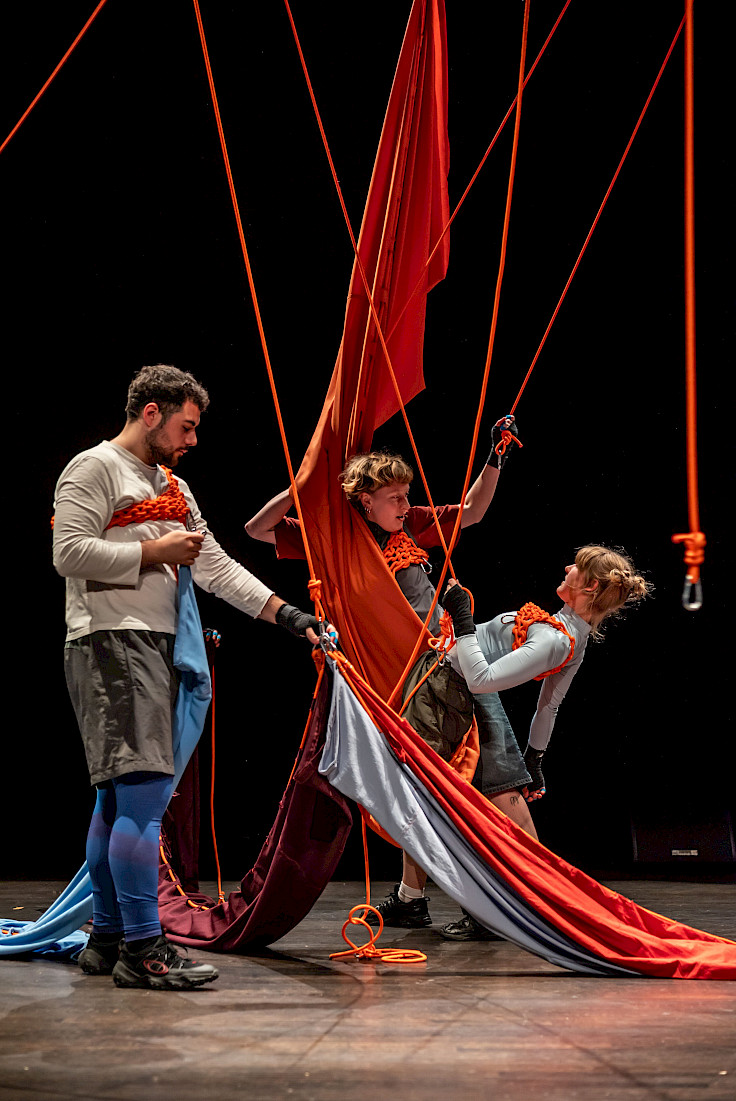
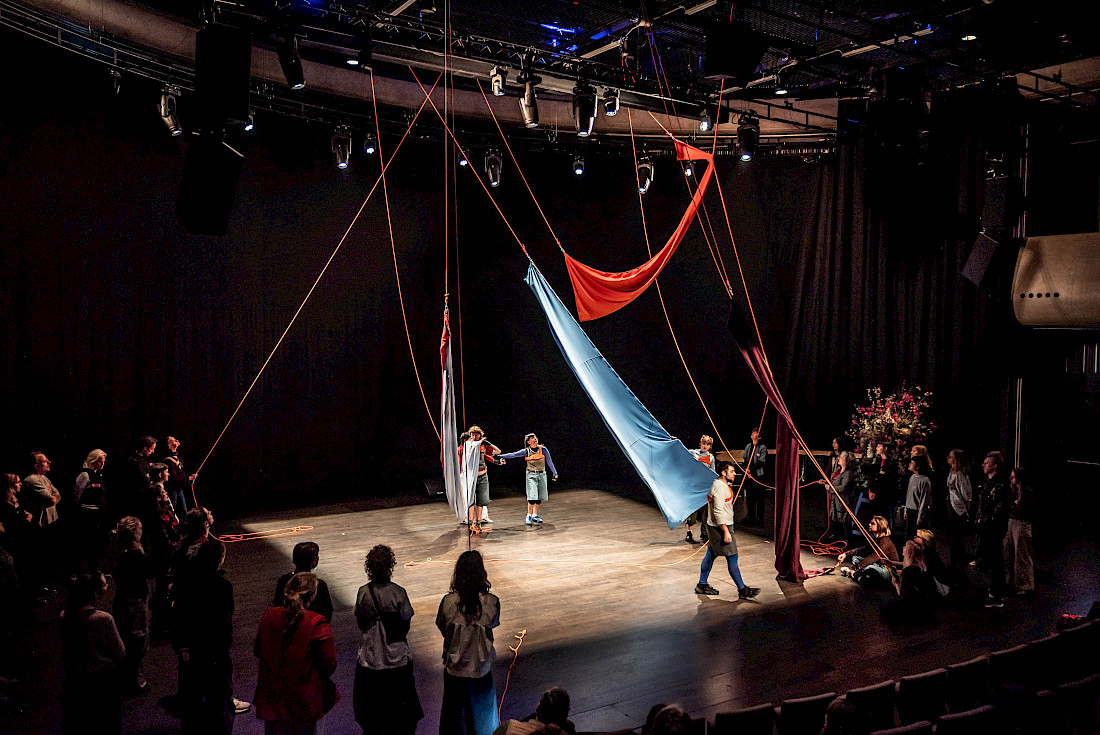
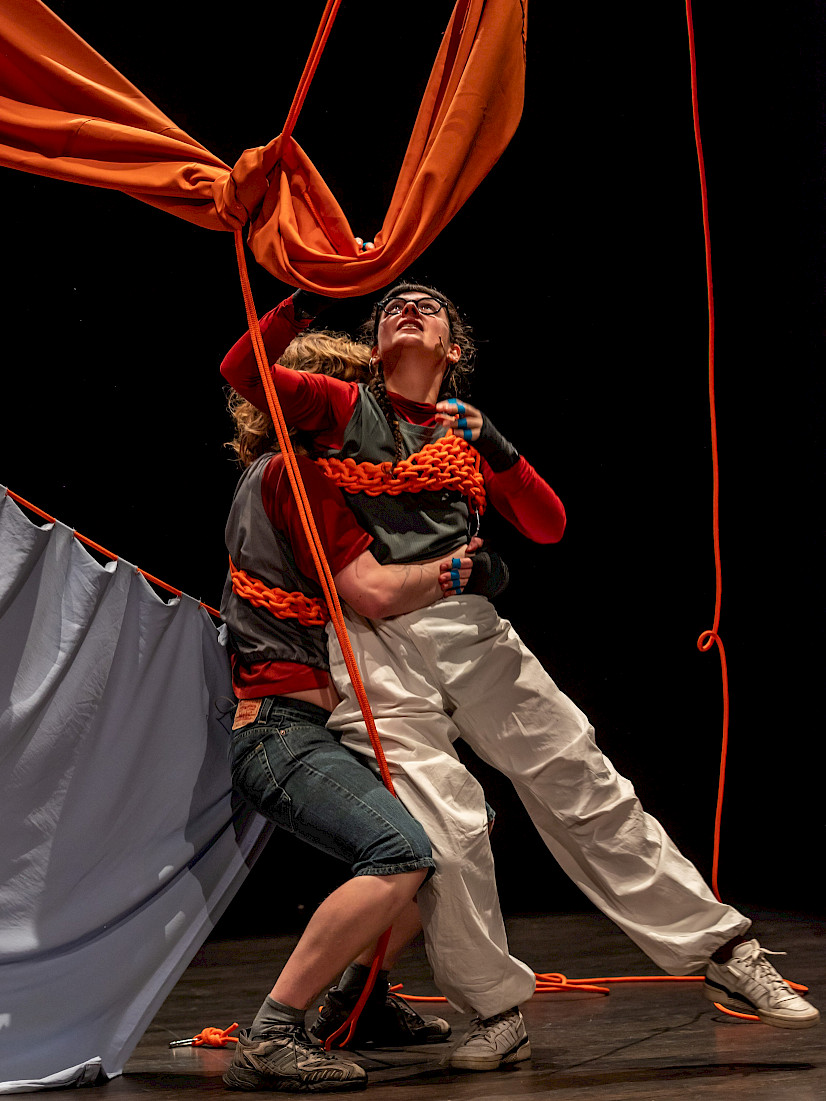
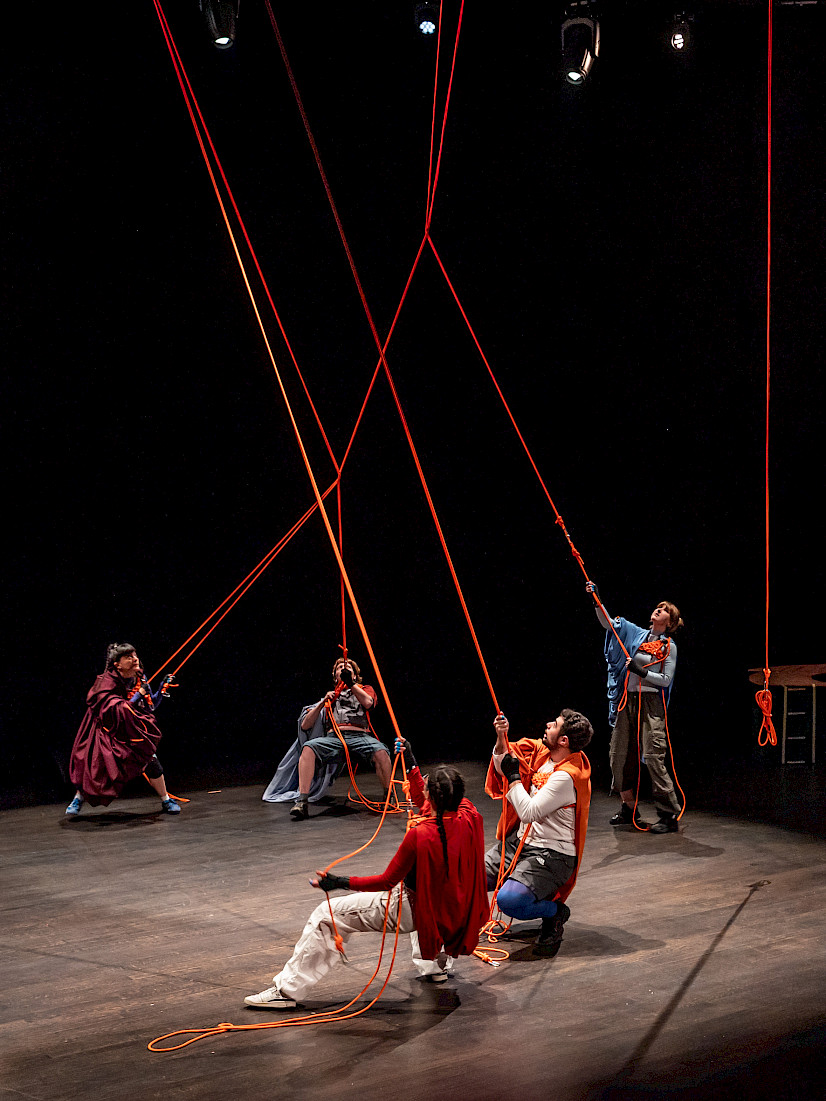
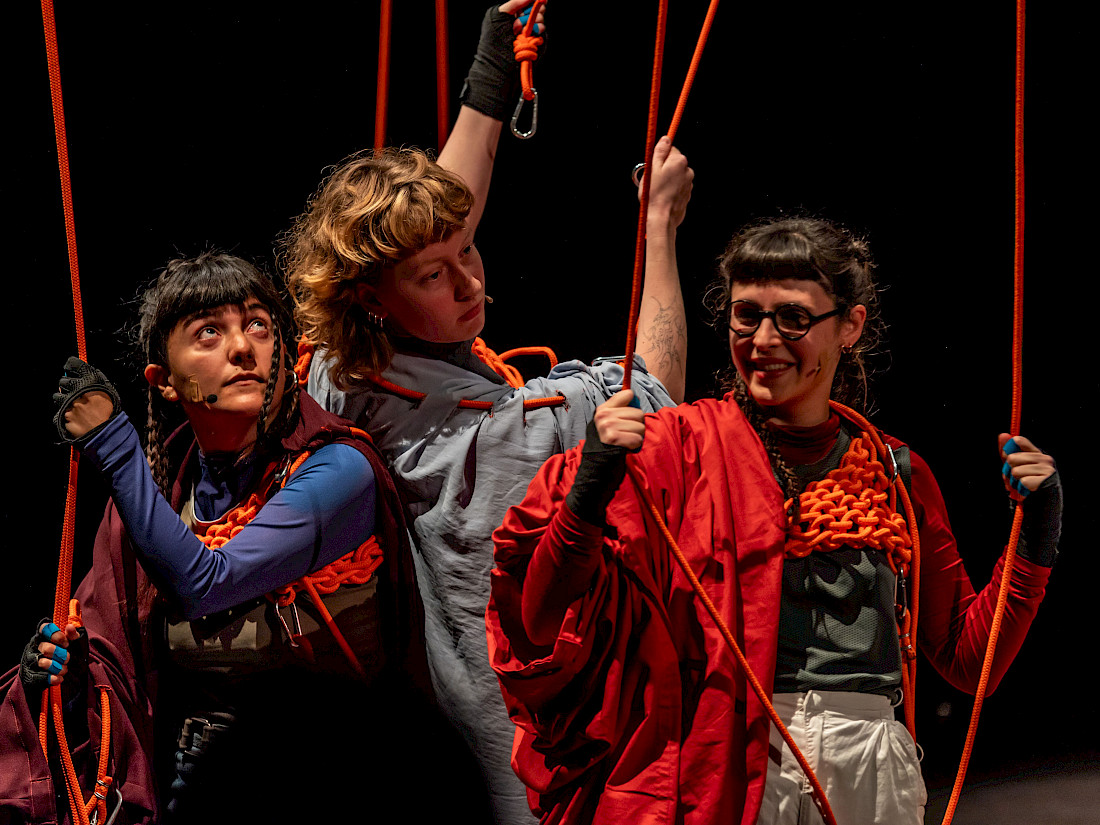
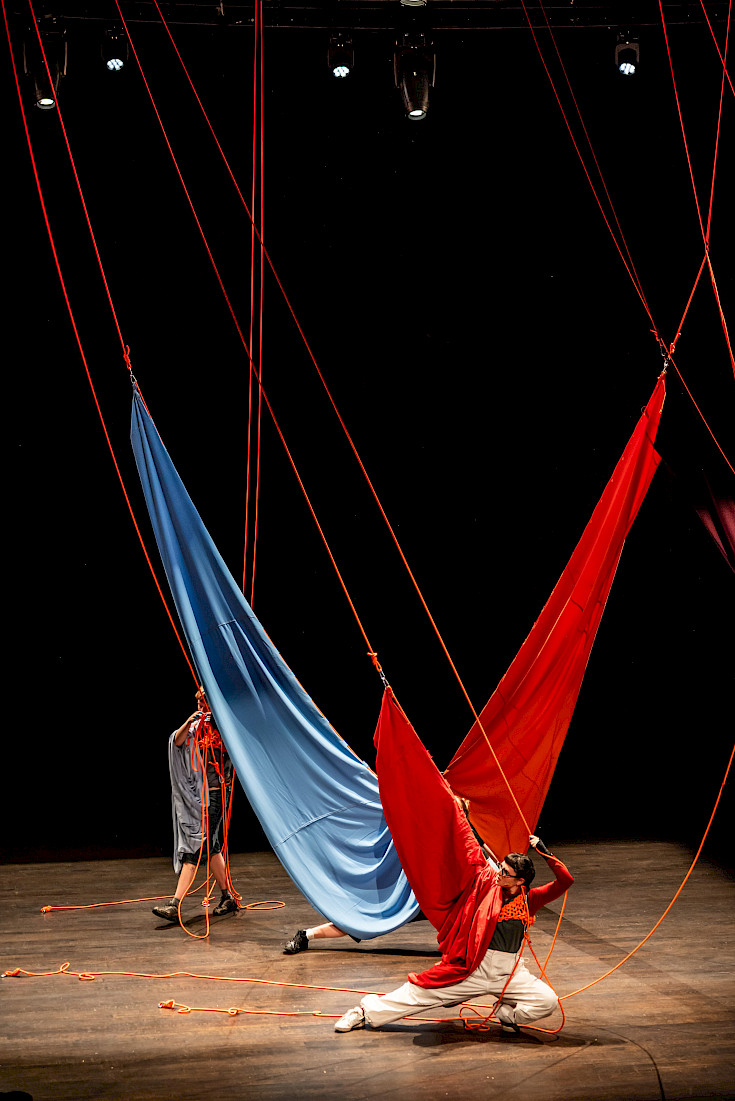
At the end of the morning, TogetherTogether presented a new iteration of their graduation project: a live, site-responsive performance shaped for the Conservatory Hall and activated in direct relation with the audience. Emerging from co-creation, collective storytelling and space-making, the performance explored the ongoing search for collectivity; its moments of joy, its tensions, and the delicate work of forming a ‘collective body’ while making intangible relations perceptible.
As a collective, TogetherTogether works through participatory and embodied methods that open space for counter-narratives and shared agency. Their practice consistently asks how we might resist the pressures of individualism and productivism by foregrounding co-creation, relationality, and learning with and through the body.
Their contribution offered both a question and a proposal: a temporary space in which agency could be reclaimed, futures imagined, and the fundamental “What if?” posed together with everyone present.
Practical Proposals of What-Might-Be, by TogetherTogether
At the end of the morning, TogetherTogether presented a new iteration of their graduation project: a live, site-responsive performance shaped for the Conservatory Hall and activated in direct relation with the audience. Emerging from co-creation, collective storytelling and space-making, the performance explored the ongoing search for collectivity; its moments of joy, its tensions, and the delicate work of forming a ‘collective body’ while making intangible relations perceptible.
As a collective, TogetherTogether works through participatory and embodied methods that open space for counter-narratives and shared agency. Their practice consistently asks how we might resist the pressures of individualism and productivism by foregrounding co-creation, relationality, and learning with and through the body.
Their contribution offered both a question and a proposal: a temporary space in which agency could be reclaimed, futures imagined, and the fundamental “What if?” posed together with everyone present.
On Collaboration in Creative Practice Research, Dicussion between TogetherTogether and Deep Futures Research Group
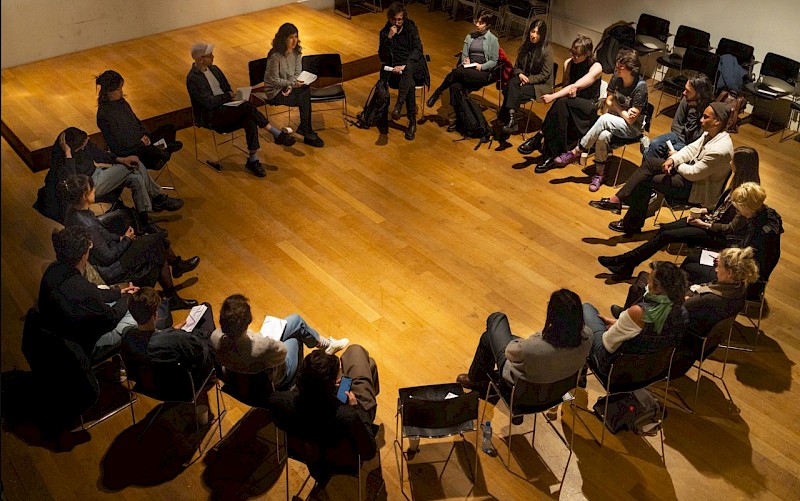
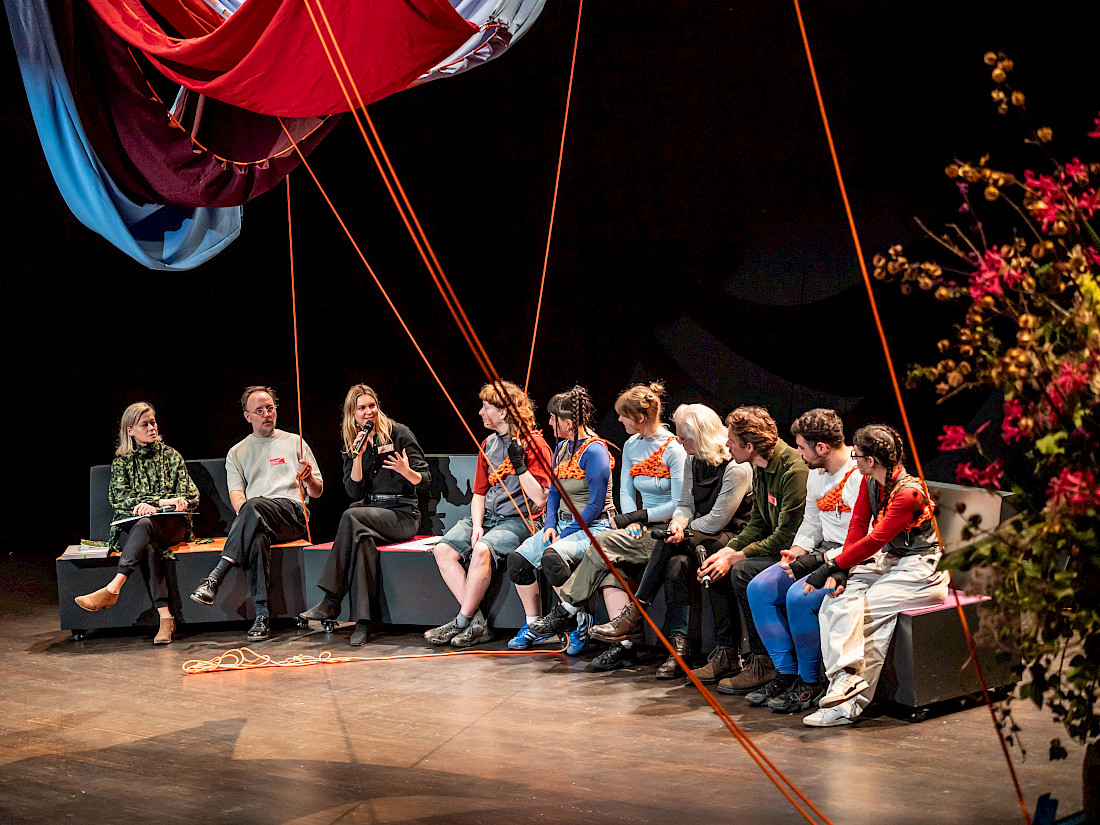
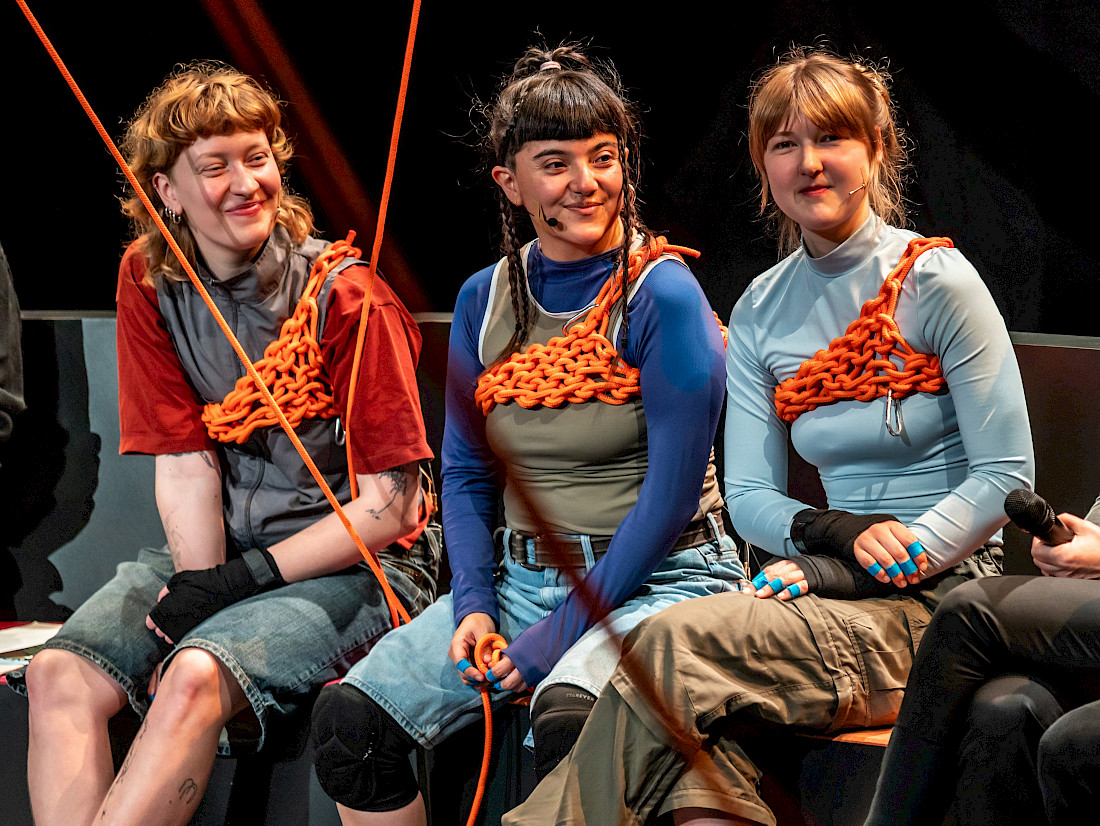
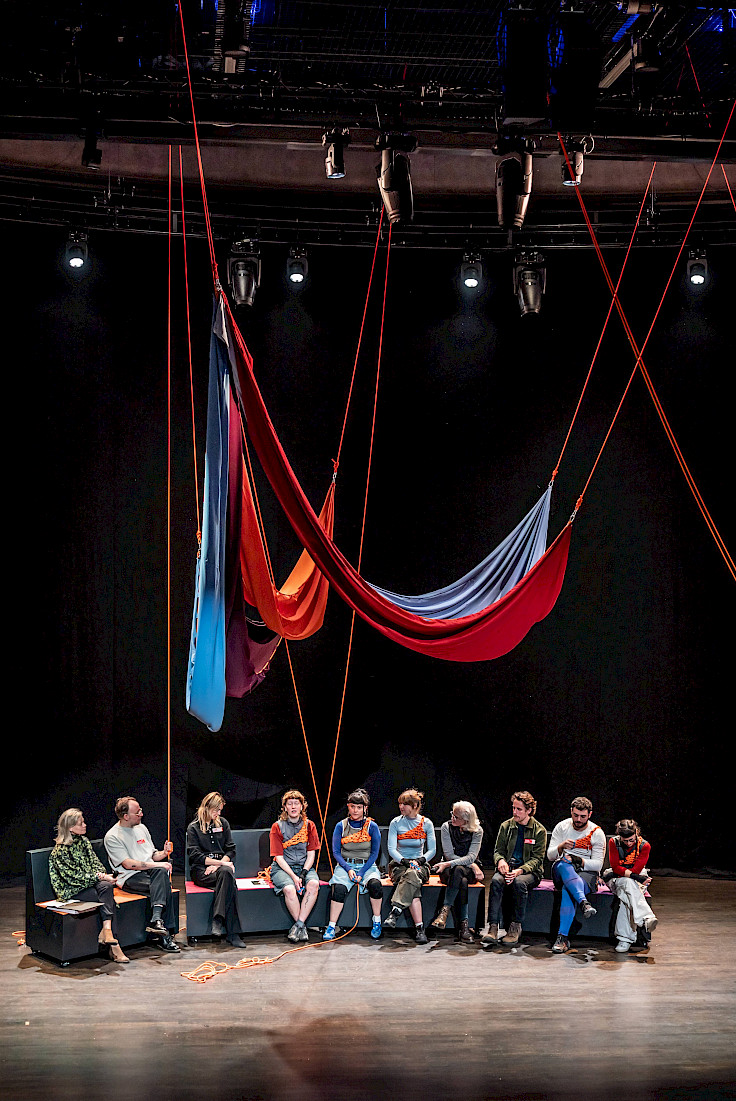
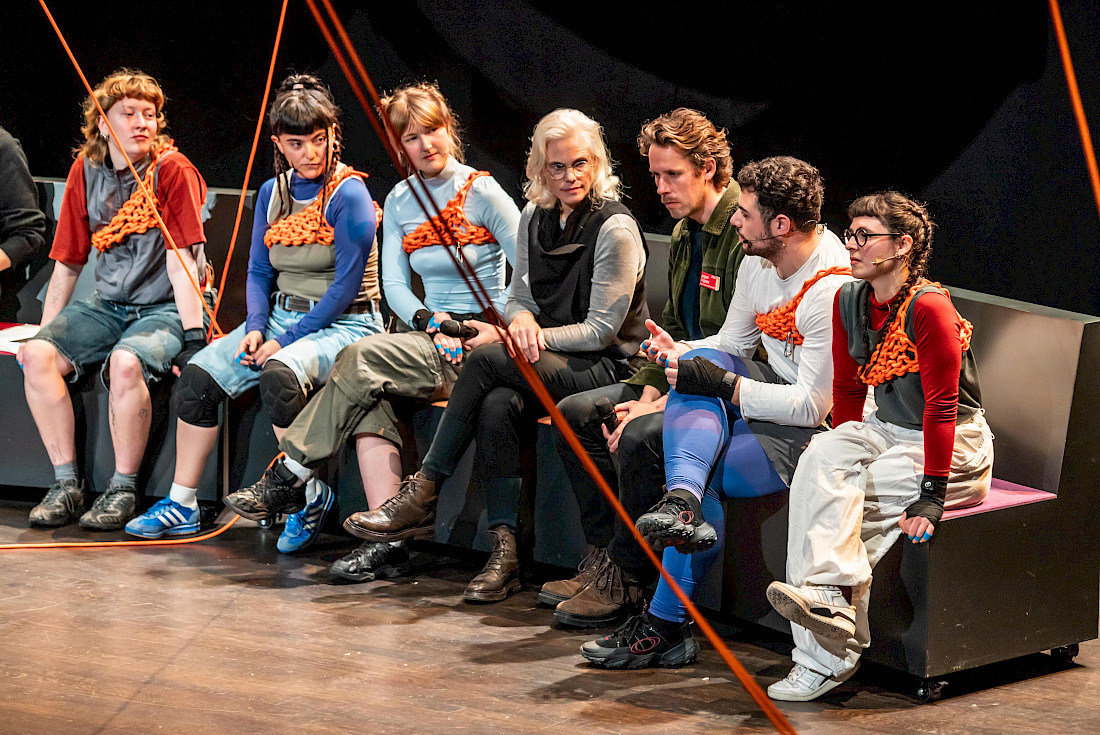
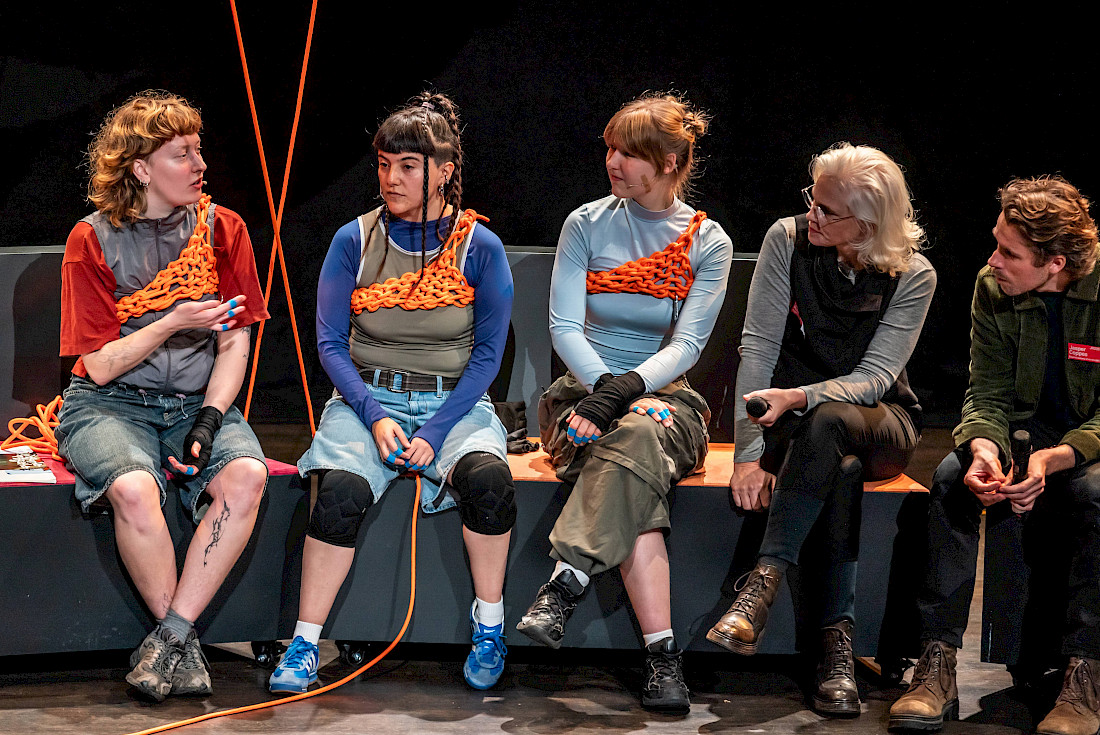
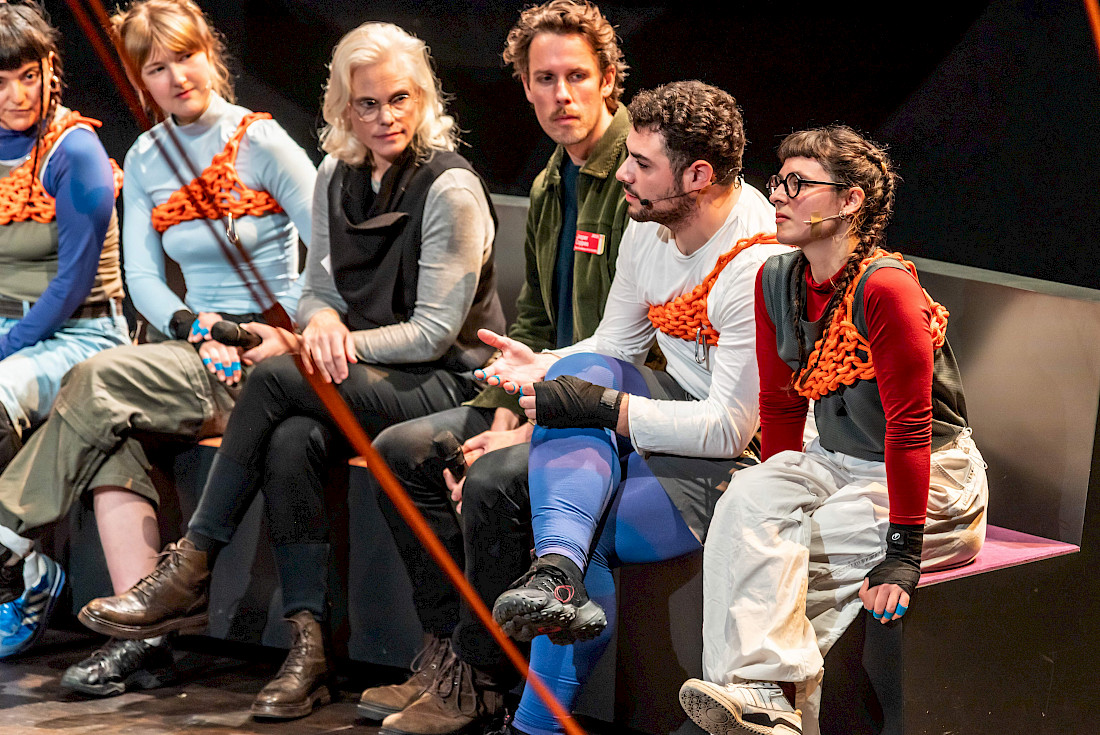
Following the performance, the Deep Futures Research Group and TogetherTogether came together for a conversation about the affinities between their research approaches. Reflecting on their respective practices, they discussed the value and the challenges of working collectively in creative practice research.
On Collaboration in Creative Practice Research, Dicussion between TogetherTogether and Deep Futures Research Group
Following the performance, the Deep Futures Research Group and TogetherTogether came together for a conversation about the affinities between their research approaches. Reflecting on their respective practices, they discussed the value and the challenges of working collectively in creative practice research.

ACPA in Motion, with Contributions from Siamak Anvari, Georgie Brinkman, Erik Viskil, and Jed Wentz
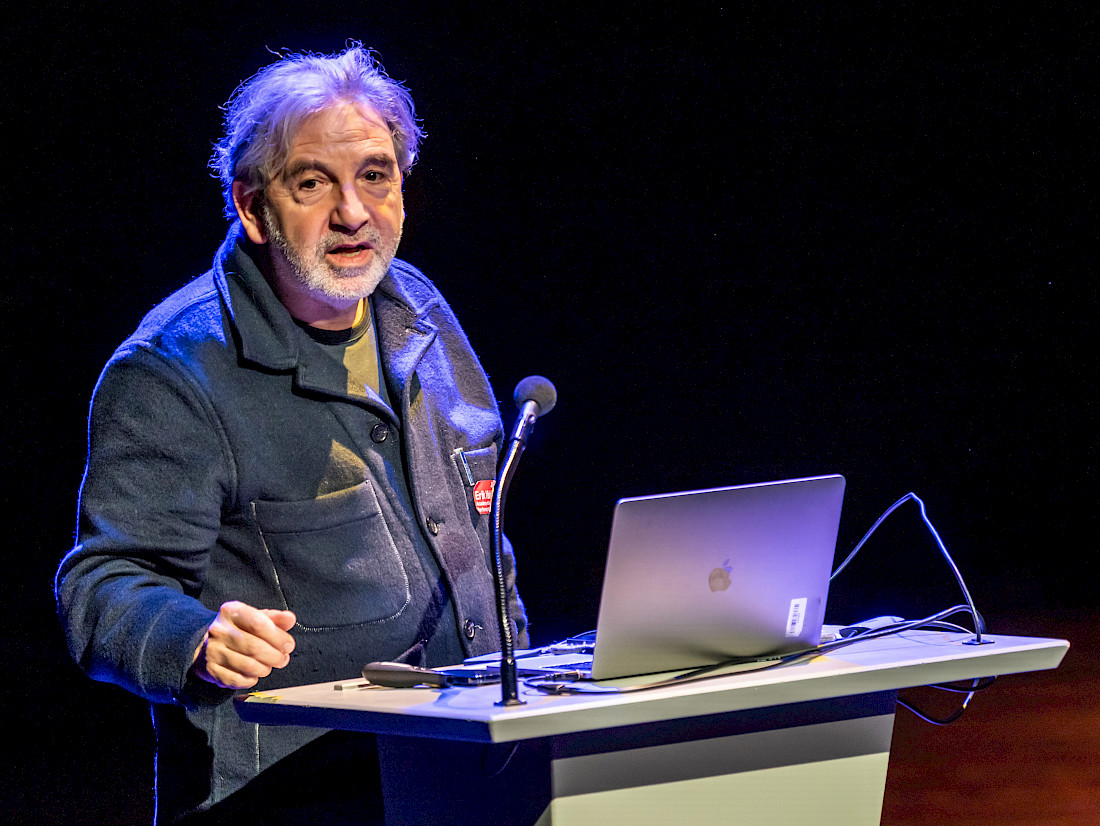
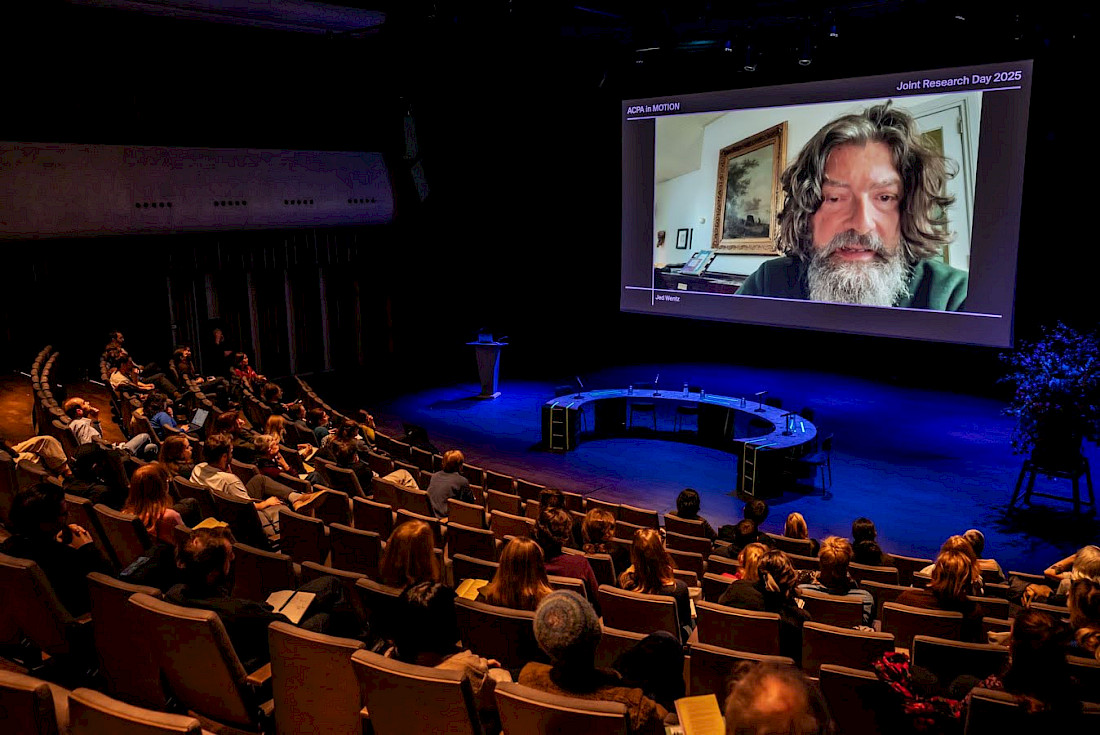
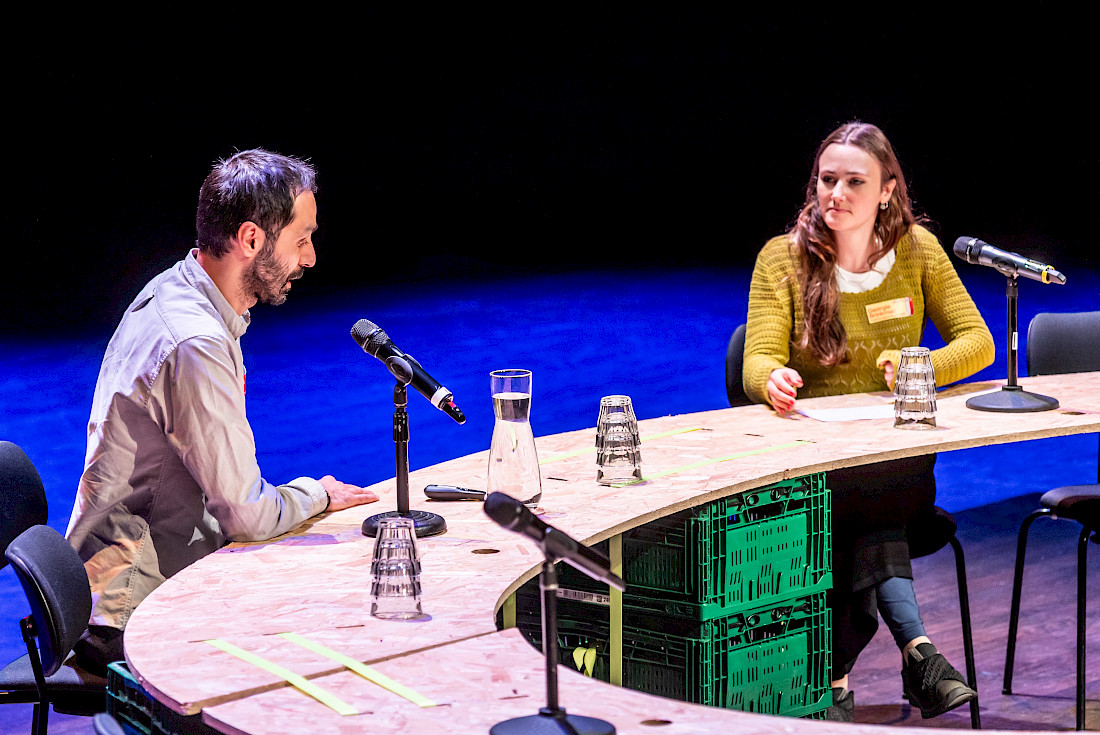
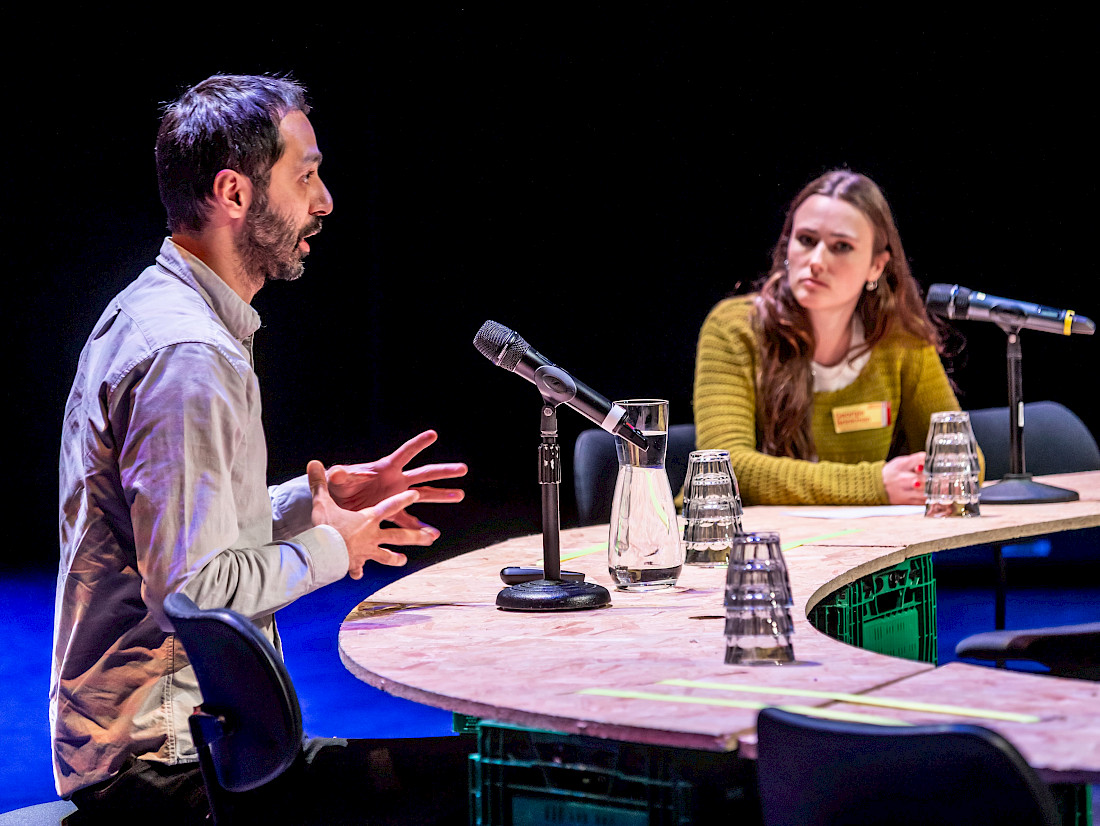
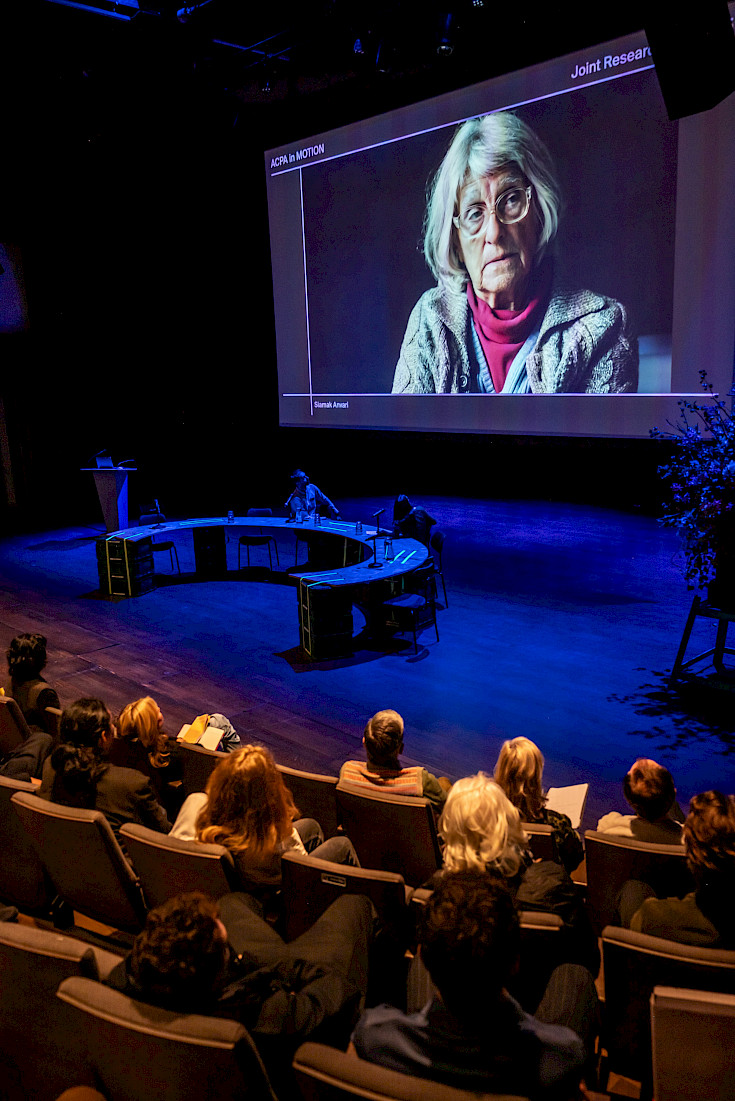
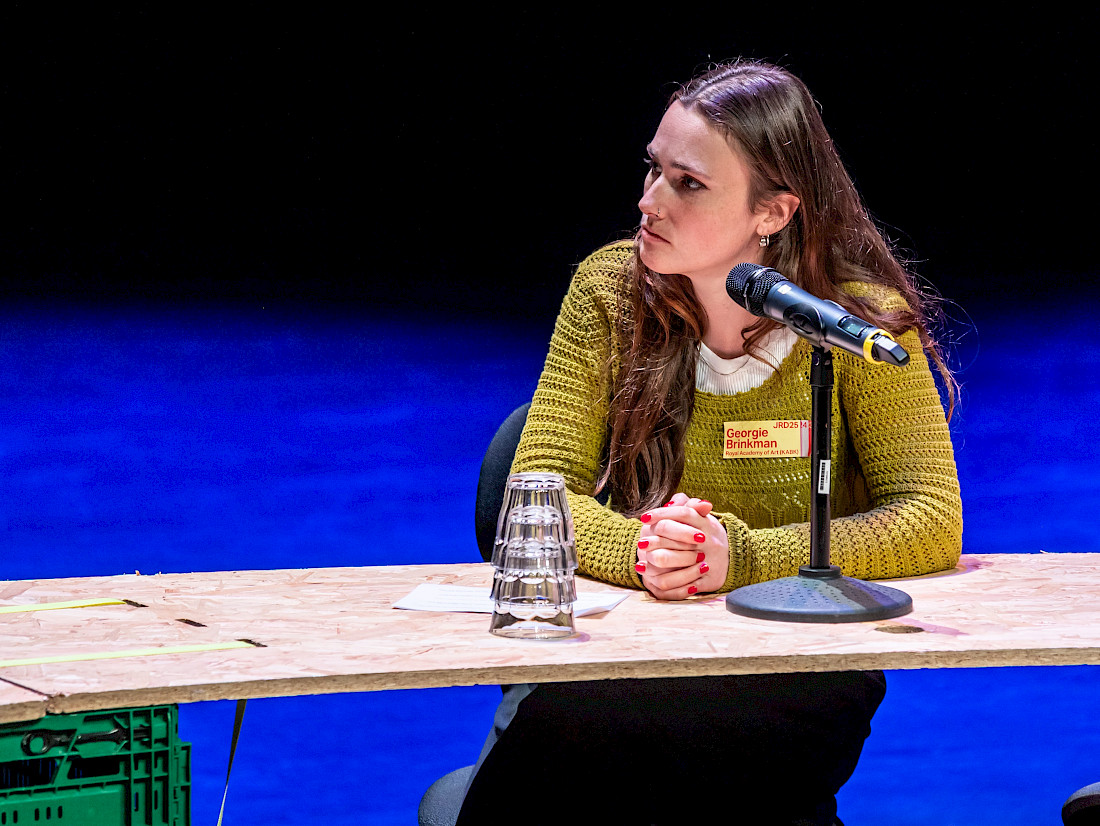
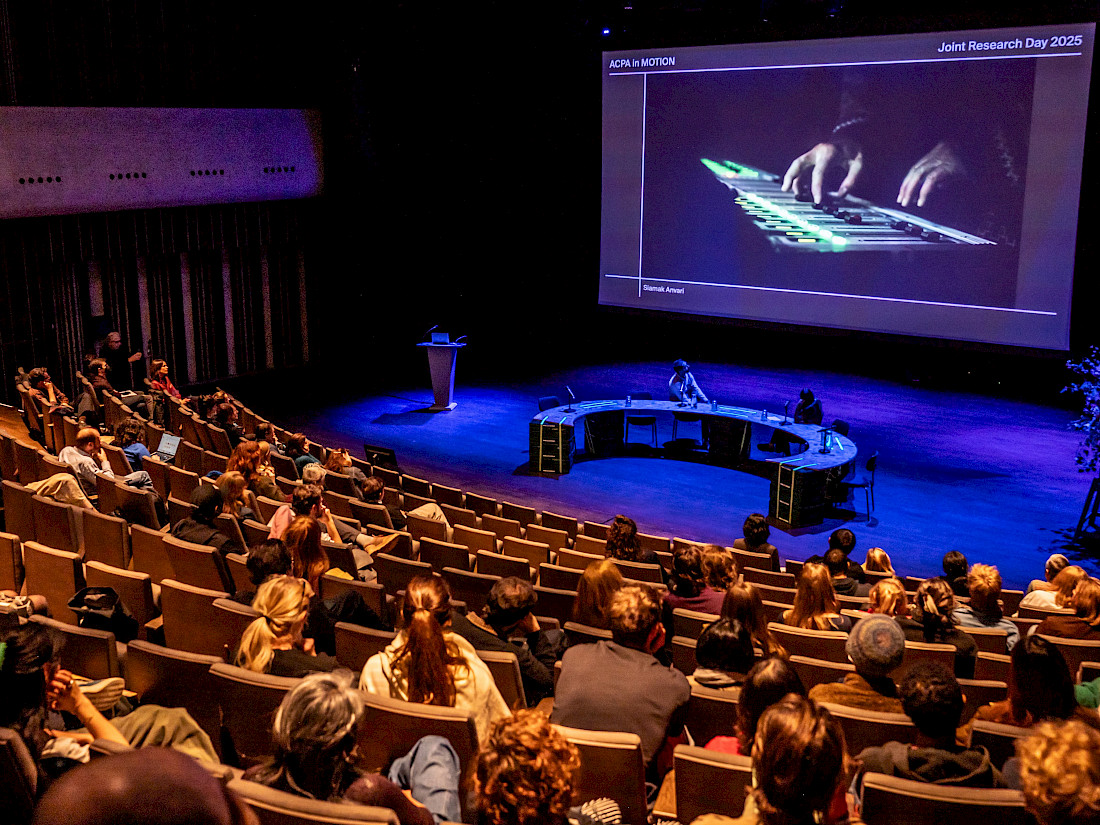
In this session, ACPA marked the lead-up to its 25th anniversary by offering insight into its past, present, and future. Academic director Erik Viskil reflected on the institute’s role in supporting research in and through the arts, and on the new agreements to be forged between the University of the Arts The Hague and Leiden University in the coming year. The audience then viewed a short video by Jed Wentz, introducing his research on historical theatre techniques and their relevance for film. The session concluded with filmmaker and coordinator Georgie Brinkman in conversation with PhD alumnus Siamak Anvari, who spoke about how film plays a role in his artistic research on music.
ACPA in Motion, with Contributions from Siamak Anvari, Georgie Brinkman, Erik Viskil, and Jed Wentz
In this session, ACPA marked the lead-up to its 25th anniversary by offering insight into its past, present, and future. Academic director Erik Viskil reflected on the institute’s role in supporting research in and through the arts, and on the new agreements to be forged between the University of the Arts The Hague and Leiden University in the coming year. The audience then viewed a short video by Jed Wentz, introducing his research on historical theatre techniques and their relevance for film. The session concluded with filmmaker and coordinator Georgie Brinkman in conversation with PhD alumnus Siamak Anvari, who spoke about how film plays a role in his artistic research on music.


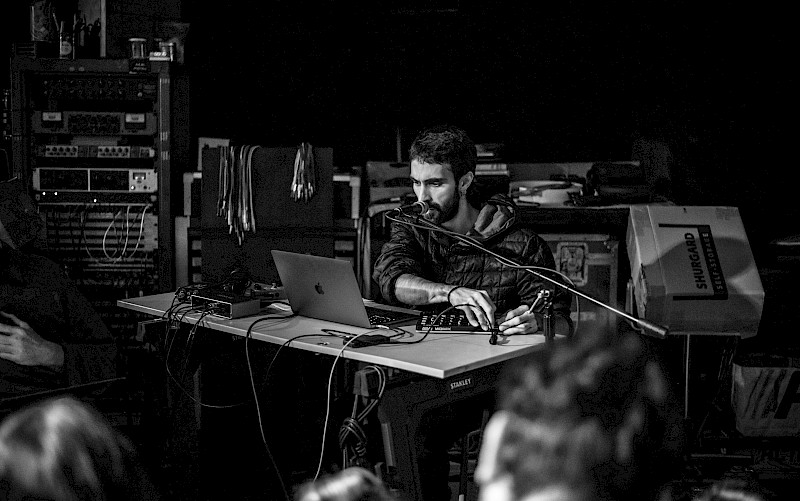
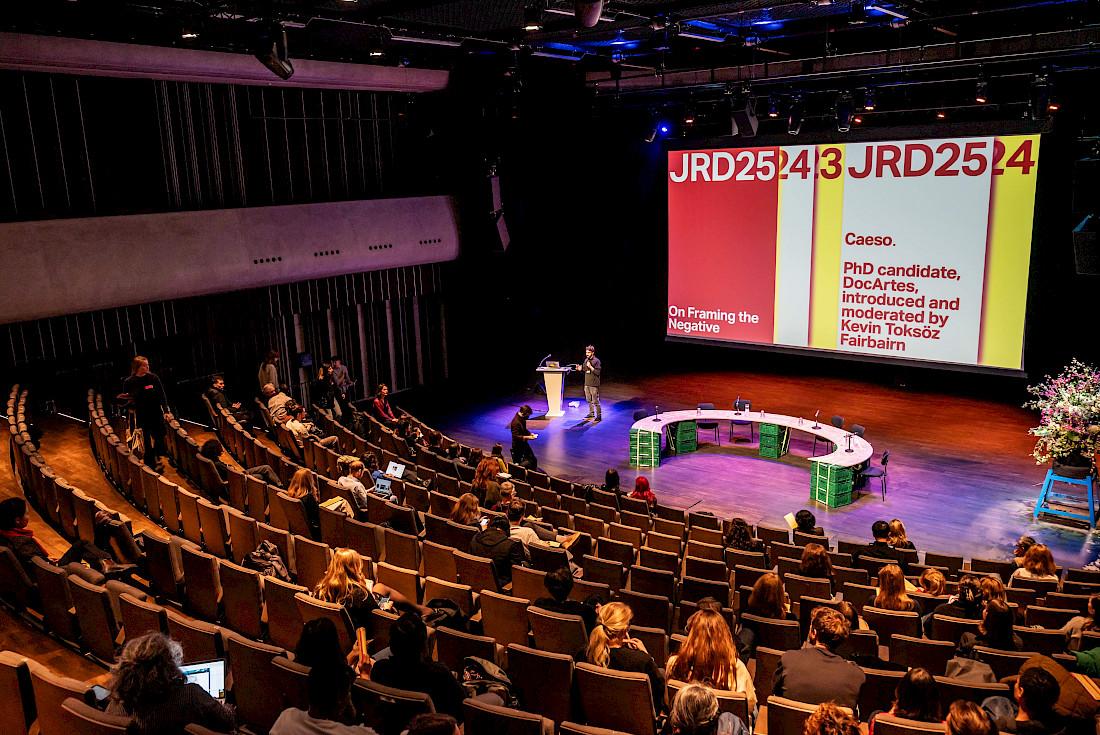
On Framing the Negative, by Caeso with Kevin Toksöz Fairbairn
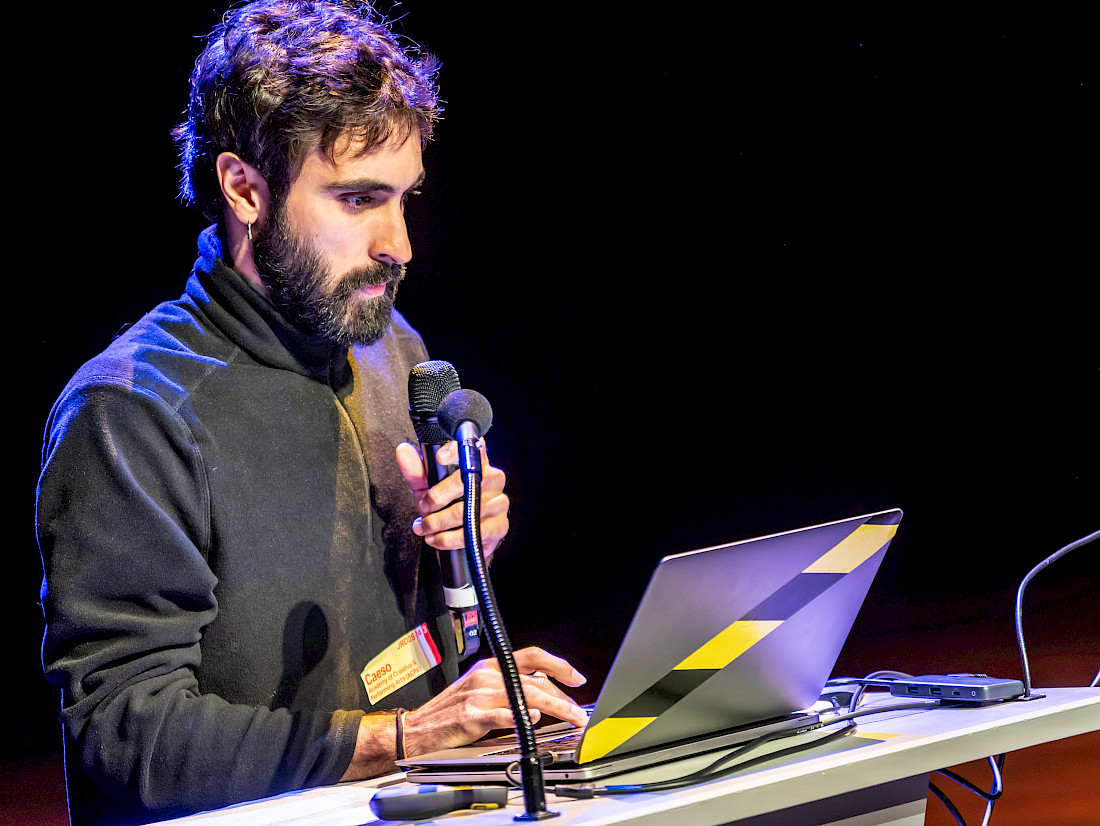
In this afternoon session, Caeso invited the audience into an experiment in listening. By presenting the same artwork with shifting amounts of contextual information, he opened a shared reflection on how framing shapes our perception: what becomes legible, what remains opaque, and how poetic possibilities emerge when context is withheld or reintroduced. With Kevin Toksöz Fairbairn facilitating the conversation, the session developed into a lively exchange about the challenges of presenting sound-based work that may not immediately reveal itself to a broader audience.
On Framing the Negative, by Caeso with Kevin Toksöz Fairbairn
In this afternoon session, Caeso invited the audience into an experiment in listening. By presenting the same artwork with shifting amounts of contextual information, he opened a shared reflection on how framing shapes our perception: what becomes legible, what remains opaque, and how poetic possibilities emerge when context is withheld or reintroduced. With Kevin Toksöz Fairbairn facilitating the conversation, the session developed into a lively exchange about the challenges of presenting sound-based work that may not immediately reveal itself to a broader audience.

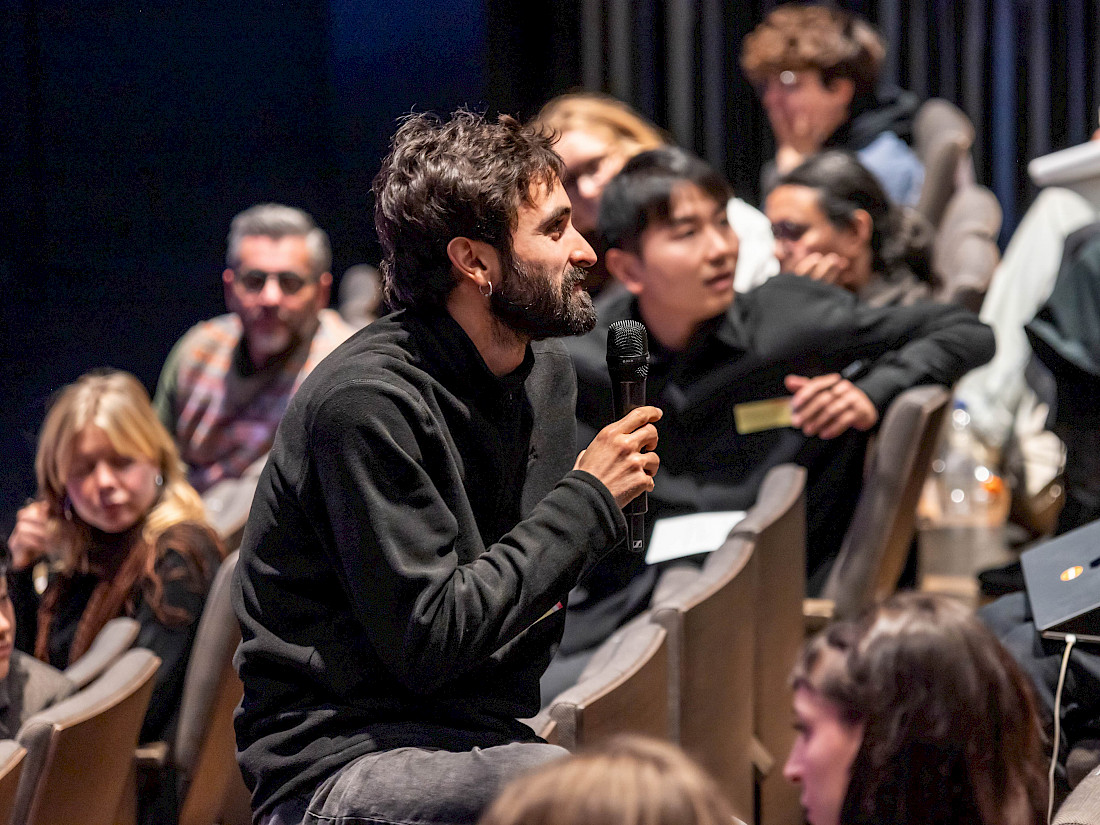
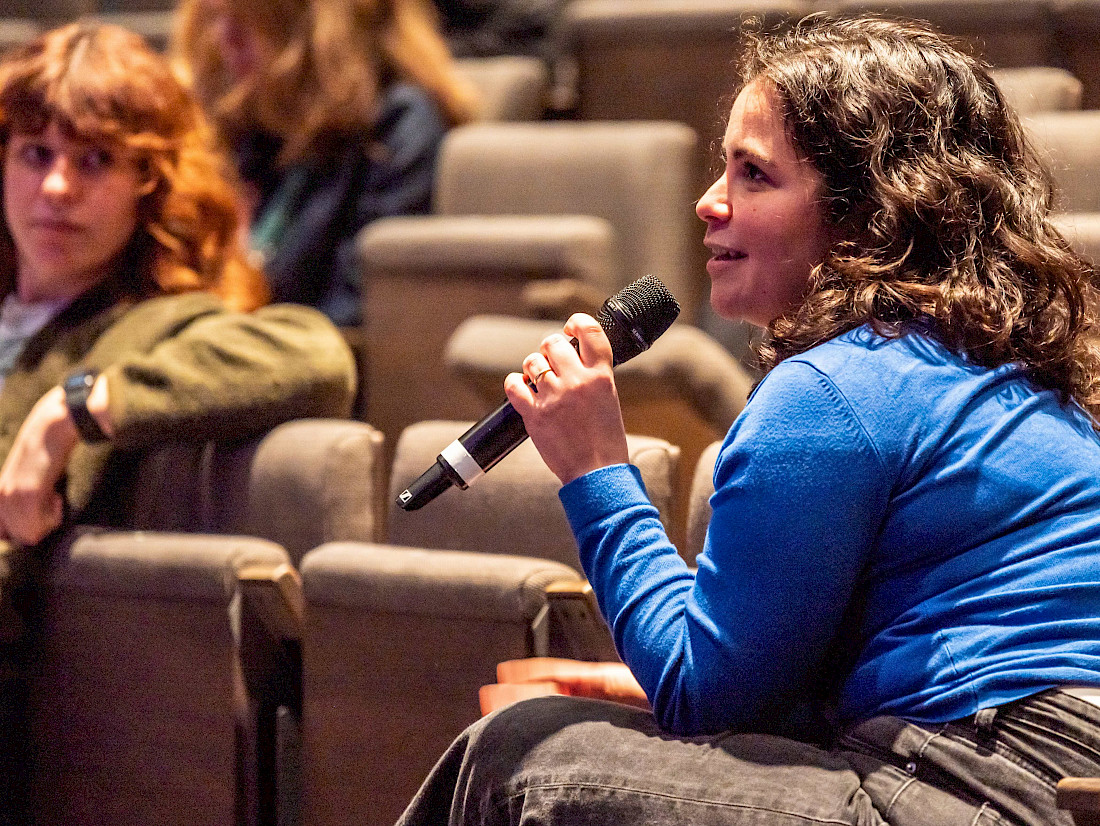
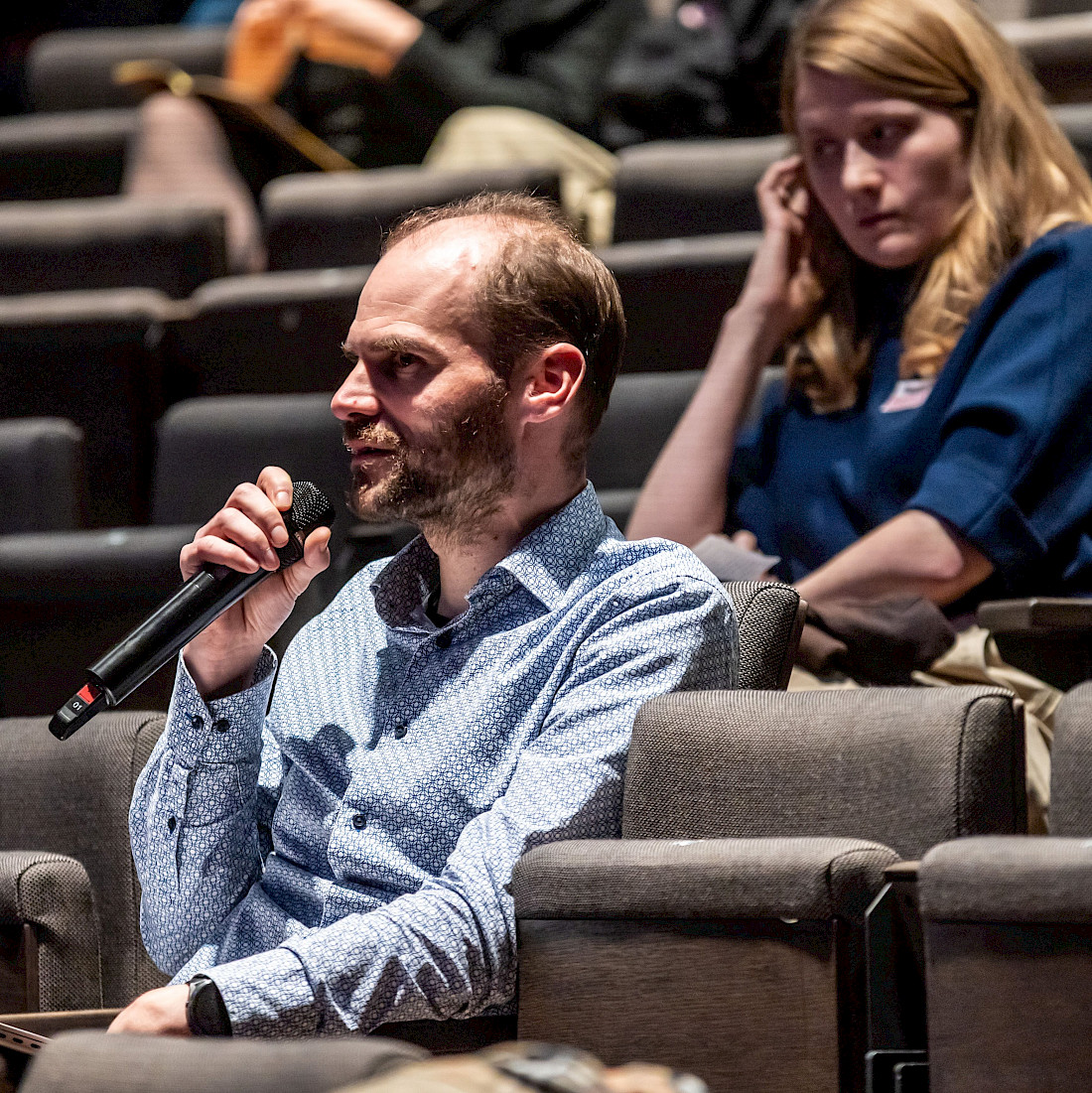
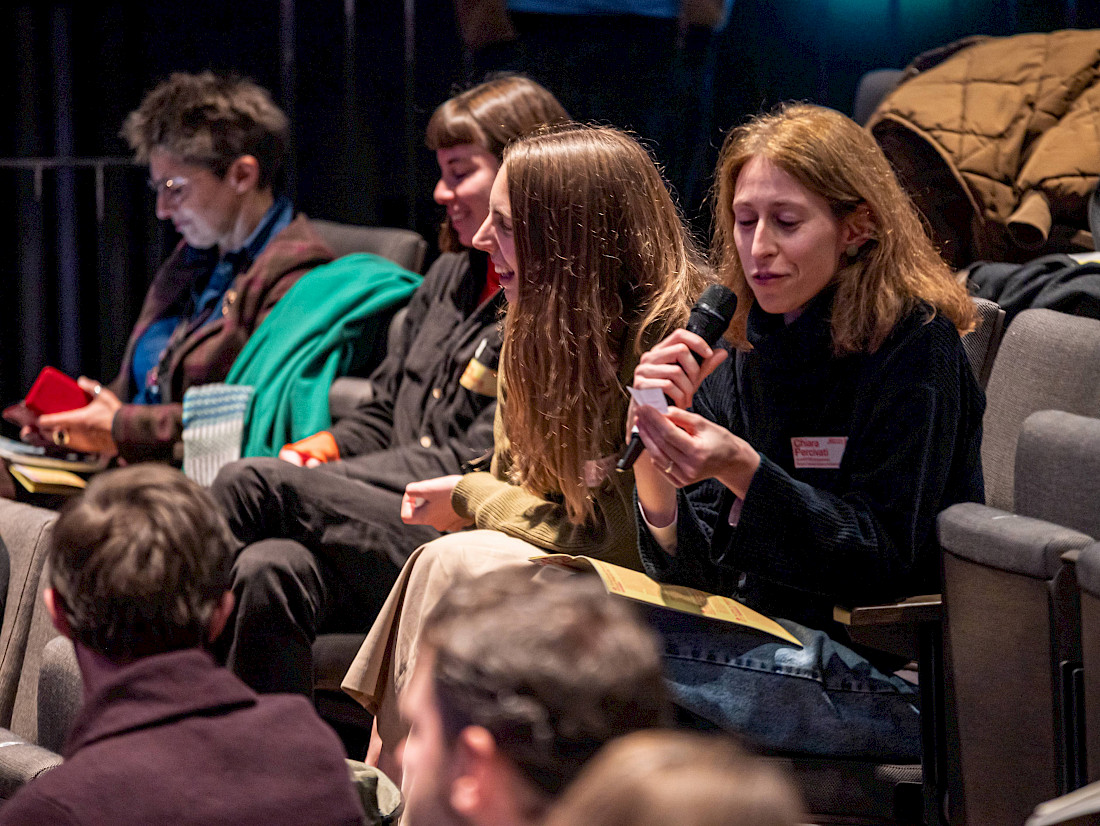
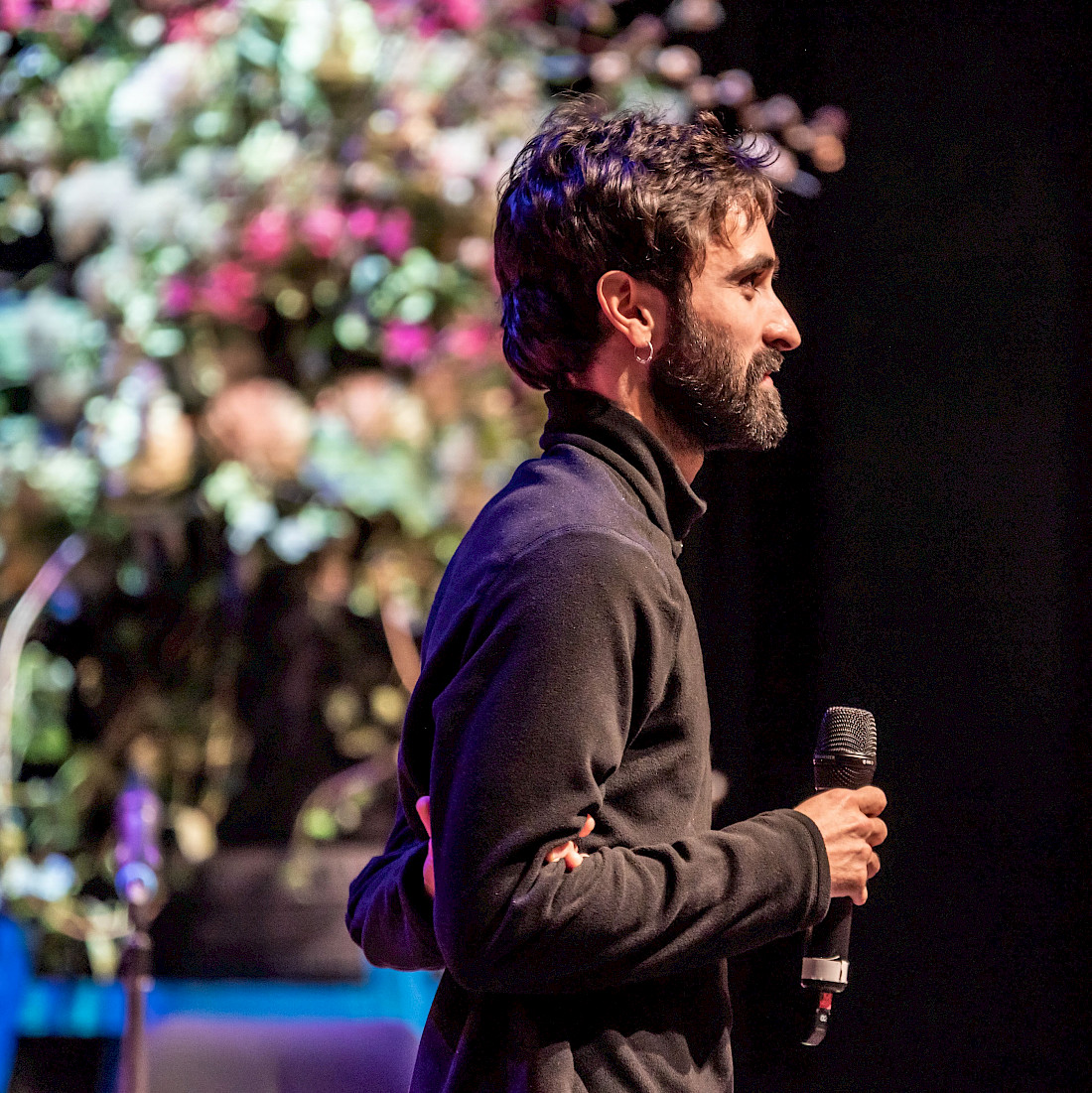
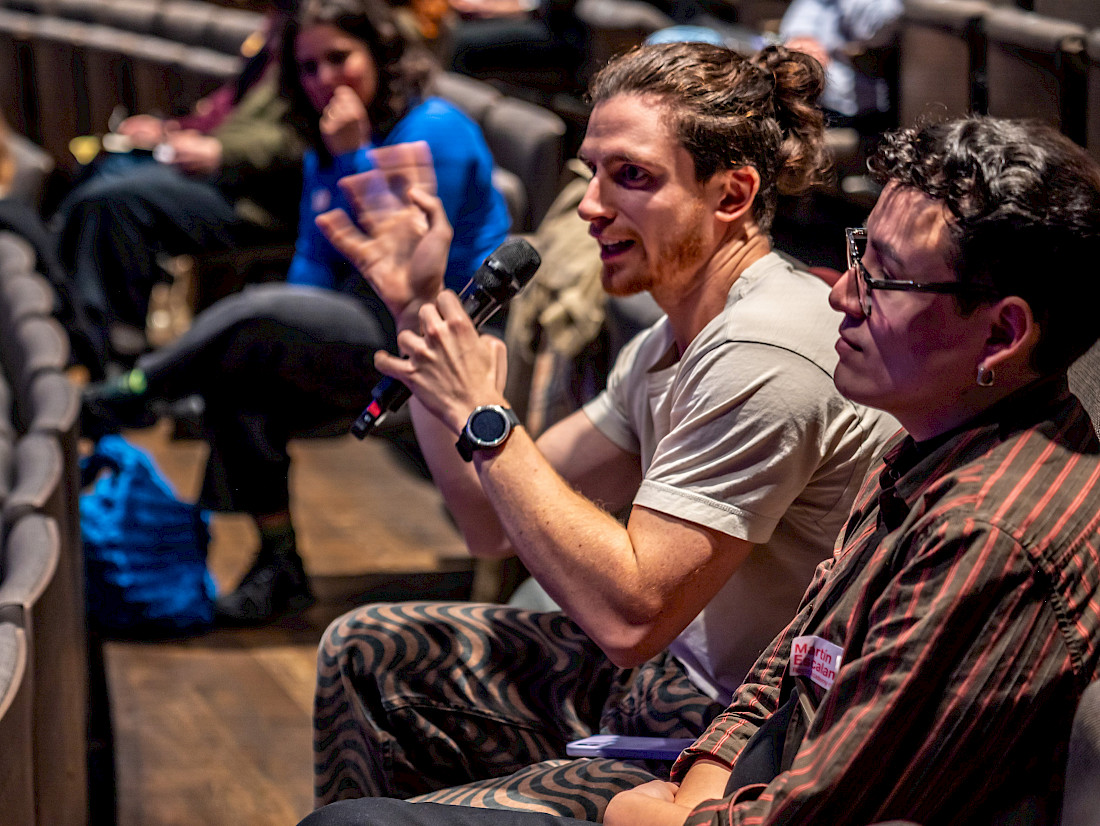
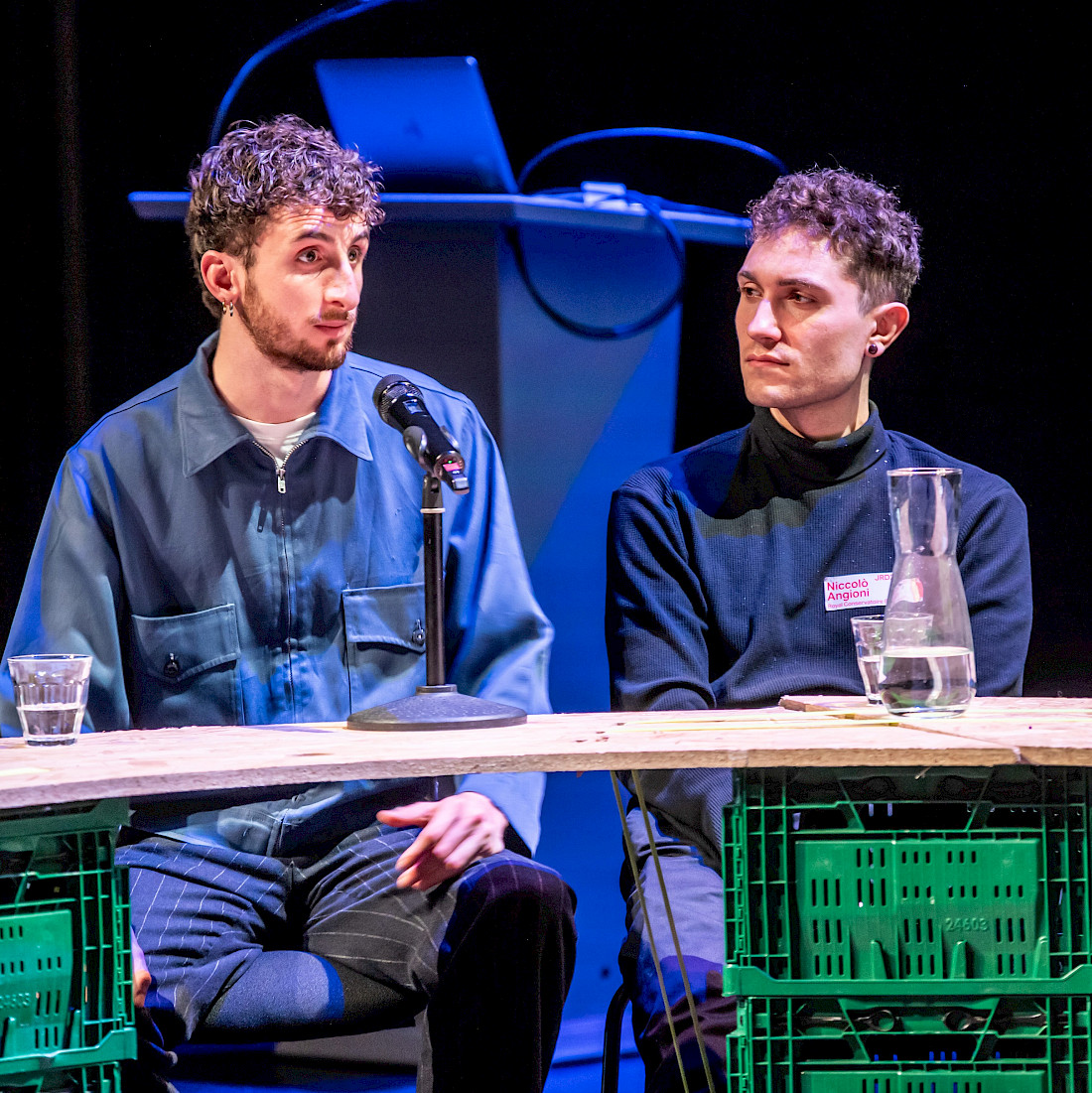
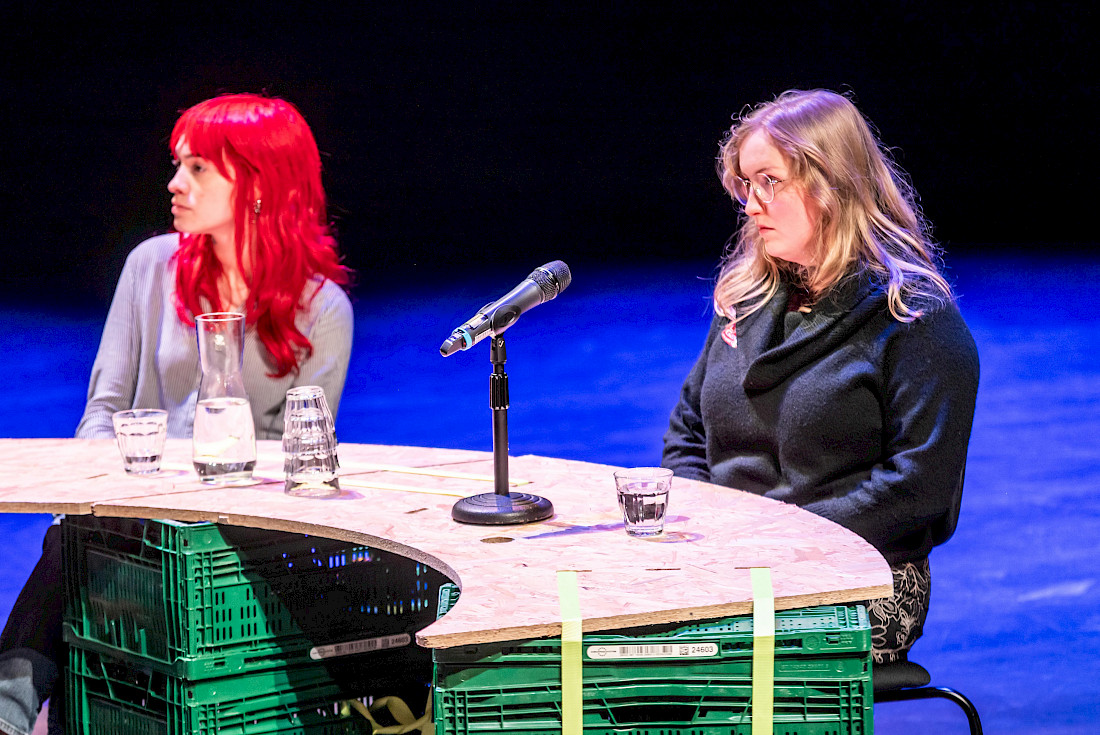
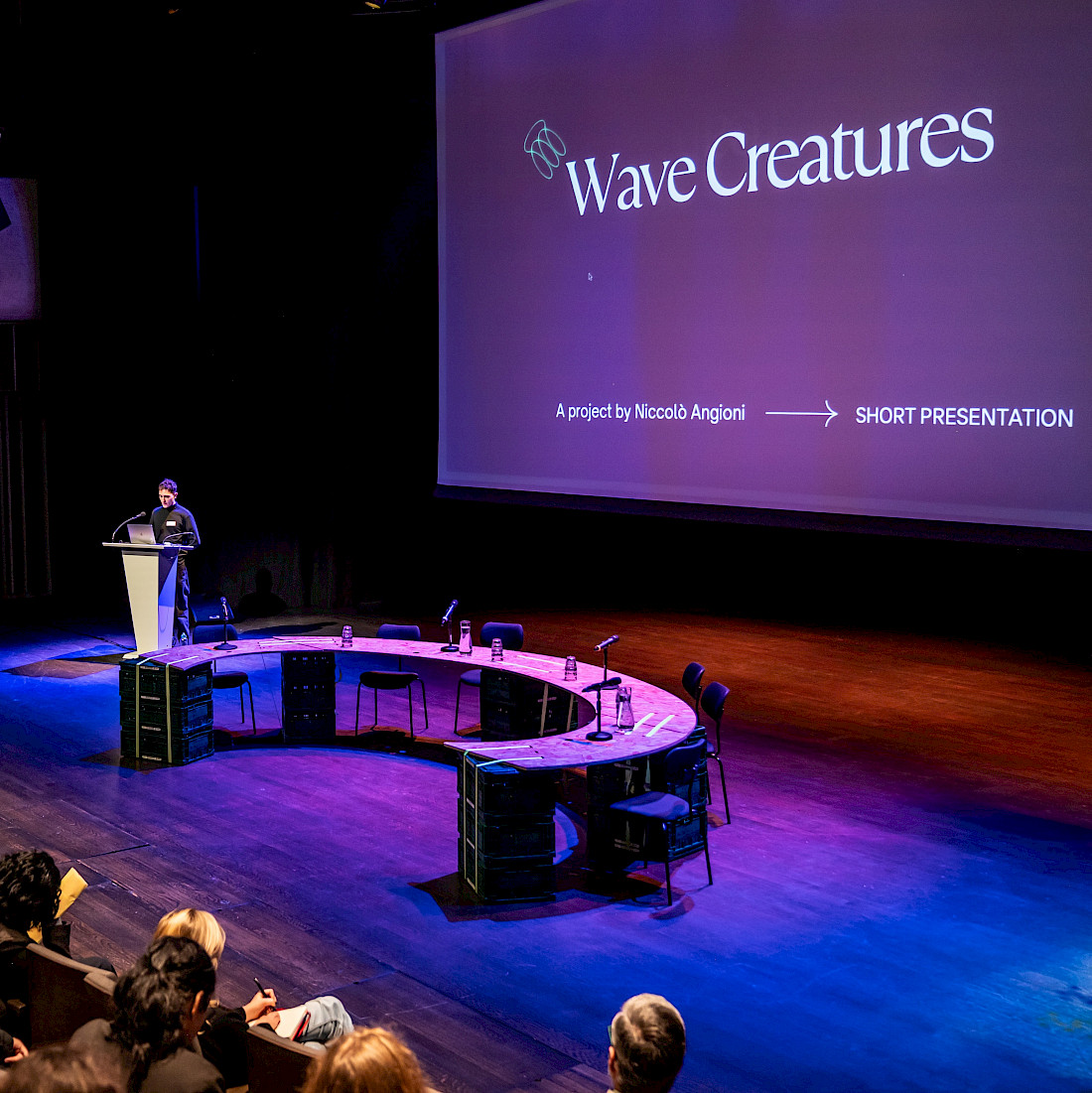
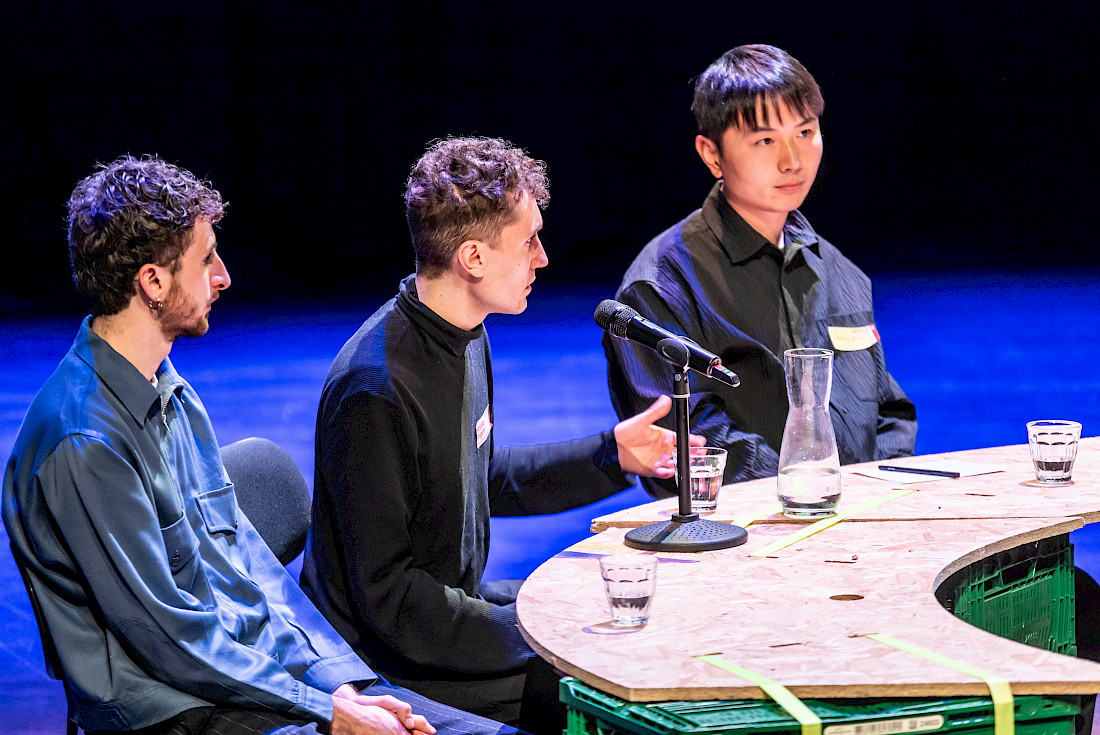
Practice-based Research in the Real World, with Presentations from Niccolò Angioni, Kelsey Corby, Stefano Dealessandri, Lydia Gardiner, and Andong Zheng, Conversation Moderated by Alice Twemlow and Andrew Wright
In this extended afternoon session, five recent graduates from KC and KABK returned to share how their MA research continues to inform—and transform—their professional practices. Moderated by Alice Twemlow and Andrew Wright, the conversation moved between sound, image, landscape, taxonomy, storytelling, and activism, offering a rich cross-section of what practice-based research can look like.
Through a series of short presentations, the alumni reflected on the methods they developed during their studies, the forms their research now takes outside the academy, and the ongoing process of learning and unlearning that comes with carrying research into new contexts.
Practice-based Research in the Real World, with Presentations from Niccolò Angioni, Kelsey Corby, Stefano Dealessandri, Lydia Gardiner, and Andong Zheng, Conversation Moderated by Alice Twemlow and Andrew Wright
In this extended afternoon session, five recent graduates from KC and KABK returned to share how their MA research continues to inform—and transform—their professional practices. Moderated by Alice Twemlow and Andrew Wright, the conversation moved between sound, image, landscape, taxonomy, storytelling, and activism, offering a rich cross-section of what practice-based research can look like.
Through a series of short presentations, the alumni reflected on the methods they developed during their studies, the forms their research now takes outside the academy, and the ongoing process of learning and unlearning that comes with carrying research into new contexts.

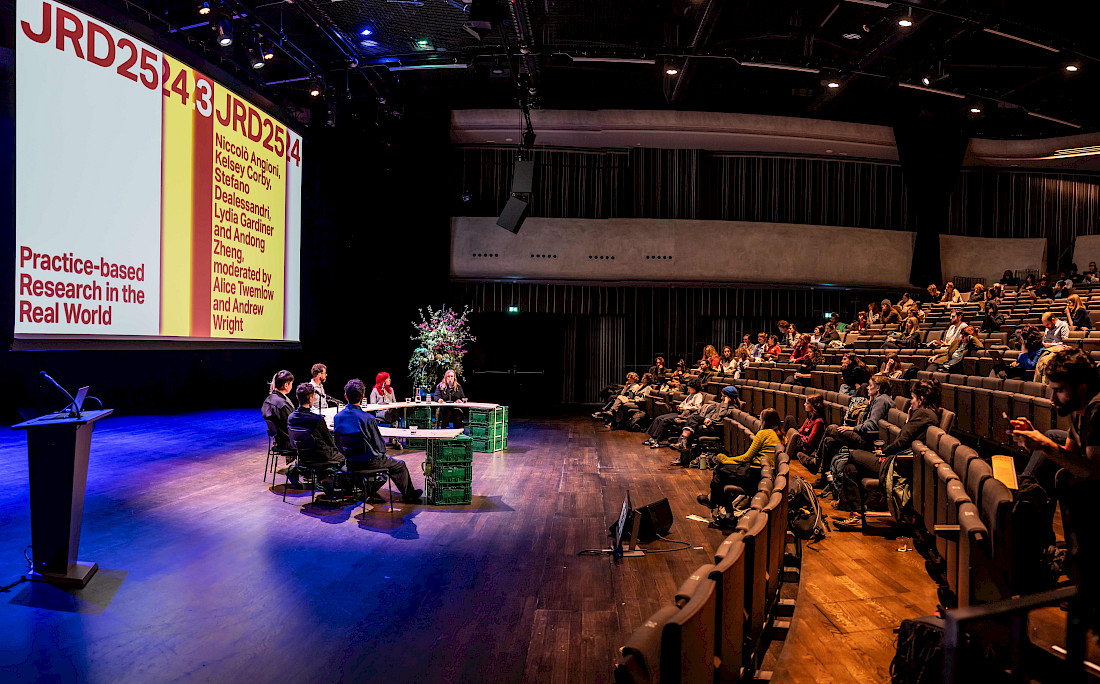



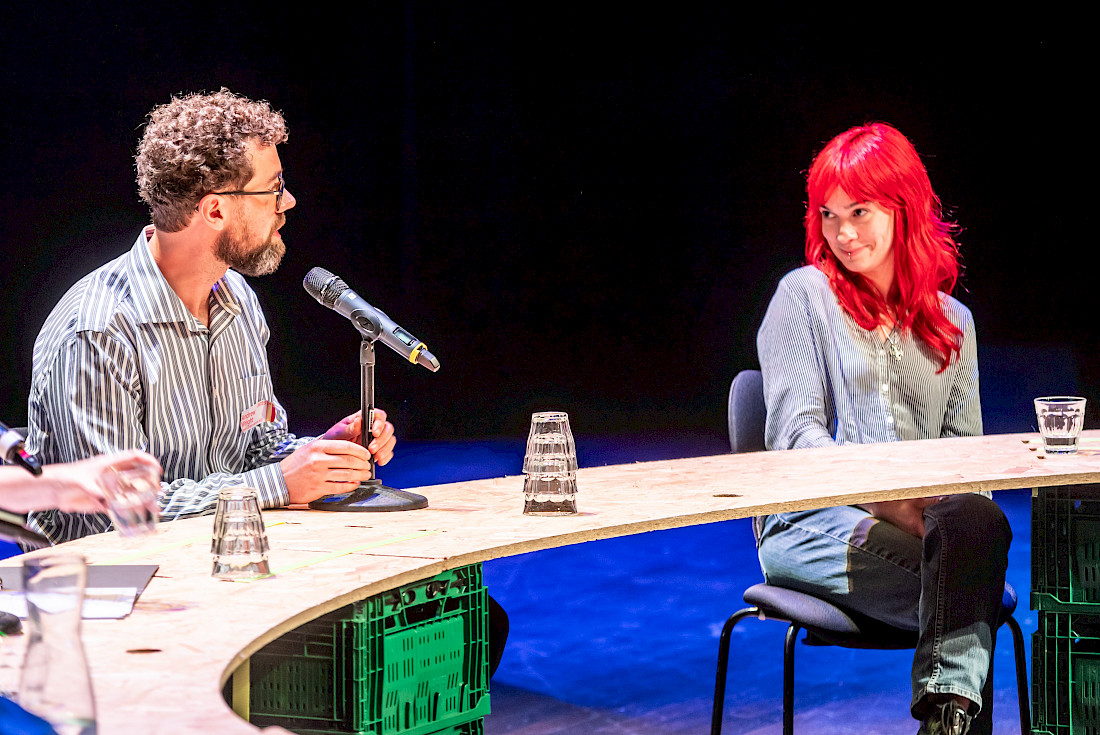
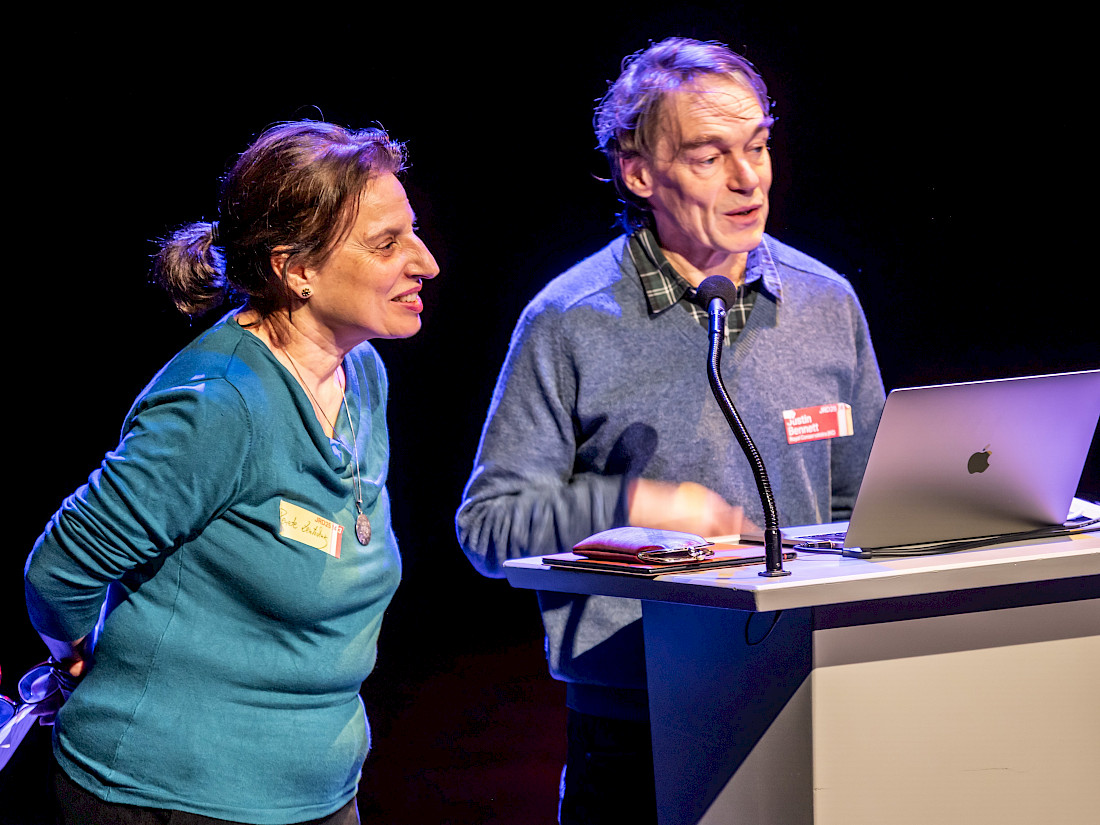
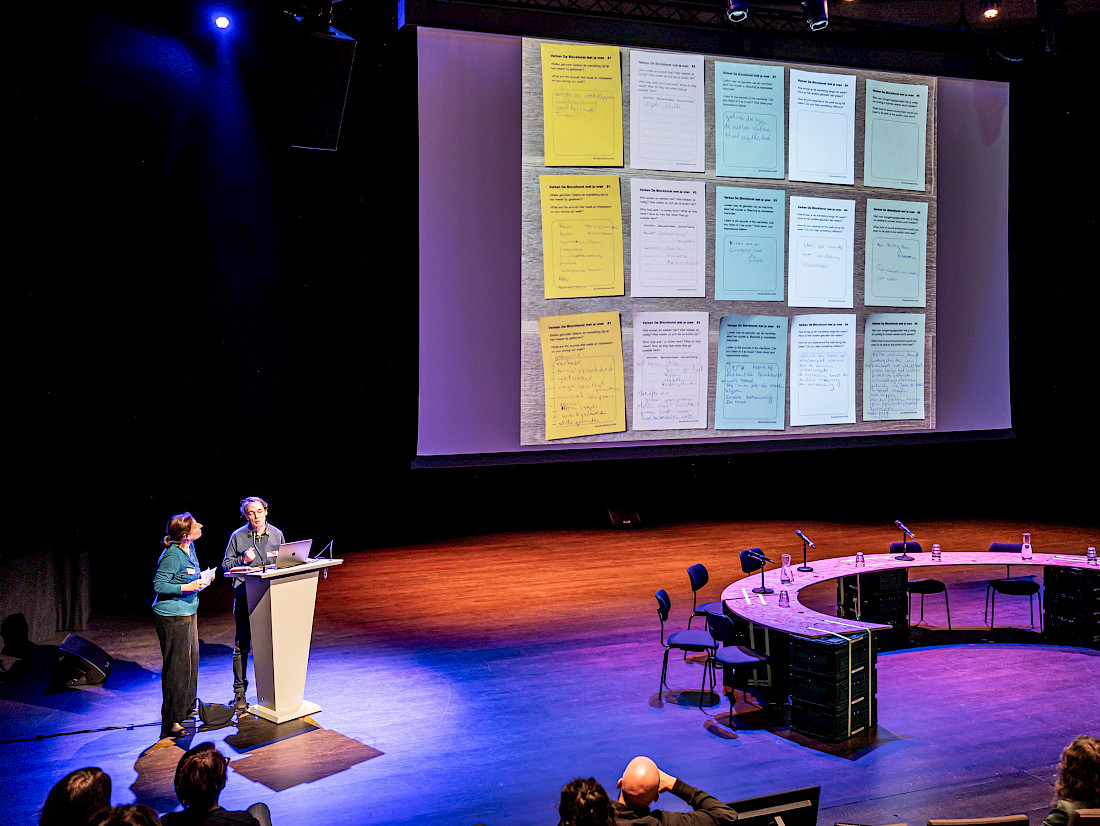
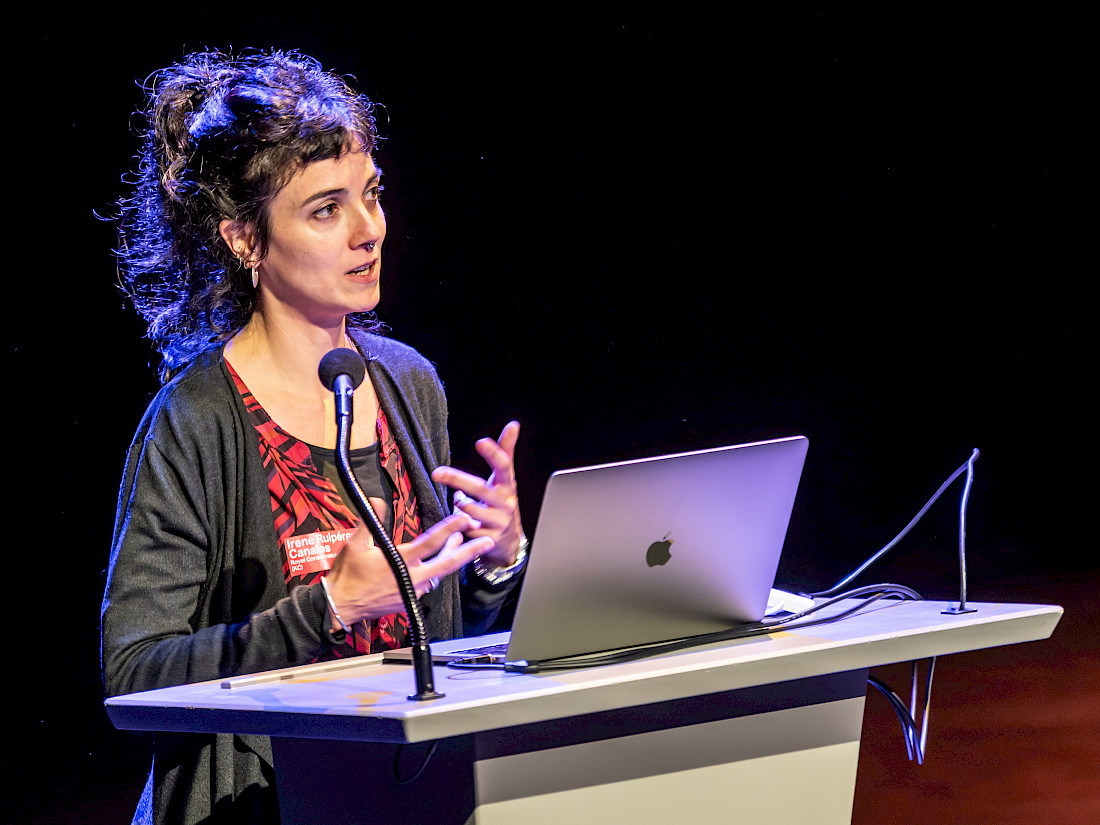
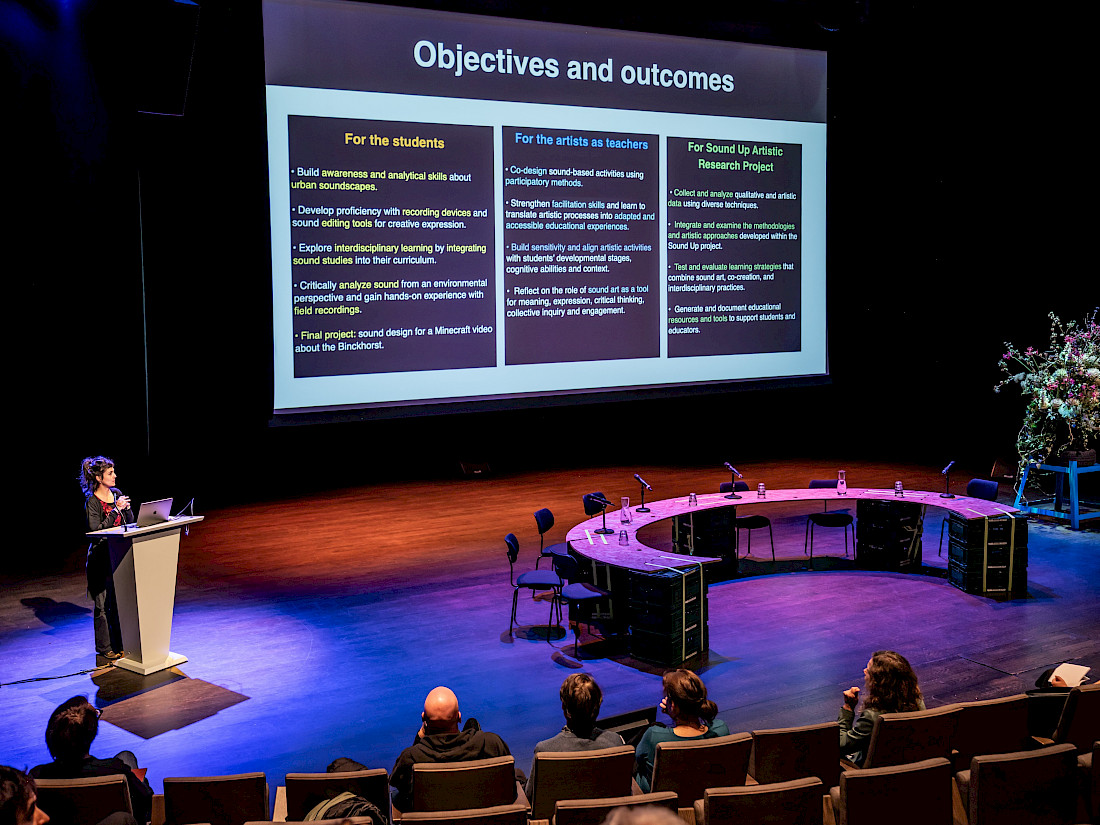
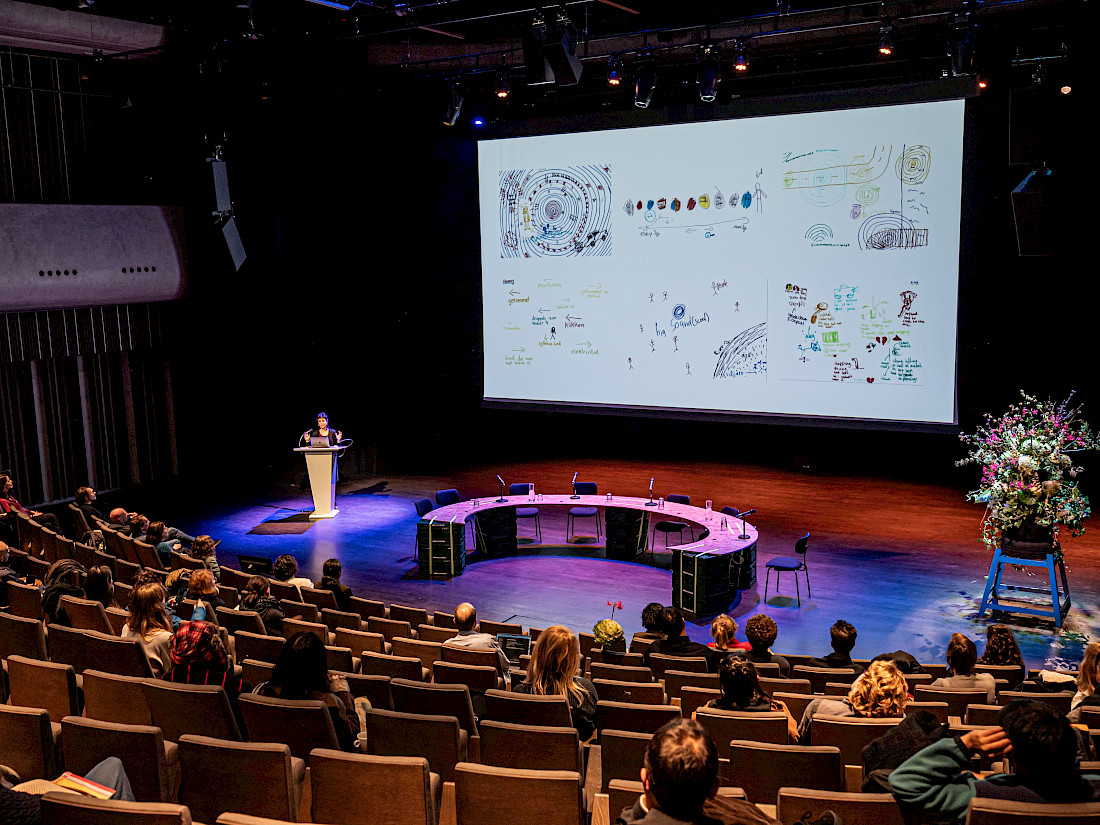
Sounding Urban Places – Listening to the Binckhorst, Presentations by Justin Bennett, Irene Ruipérez Canales, and Renate Zentschnig, Conversation Moderated by Paul Craenen, and Joined by Sabrina Lindemann and Marcel Cobussen
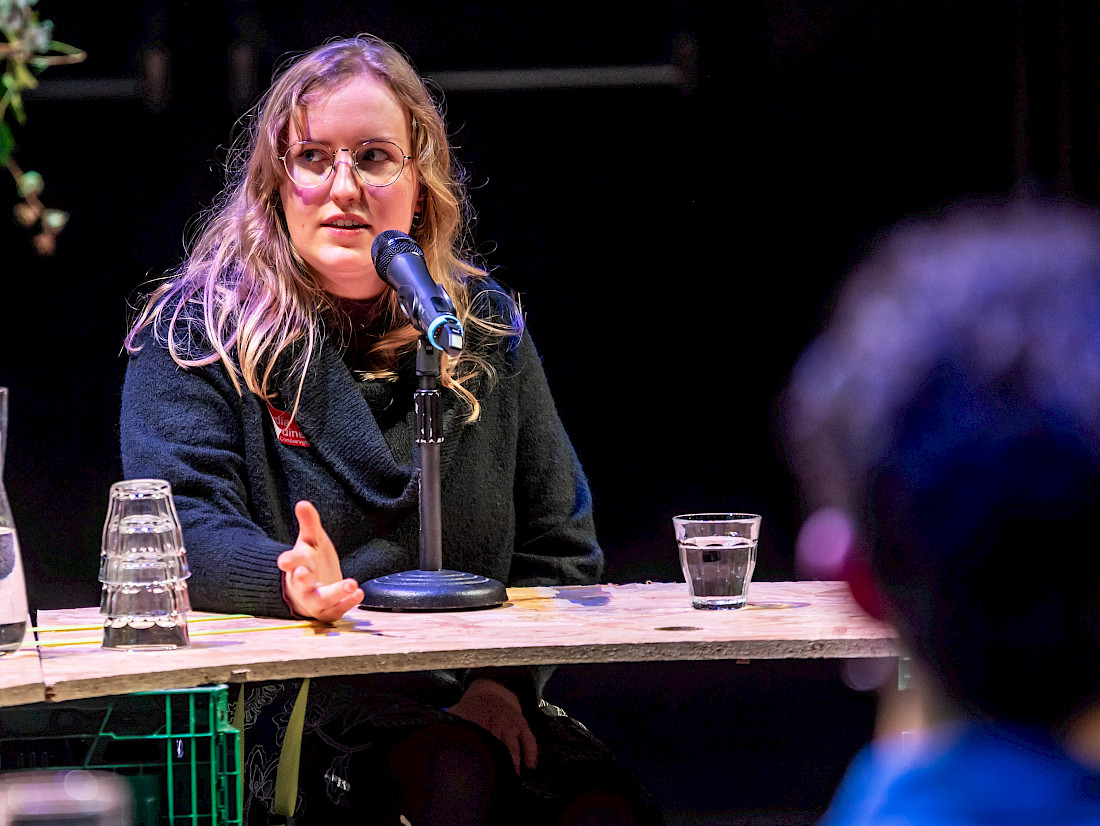
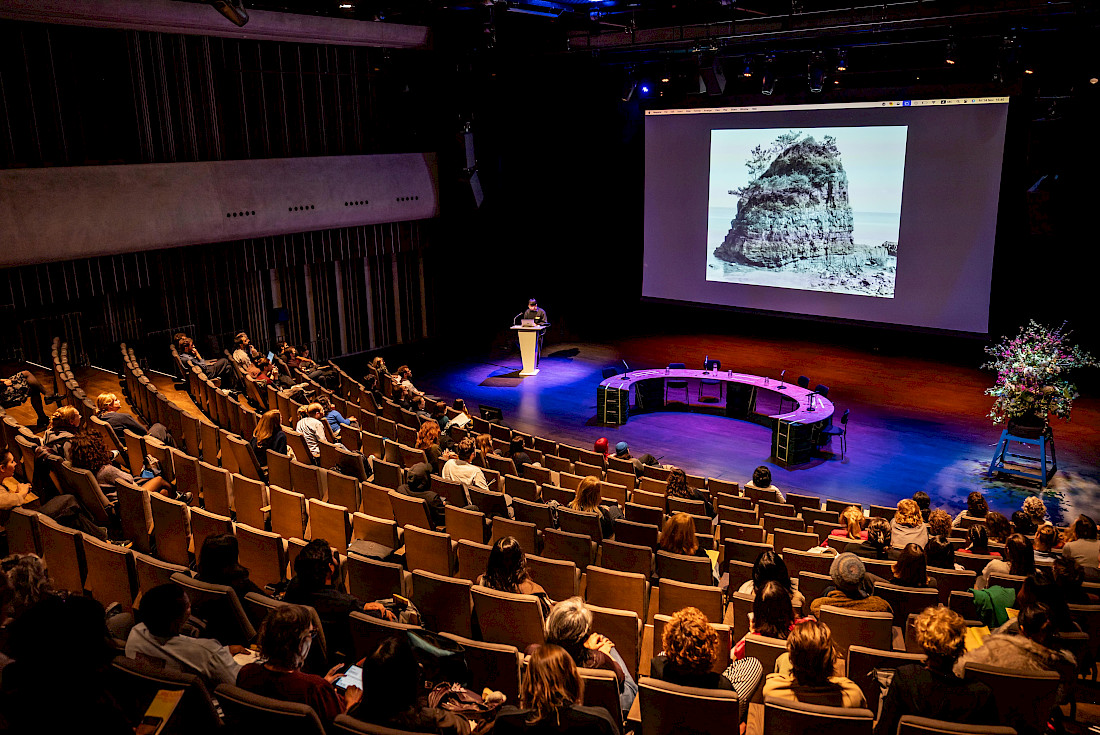
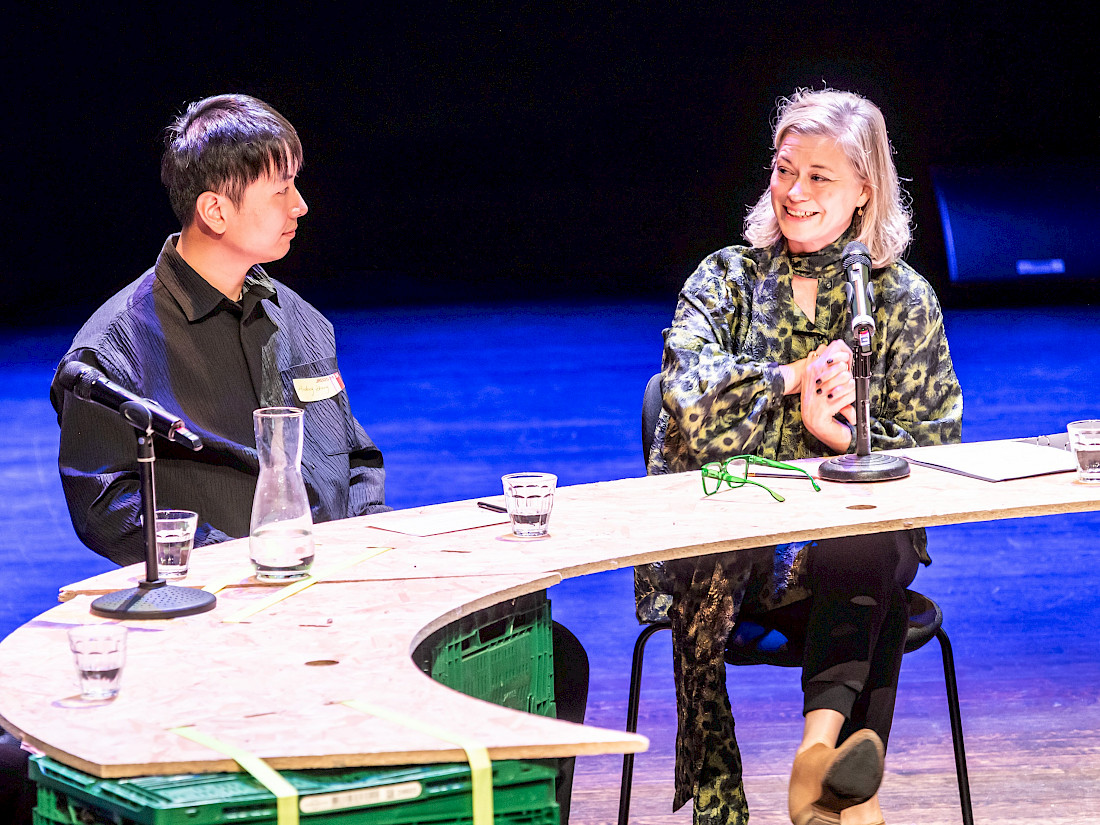
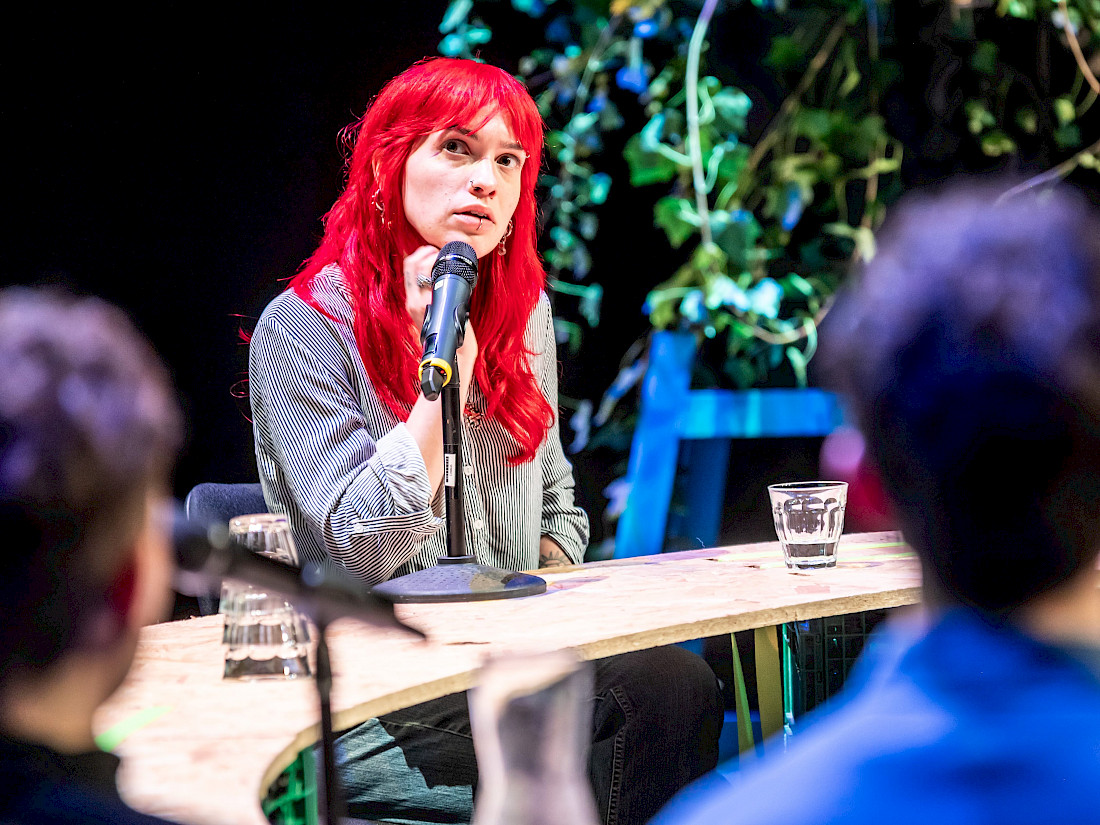
In the late afternoon, Justin Bennett, Irene Ruipérez Canales, and Renate Zentschnig presented the preliminary findings of Sounding Urban Places, a collaborative project exploring the soundscapes of the Binckhorst neighbourhood. The project outcomes include an audio paper, an online sound map, audio routes, and an educational package designed for secondary schools.
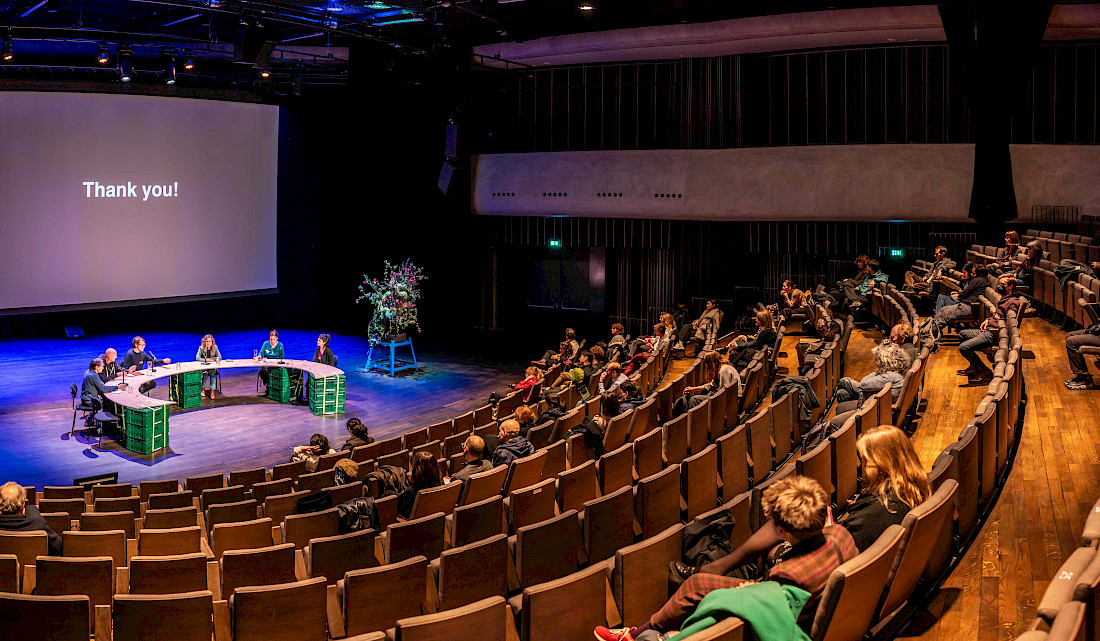
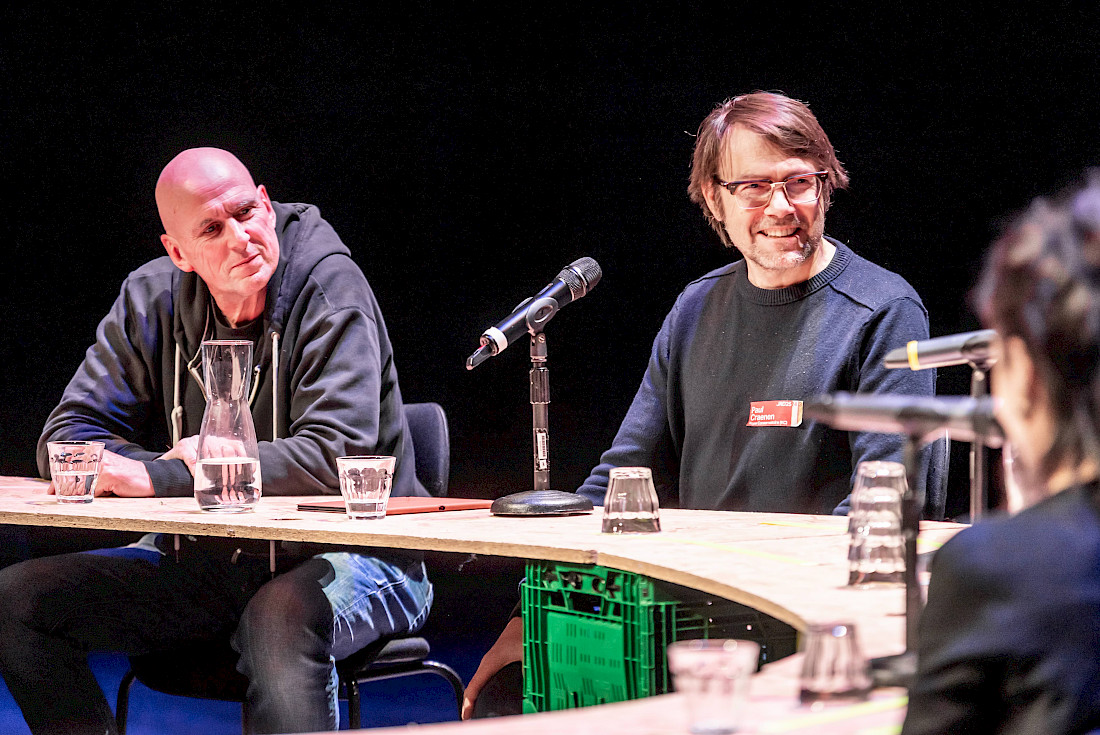
The presentations were followed by a roundtable moderated by Paul Craenen, joined by Sabrina Lindemann and Marcel Cobussen.
Sounding Urban Places – Listening to the Binckhorst, Presentations by Justin Bennett, Irene Ruipérez Canales, and Renate Zentschnig, Conversation Moderated by Paul Craenen, and Joined by Sabrina Lindemann and Marcel Cobussen
In the late afternoon, Justin Bennett, Irene Ruipérez Canales, and Renate Zentschnig presented the preliminary findings of Sounding Urban Places, a collaborative project exploring the soundscapes of the Binckhorst neighbourhood. The project outcomes include an audio paper, an online sound map, audio routes, and an educational package designed for secondary schools.
The presentations were followed by a roundtable moderated by Paul Craenen, joined by Sabrina Lindemann and Marcel Cobussen.


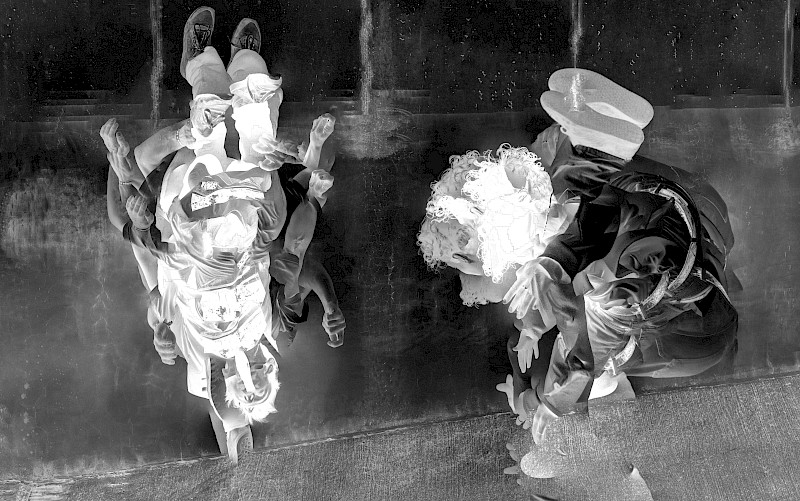
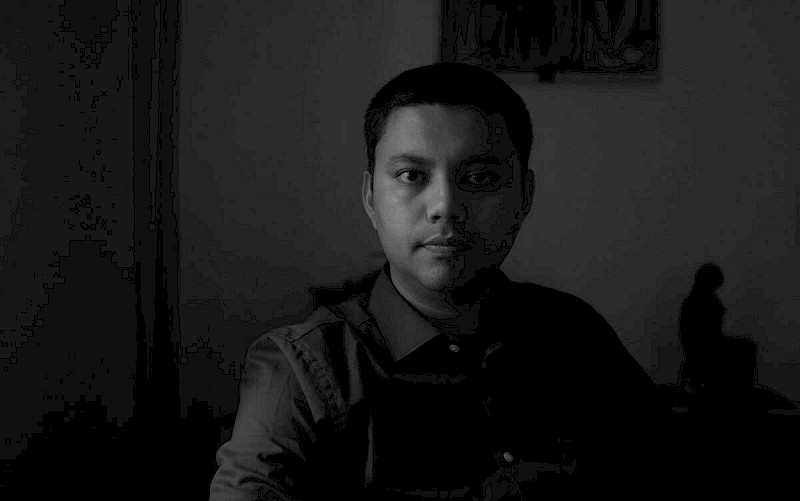
Gazing: An Act of Defiance, by Shadman Shahid, Q&A with Dafni Melidou
Shadman Shahid presented Gazing: An Act of Defiance, a project examining the photographic archives of the British Raj in Bengal. By re-contextualising and re-siting colonial photographs, the work explores how photographic fiction can challenge and defy the authority of historical archives, revealing suppressed or alternative perspectives.
The presentation was followed by a Q&A with Dafni Melidou.
Gazing: An Act of Defiance, by Shadman Shahid, Q&A with Dafni Melidou
Shadman Shahid presented Gazing: An Act of Defiance, a project examining the photographic archives of the British Raj in Bengal. By re-contextualising and re-siting colonial photographs, the work explores how photographic fiction can challenge and defy the authority of historical archives, revealing suppressed or alternative perspectives.
The presentation was followed by a Q&A with Dafni Melidou.
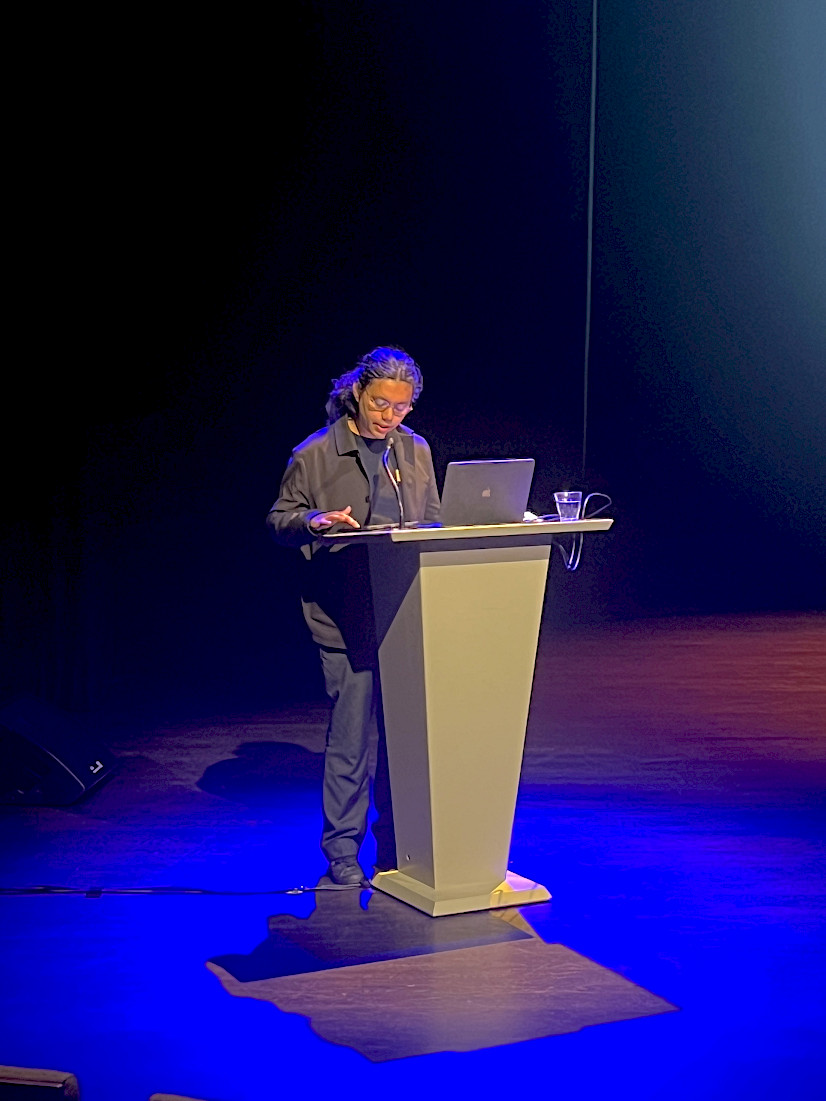


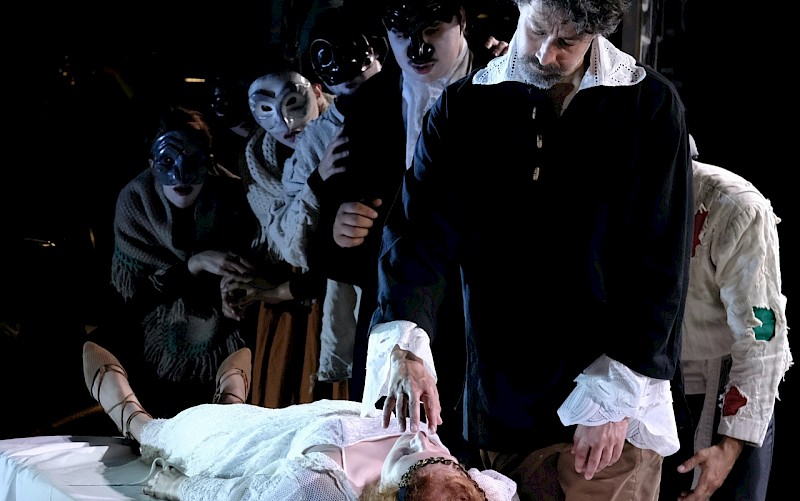
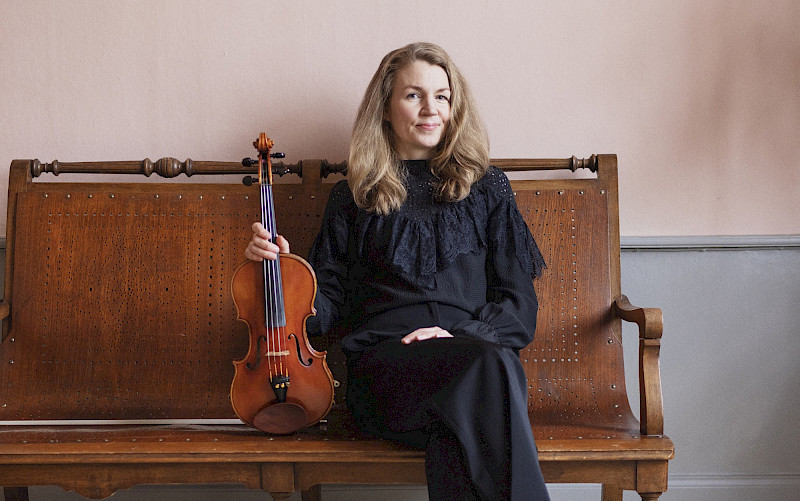
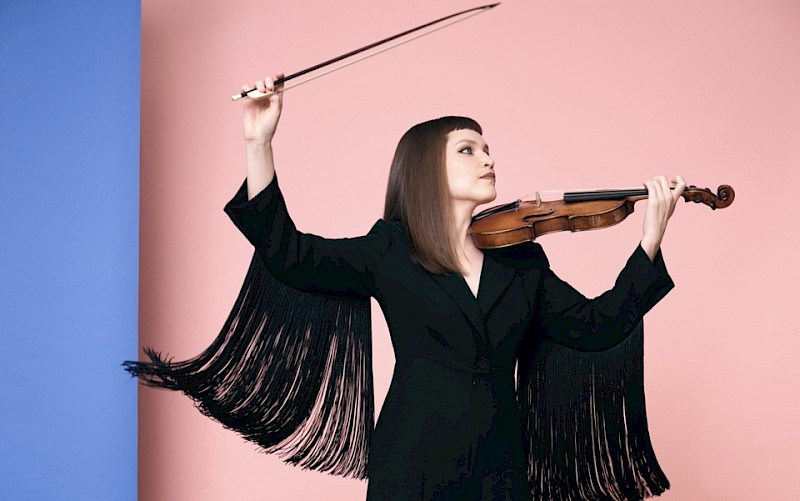
Recontextualizing Concert Experiences: 19th-Century Miscellaneous Formats and Improvisation, by Robert de Bree and Rebecca Huber, with Ajda Porenta, Miyu Nohashi, Dalila Guzzi, and Adele Xiang
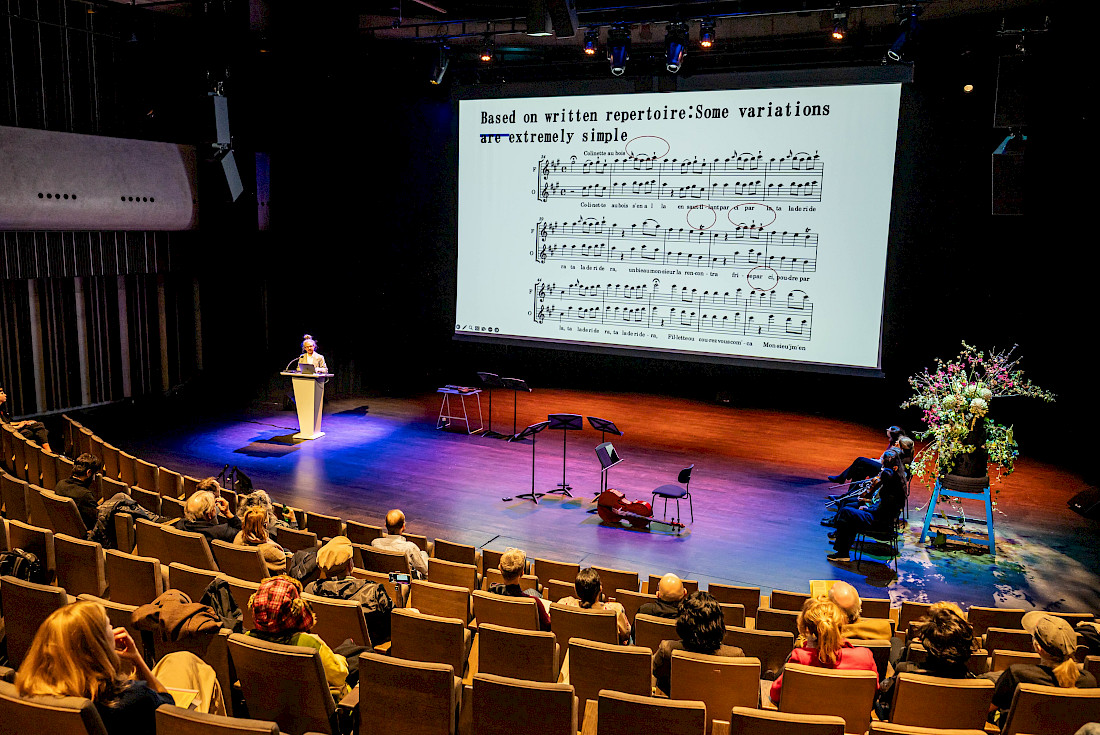
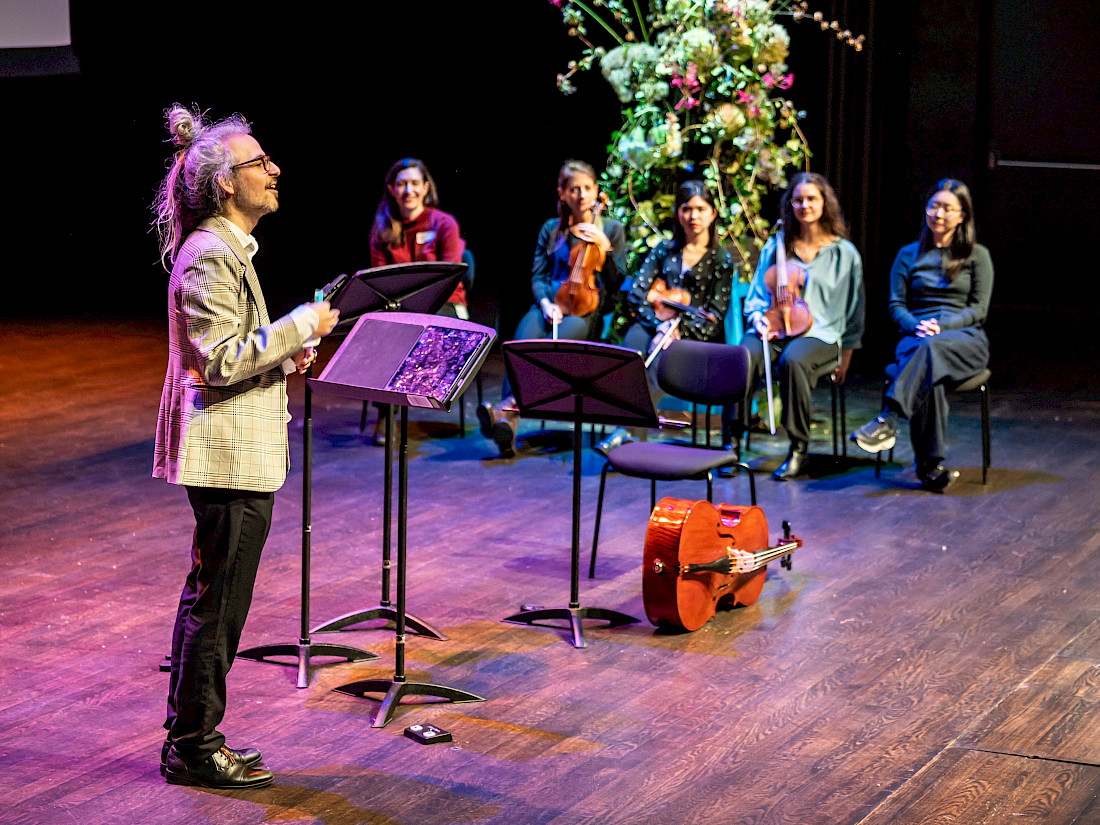
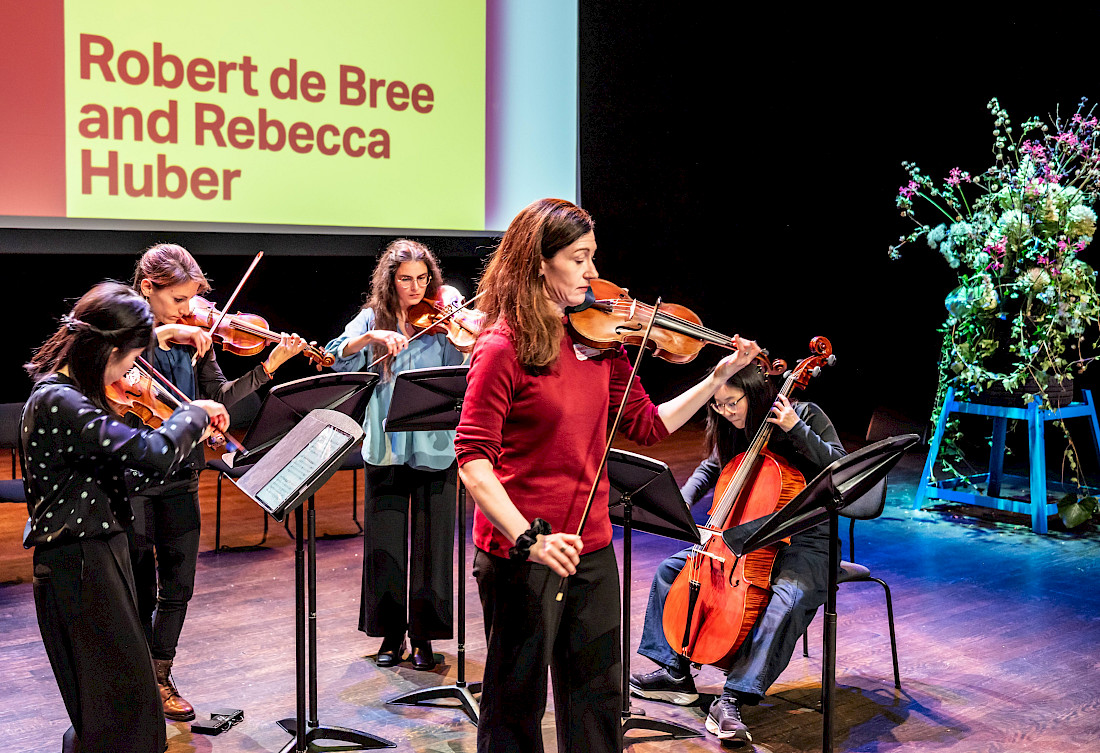
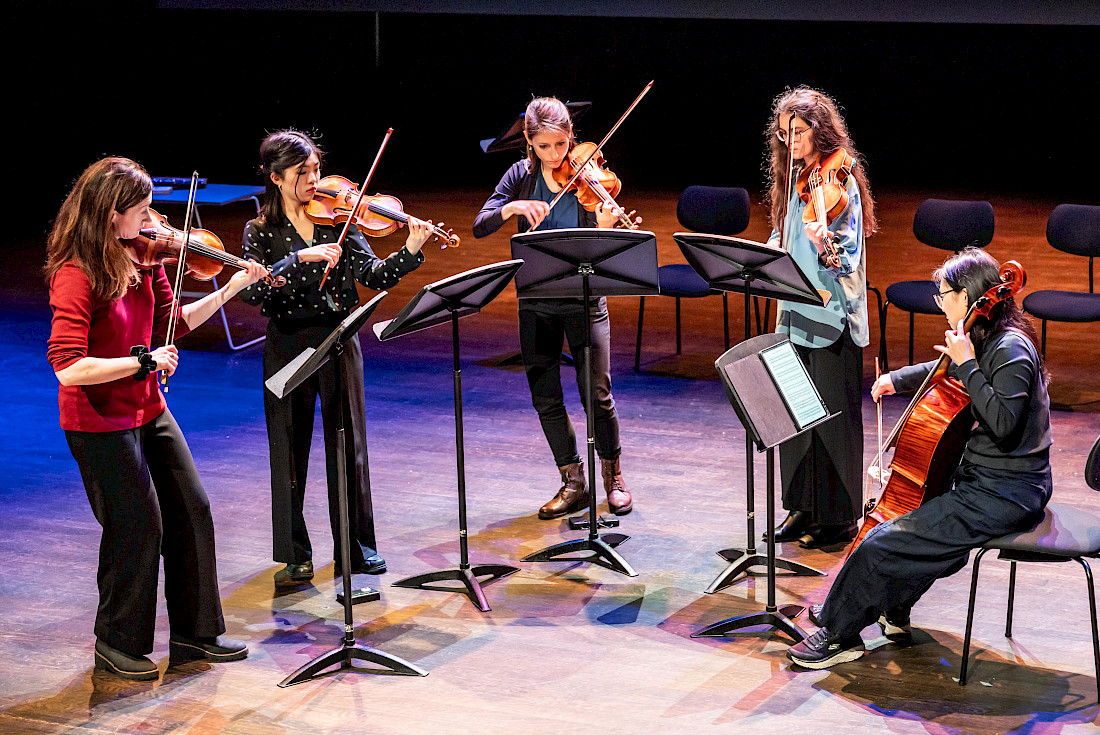
In the evening session, Robert de Bree and Rebecca Huber explored the diversity and experimentation of 19th-century concert culture. Through a combination of research presentations and live performance, they examined the practice of miscellaneous programming and improvisation, highlighting how technical skill, creativity, and audience engagement shaped the concert experience.
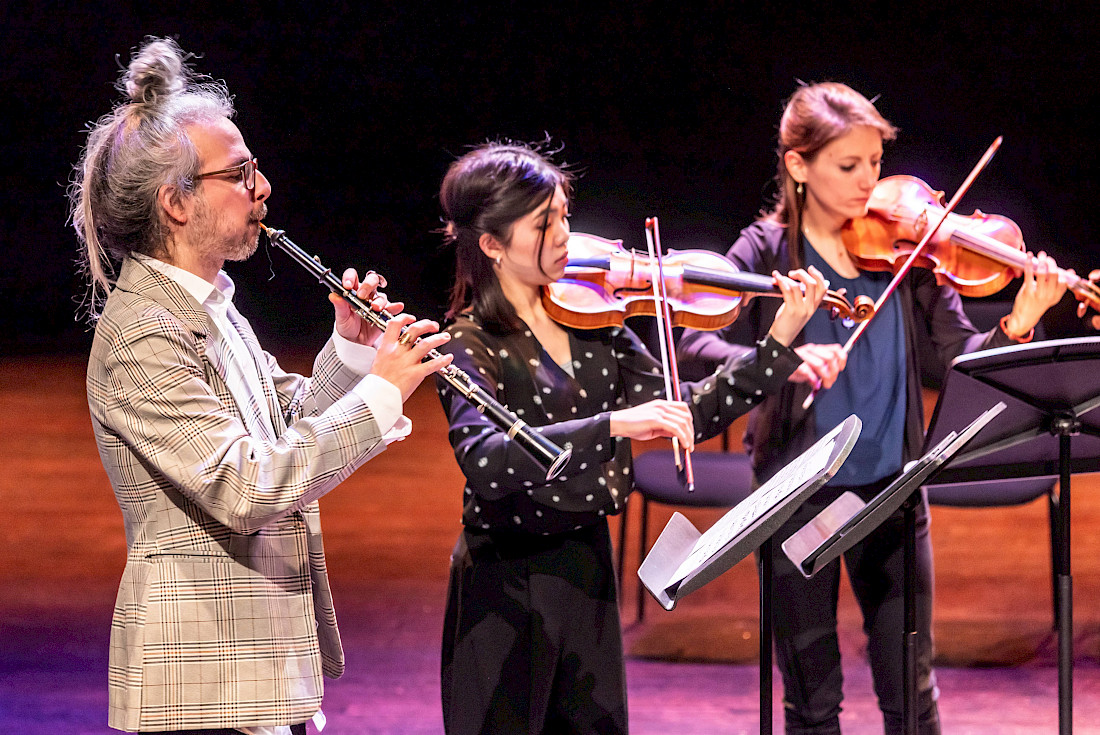
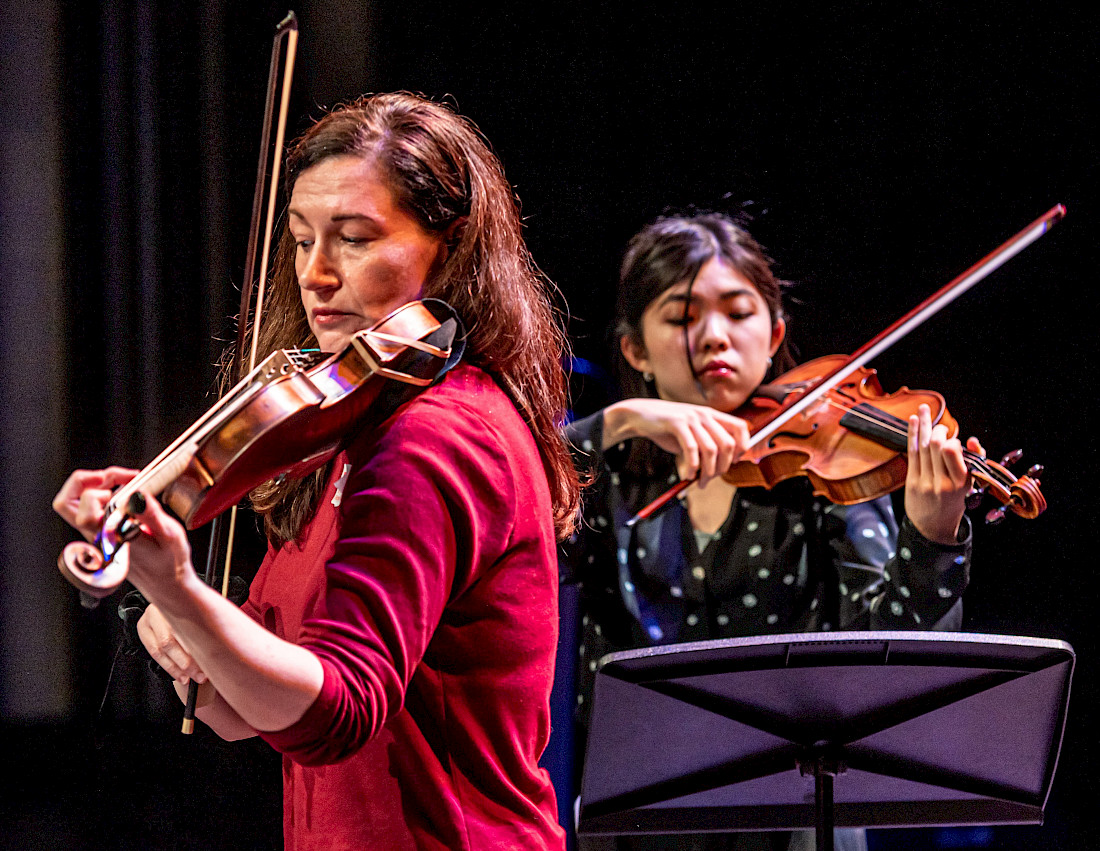
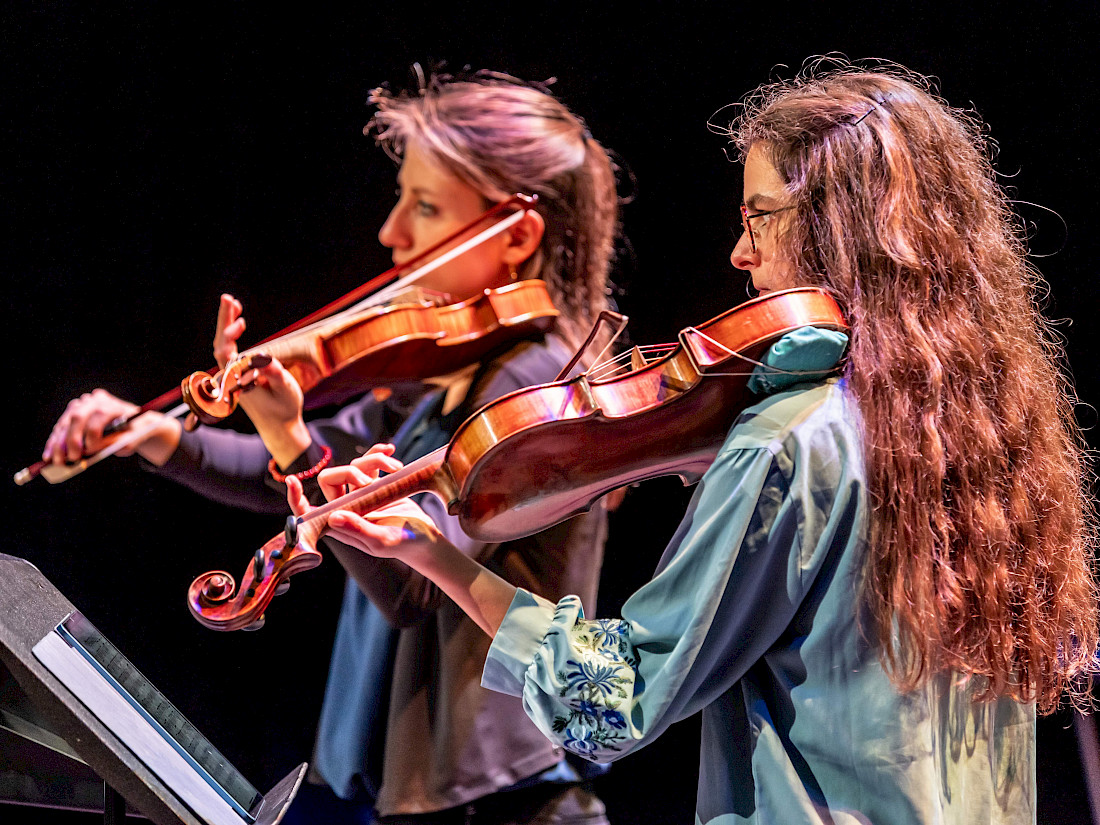
Students from Rebecca’s string quartet class—Ajda Porenta, Miyu Nohashi, Dalila Guzzi, and Adele Xiang—performed selected examples to illustrate these historical programming strategies and their impact on reception.
Recontextualizing Concert Experiences: 19th-Century Miscellaneous Formats and Improvisation, by Robert de Bree and Rebecca Huber, with Ajda Porenta, Miyu Nohashi, Dalila Guzzi, and Adele Xiang
In the evening session, Robert de Bree and Rebecca Huber explored the diversity and experimentation of 19th-century concert culture. Through a combination of research presentations and live performance, they examined the practice of miscellaneous programming and improvisation, highlighting how technical skill, creativity, and audience engagement shaped the concert experience.
Students from Rebecca’s string quartet class—Ajda Porenta, Miyu Nohashi, Dalila Guzzi, and Adele Xiang—performed selected examples to illustrate these historical programming strategies and their impact on reception.




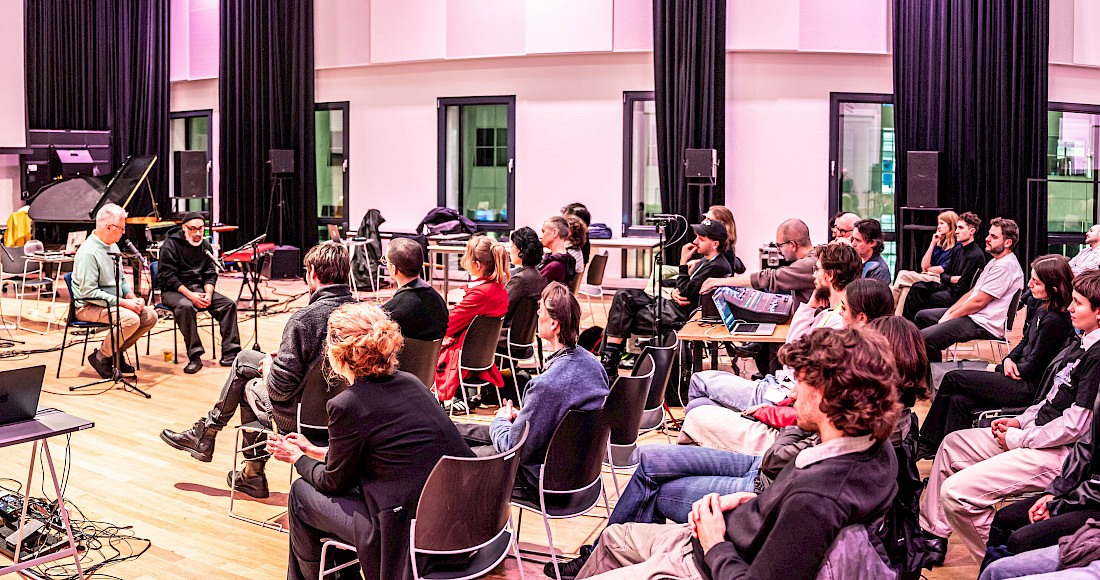
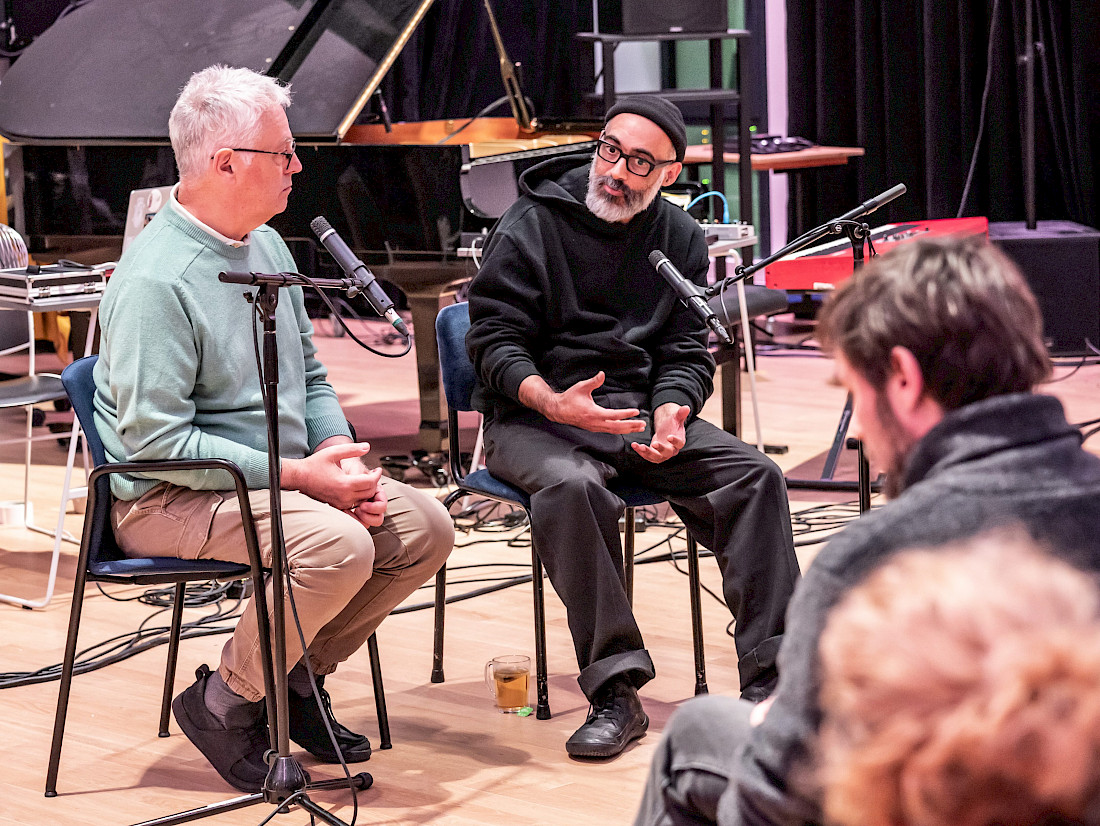
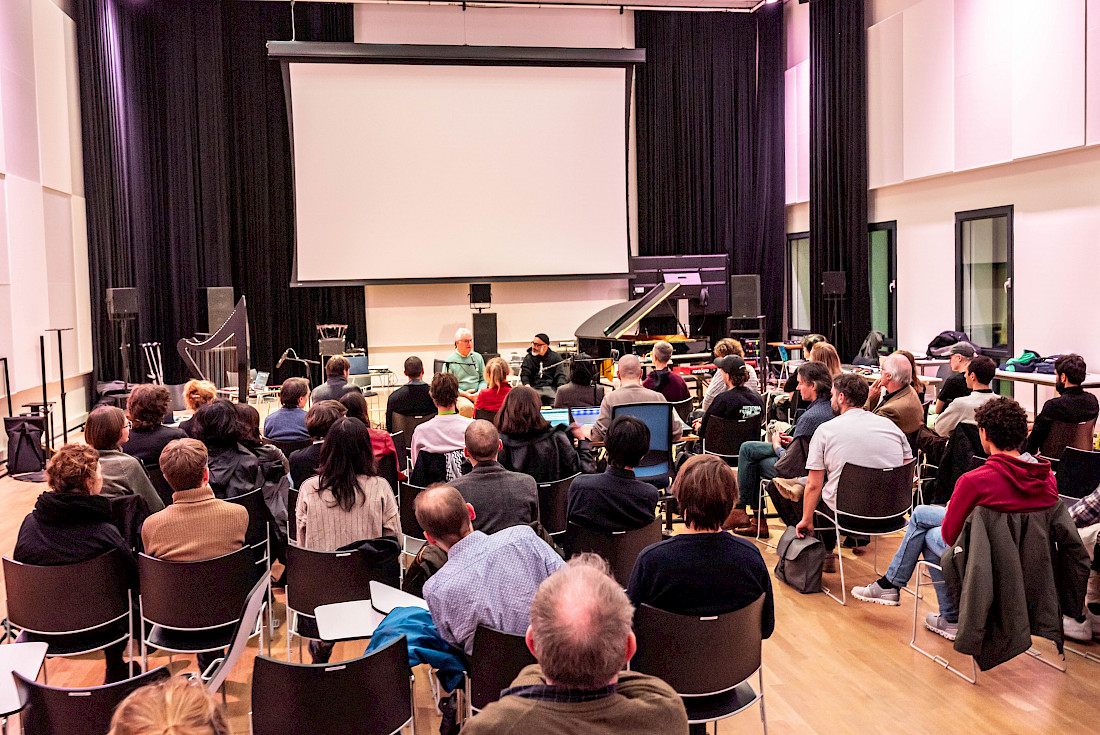
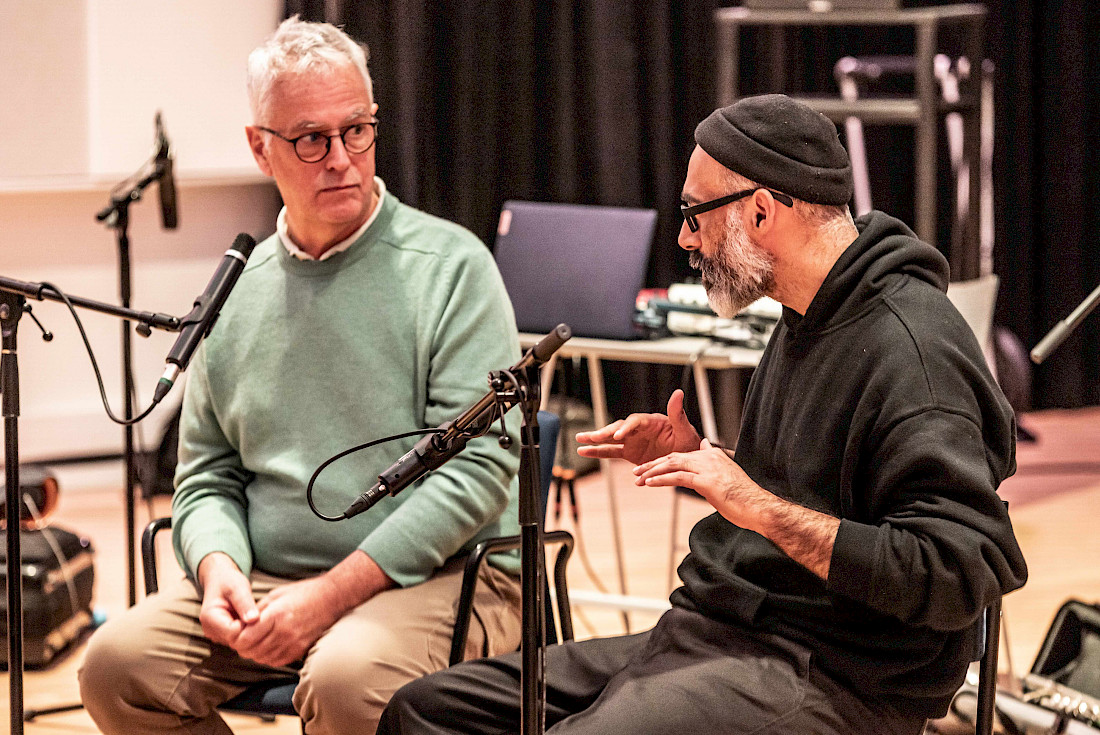
Conversation between Dirar Kalash and Richard Barrett and Performance by Sonology Electroacoustic Ensemble (SEE)
JRD25 concluded in the New Music Lab with a special evening featuring a conversation between Dirar Kalash and Richard Barrett, followed by a live performance by the Sonology Electroacoustic Ensemble (SEE). Kalash and Barrett reflected on improvisation, composition, and the intersections of artistic research and political urgency in music.
The conversation was followed by a performance by SEE, bringing together acoustic instruments and live electronics. With a large lineup of performers for this evening, the ensemble created an immersive sonic experience for the JRD25 audience.
Conversation between Dirar Kalash and Richard Barrett and Performance by Sonology Electroacoustic Ensemble (SEE)
JRD25 concluded in the New Music Lab with a special evening featuring a conversation between Dirar Kalash and Richard Barrett, followed by a live performance by the Sonology Electroacoustic Ensemble (SEE). Kalash and Barrett reflected on improvisation, composition, and the intersections of artistic research and political urgency in music.
The conversation was followed by a performance by SEE, bringing together acoustic instruments and live electronics. With a large lineup of performers for this evening, the ensemble created an immersive sonic experience for the JRD25 audience.