Rummaging in the Curriculum Carrier Bag: Creating the Unheard Symphony
Conservatoire student populations can be incredibly diverse in terms of background. What consequences does this have for the curriculum? Using Ursula K. Le Guin’s Carrier Bag Theory of Fiction as an inspiration, this research bundles together theories on pedagogy, decolonialism, reacculturation, and the hidden curriculum within a speculative carrier bag where they may inform each other. What emerges are potential points of attention, activated in a workshop.
Questions are asked about how we situate a conservatorium ecologically, socially and epistemically, leading to a discussion on the ontology of the work and an understanding of what situated knowledge might encompass. This connects to an exploration of the historical formation of the canon which is at the heart of many conservatoire curricula and reflections on what decanonisation might encompass.
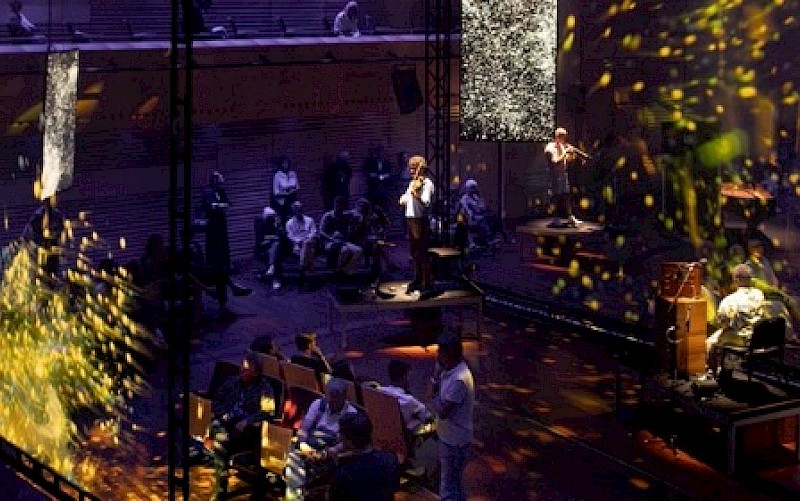
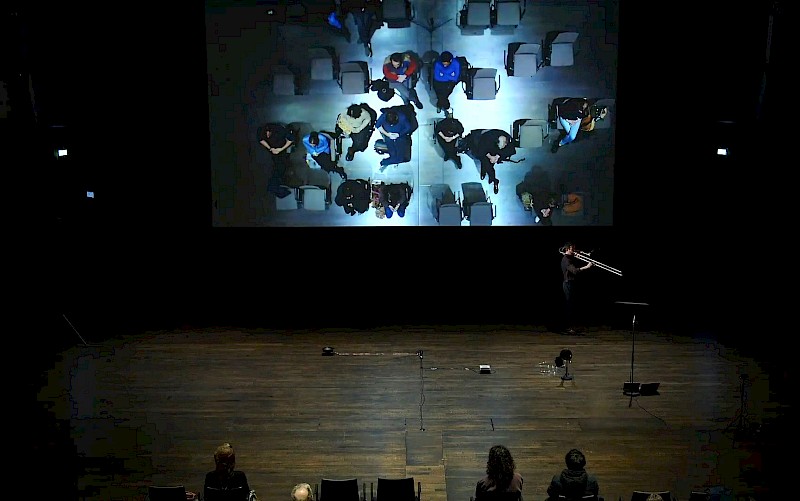
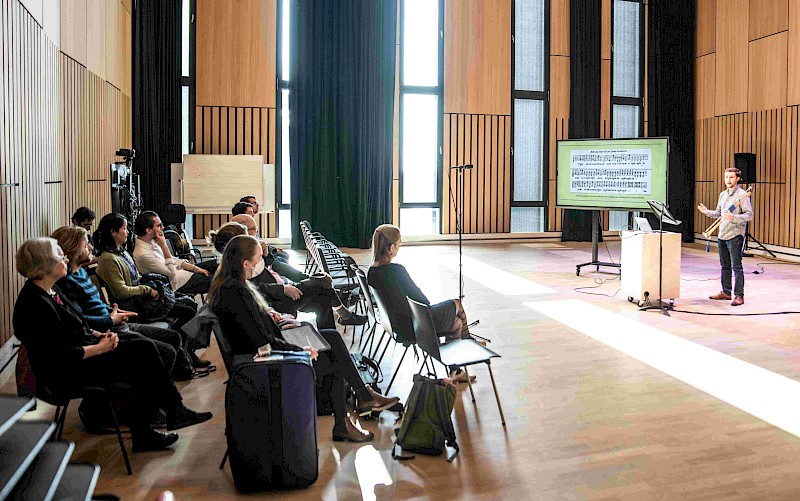
Theories in this paper were practically explored within a workshop environment which could potentially serve as a blueprint for critically engaging first year students with their studies, the curriculum, and also with their personal musical ‘pre-history’. The students applied notions of representation and nourishing space for the unheard in the creation of the Unheard Symphony, a 30-minute work inspired by Gilius van Bergeijk’s Symfonie der Duizend (alfabetisch).
This article proposes imagining the conservatoire as a ‘carrier bag’ of musical knowledge, a place where historic knowledge, embodied knowledge, and new insights intra-act and furthermore that a process of active dialogue between these elements will require responsiveness and response-ability from both students and institution alike.