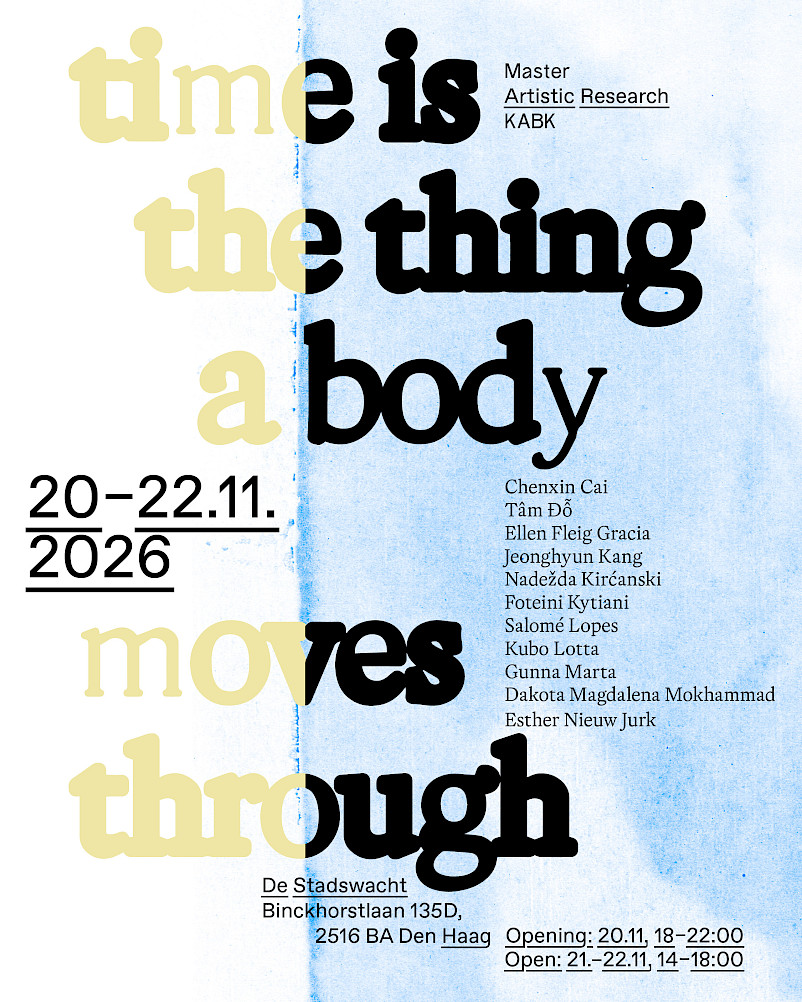
Exhibition - time is the thing a body moves through
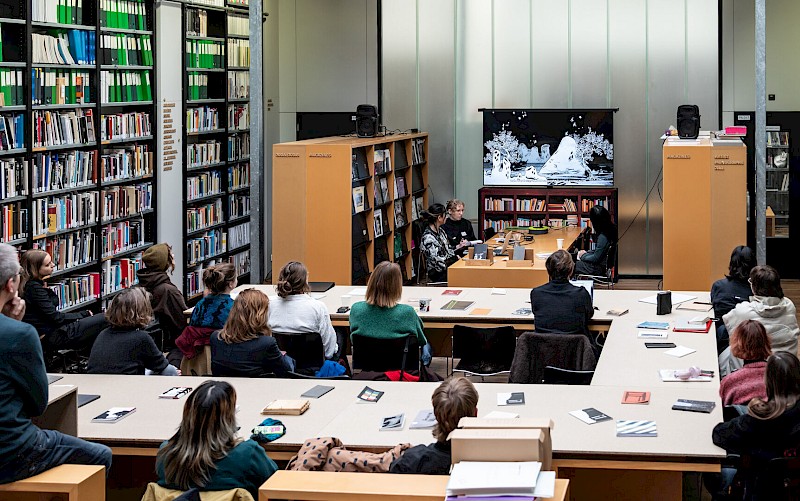
An exhibition by second year MA Artistic Research at De Stadswacht.
Opening times: Friday 20 November, 18:00-22:00, Saturday 21 & Sunday 22 November, 14:00-18:00.
Curatorial mentor: Angeliki Tzortzakaki
Graphic design: Katherina Gorodynska
Production assistance: Luka Smišek
Featuring works by:
Chenxin Cai, Tâm Đỗ, Ellen Fleig Gracia, Jeonghyun Kang, Nadežda Kirćanski, Foteini Kytiani, Salomé Lopes, Kubo Lotta, Gunna Marta, Dakota Magdalena Mokhammad, Esther Nieuw Jurk
Introductory text by Angeliki Tzortzakaki
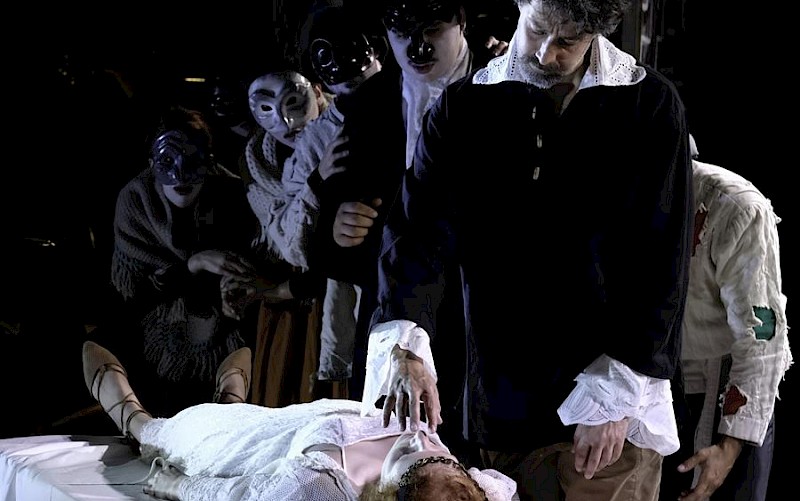
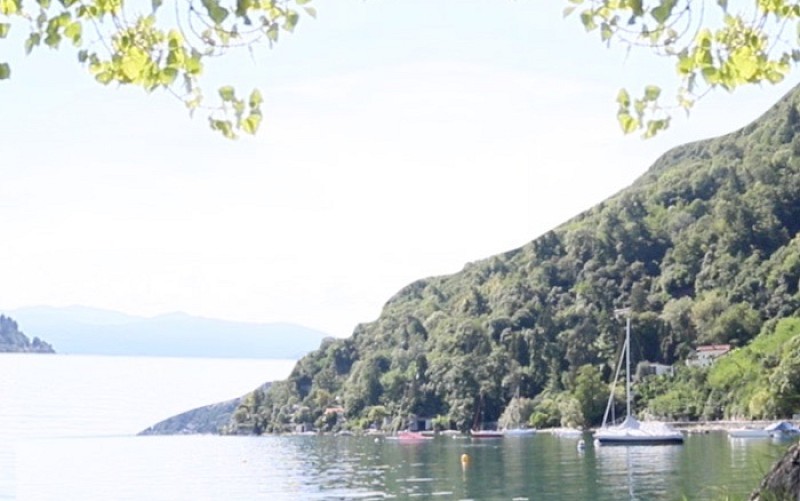
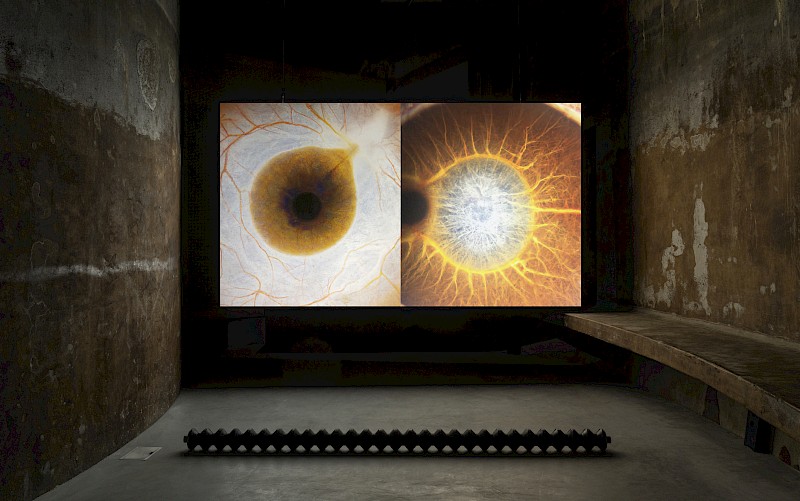
time is the thing a body moves through is an exhibition that brings together works from the artists studying their second year at the MA Artistic Research. Borrowing its title from T. Fleischmann‘s autobiographical essay of the same name, which explores the themes of embodiment, visual art, history and loss, the three-day show brings together works that have emerged from lengthy processes of reflection, studio-based practice and shared study. It also paves the way for further development in the final year of the programme.
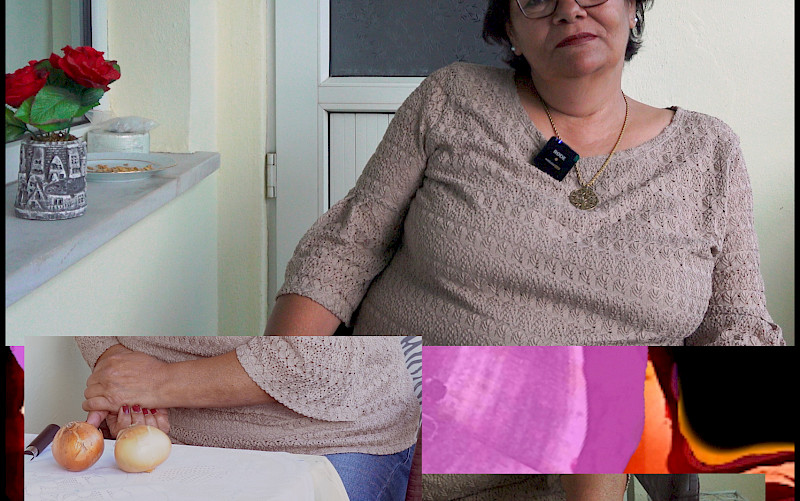
As with Fleischmann’s literary work, the students‘ practices follow a wide range of interests and inquiries, but they do meet on a shared ground: that of a desire to swirl across temporalities. The works tend to capture the shifting political momentum of ever-rising (and collapsing) authoritarian regimes, power structures and linguistic models while holding space for grief, loss and anger. Nevertheless, they critically engage with multiple truths by refusing to homogenise different positionings and lived experiences. Working through a wide range of media and driven by the cross-connective approach of artistic research, they produce much of what the world needs most: possibilities of reimagining.
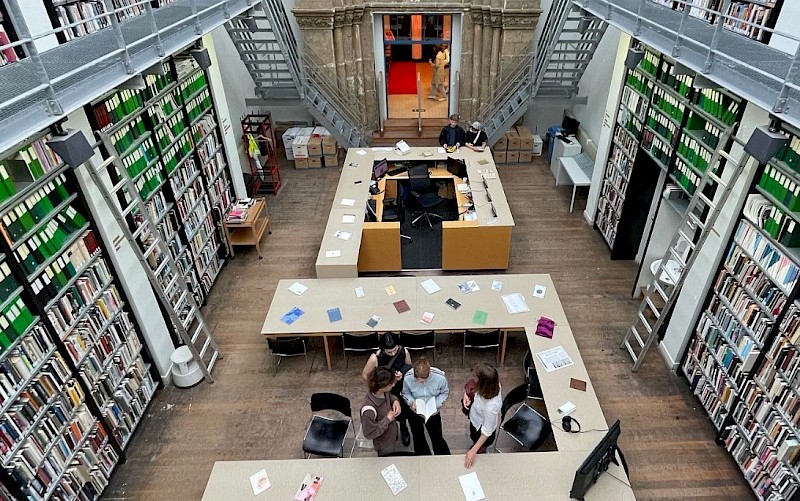
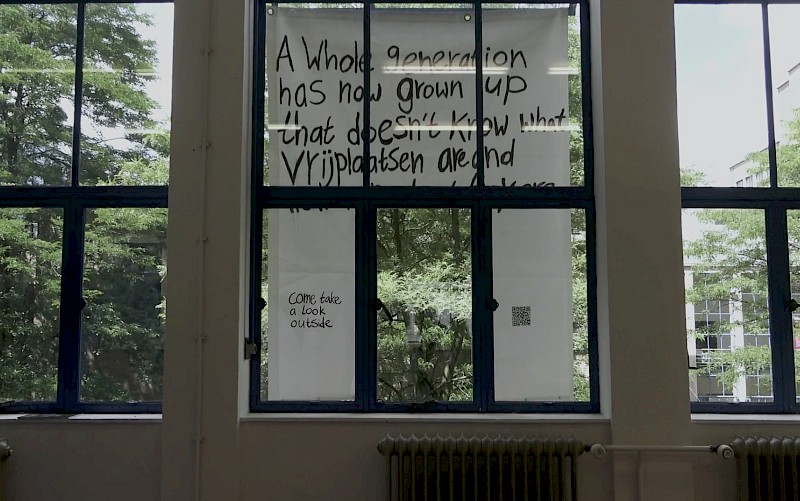
Through installation, film, sculpture, performance and more, the exhibition temporarily inhabits the second floor of de Stadswacht (translated from Dutch as city guard, a former name for the local police) in Binckhorst, constructed during the Cold War era to house the headquarters of the police, which still occupies part of the building. Today it hosts artist studios and an exhibition space. Aware of this context and history, the artworks open up spaces for rearrangement, conjuring worlds that bend linear understandings of time and emphasising a desire for transformation.